How Timing a Standing Desk Purchase Around Post-New-Year Workspace Reset Sales Delivers Better Configurations Than the Pre-Holiday Gifting Rush
The best time to buy a standing desk is almost never December. That might feel counterintuitive when holiday sales are everywhere and gift guides are pushing ergonomic gear hard, but the pre-holiday window is one of the weakest moments to make this kind of purchase. Retailers know demand spikes, inventory thins, and shoppers are in reactive mode. Wait a few weeks into the new year, and the entire dynamic flips in your favor.
If you've been thinking about upgrading your workspace and holding off because you missed a Black Friday deal or couldn't justify the spend before the holidays, you're actually in a better position right now than you realize. The post-January sales cycle for standing desks and ergonomic office furniture is one of the most underused buying windows in the home office category.
Understand Why January Inventory Works in Your Favor
After the holiday gifting rush clears, retailers are sitting on overstock across the ergonomic furniture category. Brands like Flexispot and Uplift Desk often push their slower-moving configurations — dual-motor frames, wider desktop sizes, and premium finishes — into clearance pricing to free up warehouse space. This isn't distressed merchandise. It's simply stock that didn't move as gift purchases because buyers defaulted to simpler, cheaper options in December. That leftover inventory often represents the better builds at the better prices.
Recognize the Configuration Advantage You're Getting
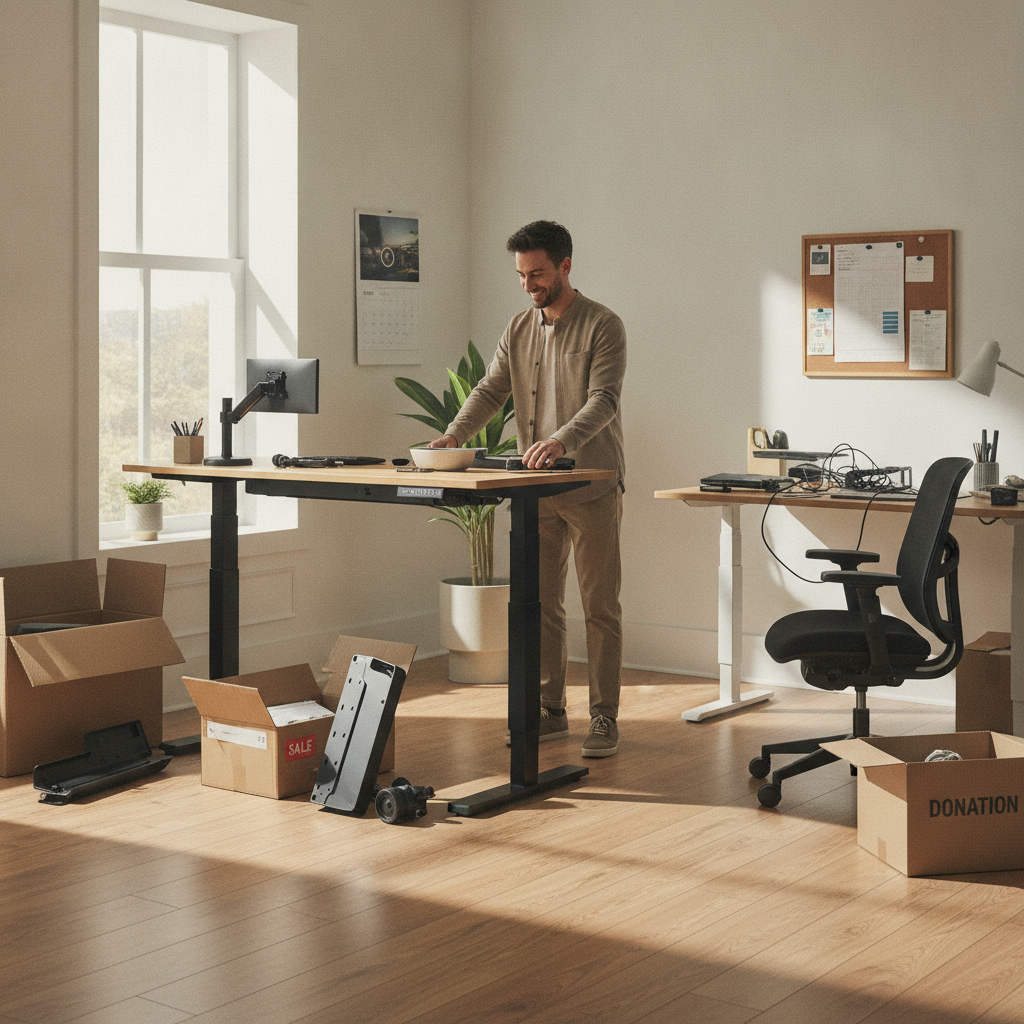
During the holiday gifting rush, most buyers are shopping for someone else and defaulting to mid-tier configurations. They pick a standard width, a basic single-motor frame, and whatever color matches a generic office aesthetic. Post-holiday, the expanded configurations nobody grabbed — L-shaped frames, wider 72-inch tops, three-stage leg systems from brands like Autonomous — come available at reduced prices. You're shopping for your own needs, which means you can evaluate memory presets, weight capacity, and cable management features that gift-shoppers skip entirely.
Set a Realistic Budget Before You Browse
Before you open a single product page, write down your actual number. Standing desks range from budget single-motor options under two hundred dollars to fully loaded sit-stand systems with programmable handsets that cost considerably more. Knowing your ceiling keeps you from getting pulled upmarket by the premium configs that suddenly look attractive when they're discounted. HomeDepot.com and Costco's online store both carry ergonomic desk options that hit solid mid-range value — knowing your budget before comparing makes the decision cleaner and faster.
Compare Handset Features Before Committing to a Frame
The control panel, or handset, is one of the most overlooked specifications in a standing desk purchase. Basic models give you up and down buttons. Better handsets offer four programmable height presets, a sit-stand reminder timer, and a digital height display. If you share your desk space with a partner who works different hours, programmable presets become genuinely useful rather than a luxury. Check whether the handset is hardwired or upgradeable, because some entry-level frames from smaller brands lock you into a basic panel with no upgrade path.
Research Frame Stability Ratings Against Your Desktop Weight
A standing desk frame has two load ratings that matter: the maximum weight capacity and the wobble performance at standing height. Most manufacturers publish static load limits but don't volunteer much about lateral stability. Dual-motor frames from brands like Vari generally outperform single-motor options at height, especially if you're adding a monitor arm, multiple screens, or a docking station. During post-holiday sales, the dual-motor configurations sometimes price down to where they overlap with single-motor retail, making the stability upgrade essentially free.
Use Price-Tracking Tools to Confirm the Discount Is Real
Not every January sale reflects a genuine markdown. Some retailers quietly raise the base price in late November and then advertise a percentage off that restores the original retail number. Browser extensions like Camelizer or Honey work on major retail sites and surface price history so you can see whether the current deal represents an actual low. Give yourself a week to track a few models before buying. Desks in this category don't sell out in hours the way consumer electronics do, so patience pays without meaningful risk.
Account for Shipping and Assembly Costs Upfront
Standing desk purchases come with hidden logistics costs that don't show on the listing price. Freight shipping for large desk frames can add a significant flat fee, and some white-glove delivery options that include assembly charge separately. A desk that looks like a strong deal can shift considerably once you add realistic shipping and the cost of any tools or hardware you don't already own. Factor these into your comparison before you declare one option the winner over another. Total cost delivered is the only number that matters.
Time Your Purchase to the Third or Fourth Week of January
The deepest post-holiday markdowns on ergonomic furniture typically hit in the third and fourth weeks of January. Early January still carries some holiday pricing momentum, and retailers are watching whether standard sell-through rates will clear inventory without heavy discounting. By week three, the math has usually resolved and price cuts deepen. Companies running workspace reset promotions — Flexispot often runs extended new-year campaigns — tend to layer in additional incentives like free accessories or extended warranties during this window that weren't available in December.
The standing desk market is heading toward broader modular compatibility, where frames, tops, and cable management systems from different manufacturers will increasingly work together. That means future upgrades will be easier and cheaper than replacing a full unit. Buying now during the post-holiday window still makes sense because you're capturing current pricing while positioning yourself for a system you can build on over time. The workspace that serves you well isn't always the most expensive one you could have bought — it's the right configuration, purchased at the right moment.