
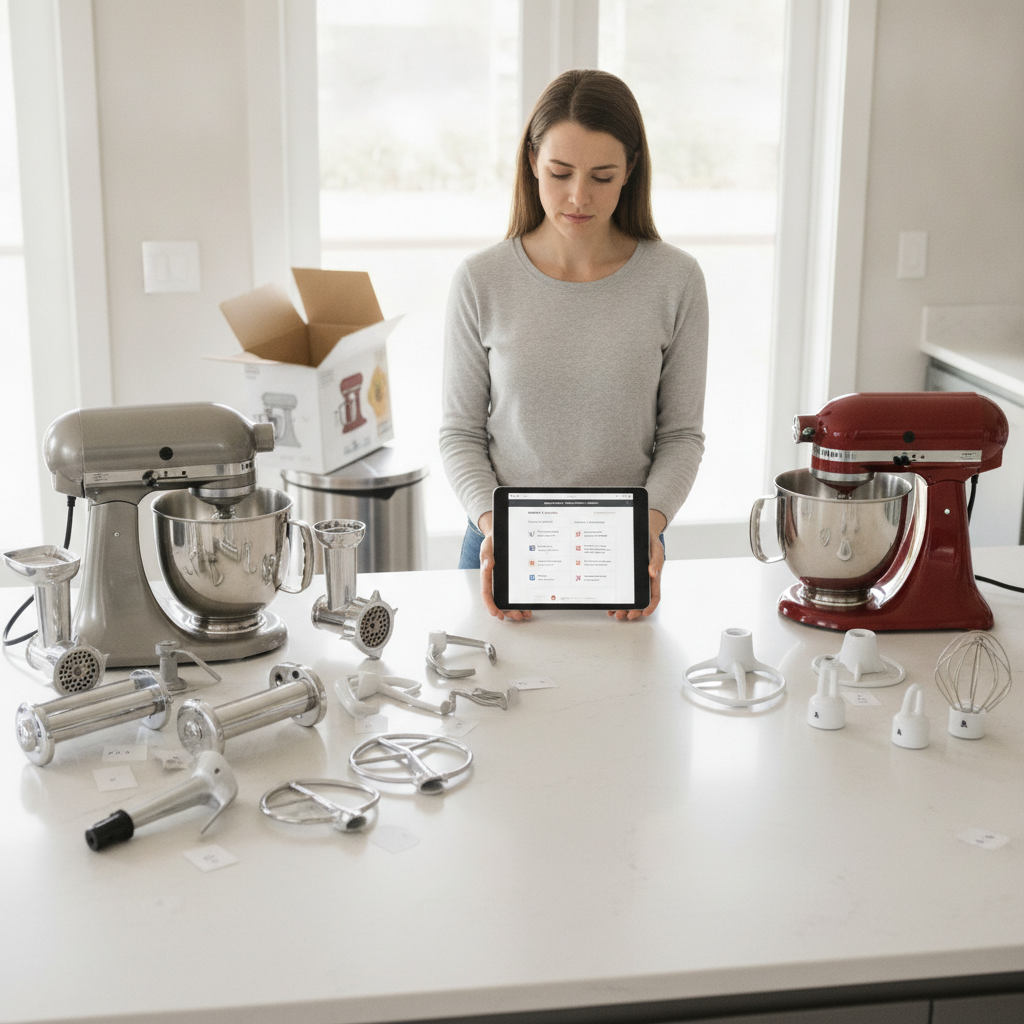
How Comparing Stand Mixer Attachment Ecosystems Before Buying Prevents the Costly Brand Lock-In That Limits Your Kitchen Capabilities Years After the Initial Purchase
A stand mixer is rarely just a mixer — it's the hub of an expandable kitchen system that can either grow with you or trap you. Most buyers focus on bowl size, wattage, and color options, which are reasonable starting points. What they often overlook is whether the machine's attachment ecosystem will still serve them three, five, or ten years after the purchase. That oversight tends to surface only when a new cooking interest develops and the available accessories simply don't exist for the brand sitting on the counter.
The Real Cost of Attachment Availability
When people calculate the price of a stand mixer, they typically count the machine itself and maybe one or two add-ons. The fuller picture includes every attachment purchased over the machine's lifetime. KitchenAid has built one of the broadest hub-based attachment libraries in the consumer market, ranging from pasta rollers to ice cream makers to grain mills. Ankarsrum and Bosch, both strong European brands, offer their own accessory ecosystems that skew toward bread-heavy baking. Before committing to any machine, spend time mapping out what you realistically expect to make in the next few years — then verify those attachments actually exist and are still in production for your target model.
Why Hub Standards Matter More Than You Think
Most attachment-ready mixers use a power hub on the front or top of the machine where third-party and proprietary accessories connect. KitchenAid's hub design has remained largely consistent across decades, which means attachments purchased years apart can still work on the same unit. Some brands use proprietary connectors that accept only their own accessories, while others have adopted hub designs that technically accommodate aftermarket options. The hub standard your mixer uses determines whether your attachment options will be wide or narrow over time — and whether price competition between manufacturers will ever work in your favor.
Checking the Discontinued Attachment Problem
Brand ecosystems don't stay static. Manufacturers regularly discontinue accessories, update hub designs between product generations, or exit certain attachment categories entirely. A spiralizer attachment available at purchase may disappear from shelves within a few years if demand doesn't support continued production. When evaluating a mixer, look at how long the brand has been manufacturing attachments for that specific line and whether older accessories from five or more years ago are still sold and supported. Brands with longer, more stable attachment histories give you a safer long-term bet than newcomers with impressive but unproven accessory lines.
Evaluating Third-Party Attachment Support
For some mixer lines, third-party manufacturers like Nutrimill or smaller specialty kitchenware brands produce compatible accessories that expand the ecosystem beyond what the original manufacturer offers. This third-party market is healthiest around KitchenAid's tilt-head and bowl-lift models, where the attachment hub has become something of an industry standard. For less common brands, third-party support is minimal or nonexistent, leaving you entirely dependent on what the original company produces. Before purchasing, search for the brand name alongside terms like "compatible attachments" or "third-party accessories" to get a realistic sense of how much flexibility the ecosystem actually provides.
Matching Attachments to Your Cooking Style
Not every kitchen needs a pasta extruder or a meat grinder. The right attachment ecosystem is the one aligned with how you actually cook, not the one with the longest catalog. Someone who bakes bread weekly has different needs than someone who primarily makes pasta or processes large batches of vegetables. Ankarsrum's ecosystem, for example, is particularly well-suited to high-hydration doughs and large bread volumes, while KitchenAid's broader catalog serves more varied cooking styles. Identifying your two or three most likely attachment purchases before buying a mixer makes it much easier to evaluate whether a given brand's ecosystem genuinely fits your kitchen habits.
Reading Warranty and Compatibility Disclosures Carefully
Some manufacturers explicitly state that using non-OEM attachments voids the warranty or risks damaging the motor. Others make no such restrictions. This matters because it directly affects the total cost of ownership — if using a well-reviewed third-party pasta attachment puts your warranty at risk, that attachment's value drops considerably. Read the fine print in the warranty documentation before assuming attachment compatibility is open. For mixers in higher price brackets, where repairs are expensive, warranty protection has meaningful financial weight that should factor into the brand decision alongside attachment availability.
Resale Value as an Ecosystem Indicator
A useful secondary signal for ecosystem strength is resale market activity. Brands with robust attachment libraries tend to hold resale value well because buyers in the secondhand market understand they're purchasing into an ongoing system. KitchenAid tilt-head models from a decade ago still sell reliably on platforms like Facebook Marketplace and eBay precisely because their attachments remain compatible and widely available. A brand with weak resale activity often signals a weaker attachment ecosystem, lower community support, or both. Checking used appliance listings before purchasing a new machine takes about ten minutes and provides a surprisingly honest picture of long-term satisfaction across actual owners.
Thinking in Decades, Not Years
Quality stand mixers are built to last fifteen to twenty-five years with reasonable care. A machine purchased today should still be earning its counter space well into the 2040s. That lifespan reframes the attachment ecosystem question entirely — it's not about what accessories are available now, but whether the brand will continue supporting and expanding that ecosystem across the full useful life of the machine. Brands with long histories, stable hub standards, and demonstrated commitment to backward compatibility offer meaningfully lower long-term risk than newer entrants, regardless of how attractive their current catalog looks. The attachment ecosystem isn't a bonus feature. It's the investment itself.
As home cooking continues evolving — with more people exploring fermentation, fresh pasta, plant-based processing, and artisan bread — the demand for specialized mixer attachments will only grow. Manufacturers who recognize this are already expanding their ecosystems, while others are narrowing their focus to core functions. Paying close attention to where brands are investing in attachment development, and which lines they're quietly discontinuing, gives buyers meaningful advance information about which ecosystems will be worth joining for the long term.