How Centering a First-Time Autumn Trip Around Slovenia's Julian Alps Instead of Lake Bled Delivers Wilder Hiking, Fewer Crowds, and Dramatically Lower Daily Accommodation Costs
Most first-time visitors to Slovenia organize their entire itinerary around a single photograph — the island church on Lake Bled, reflected in still water, framed by mountains. It's a beautiful image, and Bled genuinely earns its reputation. But centering your whole autumn trip there means paying premium accommodation rates, sharing trails with tour groups, and missing the quieter, wilder version of Slovenia that exists just a few kilometers to the west. The Julian Alps offer something harder to capture in a single shot but far more rewarding to actually experience.
Understand What You're Trading Up For
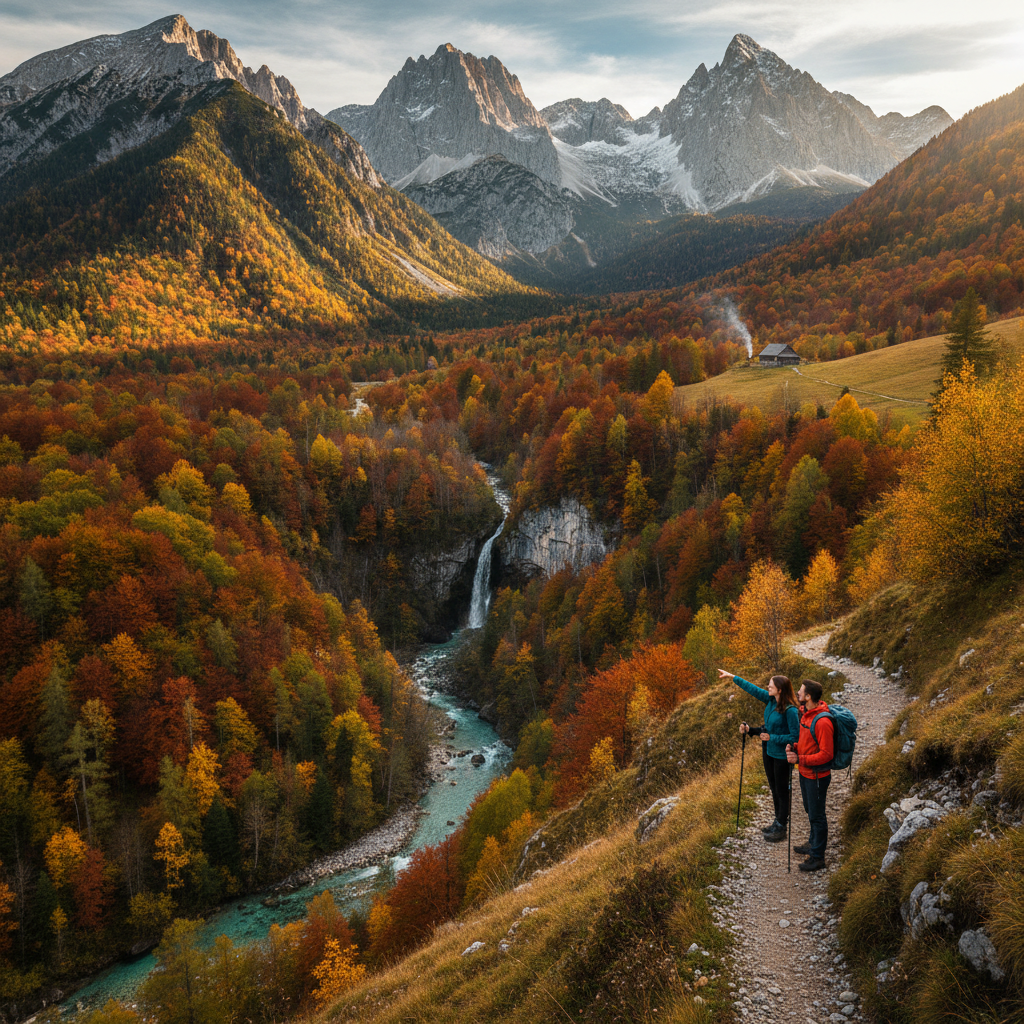
The Julian Alps cover a substantial portion of northwestern Slovenia, stretching from the Soča Valley in the west to the Triglav National Park plateau in the center. Autumn is their finest season — larch trees turn gold across the ridgelines, morning mist settles in the valleys, and the long summer crowds thin out considerably by mid-September. You're not giving up alpine scenery by skipping Bled; you're gaining more of it, spread across a landscape that doesn't funnel every visitor onto the same lakeside promenade. The tradeoff is simply a willingness to plan your own route rather than follow a well-worn tourist trail.
Base Yourself in Kranjska Gora or Bovec Instead
These two towns function as practical anchors for very different parts of the Julian Alps experience. Kranjska Gora sits near the Austrian and Italian borders, surrounded by gentler valleys and accessible day hikes that suit a range of fitness levels. Bovec, further southwest near the Soča River, skews more toward dramatic gorges, emerald water, and steeper terrain. Guesthouses and small hotels in both towns run noticeably cheaper than comparable rooms in Bled, particularly in September and October when local operators drop rates to attract the shoulder-season traveler. You'll also find that hosts in these smaller towns tend to offer genuinely useful local knowledge — trail conditions, which passes are still accessible before first snow, where to eat without paying tourist markups.
Use AllTrails and Mapy.cz to Plan Smarter Routes
Autumn hiking in the Julian Alps rewards preparation. Snow can arrive on higher passes earlier than expected, and some routes that are straightforward in August become genuinely committing by late October. AllTrails carries a solid library of Triglav National Park trails with elevation profiles and user-submitted condition updates, which matters when you're deciding whether a high ridge walk is still reasonable. Mapy.cz is less well known among English-speaking travelers but covers Slovenian terrain in exceptional detail, including unmarked tracks and forest roads that don't appear on more popular mapping apps. Download offline maps for both before you leave — mobile signal in the valleys is inconsistent, and you don't want to be navigating blind on a larch-lined ridge.
Time Your Arrival for the Golden Window
The larch color peak in the Julian Alps typically runs from late September through mid-October, though it shifts slightly depending on elevation and year. Lower valley trails go golden first; higher routes near the Vršič Pass — a dramatic switchback road connecting Kranjska Gora to the Soča Valley — tend to peak a week or two later. If you can structure your trip to move from lower to higher terrain over the course of a week, you essentially chase the color through the landscape. Arriving before the second week of October also keeps you ahead of the first serious cold snaps that can close higher passes and reduce daylight hiking hours significantly. Booking accommodations through Booking.com in this window, rather than peak summer, typically yields better availability and meaningfully lower nightly rates than you'd find in Bled at any point in the season.
Factor In the Soča River as a Destination in Itself
The Soča River runs through the western edge of the Julian Alps with a color so intensely turquoise it looks digitally altered in photographs. It isn't. The river draws kayakers and rafters in summer, but by autumn the water levels stabilize, the rafting crowds evaporate, and you're left with a series of gorges, pools, and riverside trails that feel almost entirely your own. The walk through the Velika Korita gorge near Bovec takes less than two hours and involves no technical climbing — just a narrow canyon path alongside water that shifts between pale green and deep aquamarine depending on depth. It's one of the genuinely unmissable natural experiences in Central Europe, and most visitors who center their Slovenia trip around Bled never make it here at all.
Manage Your Budget With a Simple Daily Framework
Accommodation in the Julian Alps towns runs considerably lighter on your daily budget than Bled, especially if you book guesthouses or pension-style lodging rather than hotel chains. Meals in Bovec and Kranjska Gora follow suit — local restaurants serving Slovenian staples like jota stew and buckwheat dishes cost a fraction of what lakeside tourist restaurants charge. Keeping a rough daily spending cap tracked through a simple app like Trail Wallet helps you stay honest about where costs are drifting, particularly on longer trips where small daily overruns compound quickly. Grocery runs at local supermarkets for trail lunches shave meaningful amounts off your weekly spend without sacrificing the experience of eating out for dinner.
Plan Your Exit Through Bled, Not Into It
This is the move that captures the best of both worlds without paying Bled prices for a full stay. Spend the bulk of your trip based in the Julian Alps, then route your final day or two through Bled on the way back to Ljubljana for your flight home. You'll still get the lake, the views, and the iconic walk around the shoreline — you'll just arrive rested, well-hiked, and having spent your accommodation budget on accommodation that actually delivered quiet and space. The drive from Kranjska Gora to Bled takes under an hour, and from Bled to Ljubljana Airport is another 45 minutes. The geography works cleanly in your favor.
As more travelers move away from single-landmark itineraries toward region-based exploration, destinations like the Julian Alps are likely to see gradual increases in autumn visitor numbers over the next several years. The infrastructure is improving slowly — new trail markings, expanded guesthouse capacity in Bovec — but the core appeal of relative solitude and honest pricing remains intact for now. Autumn 2026 is a reasonable window to experience this region before it fully enters the mainstream travel conversation. The slower you move through it, the more it gives back.