
Why Basing a First-Time Lisbon Trip Around the Setúbal Peninsula Instead of the City Center Delivers Coastal National Parks and Fishing Villages at Half the Nightly Accommodation Rate
Most first-time visitors to Lisbon book their accommodation in Alfama or Chiado, pay premium nightly rates, and spend their days fighting foot traffic on narrow tiled streets. That approach isn't wrong — Lisbon is genuinely beautiful — but it misses something fundamental about how Portugal's geography actually works. The Setúbal Peninsula sits just 40 minutes south of the city center, and it offers coastal national parks, whitewashed fishing villages, dolphin-rich estuaries, and accommodation rates that often run at half what central Lisbon commands. For travelers who care about value and experience in equal measure, the case for basing south is compelling.
The Geography That Makes This Strategy Work
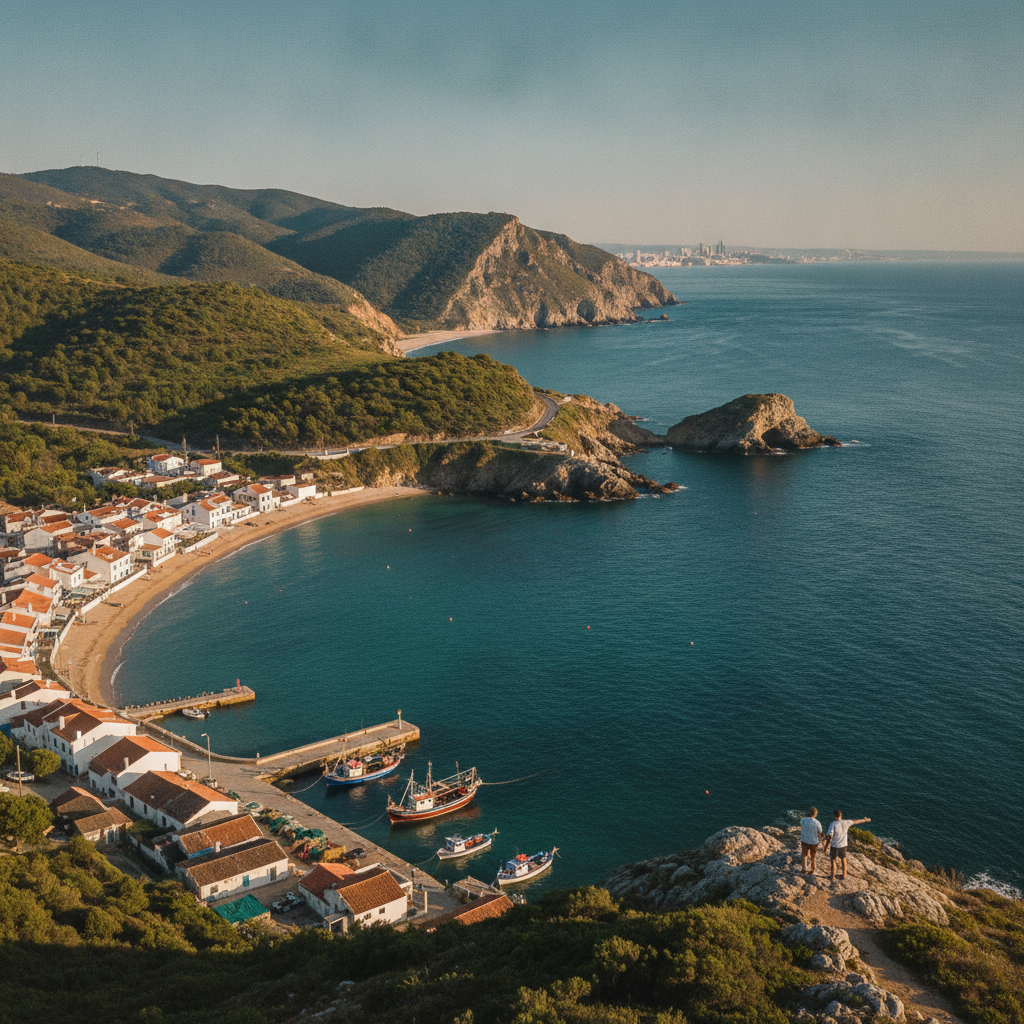
The Setúbal Peninsula is a compact wedge of land between the Tagus and Sado estuaries, anchored by the town of Setúbal and flanked by the Arrábida Natural Park to its south. The park runs along a dramatic limestone ridge above the Atlantic, sheltering some of Europe's clearest coastal waters. From virtually anywhere on the peninsula, Lisbon's center is reachable by commuter train or the A2 motorway in well under an hour. That proximity is the entire logic — you're not sacrificing city access, you're simply paying local rates to sleep closer to the coast.
Arrábida Natural Park Rewards the Early Morning
Parque Natural da Arrábida is the kind of place that justifies a Portugal trip on its own. The limestone serra drops sharply to transparent turquoise bays — Portinho da Arrábida and Galapinhos are the standouts — and the lack of mass-market hotel infrastructure keeps the area genuinely quiet outside July and August. Mornings here carry a different quality than anything in central Lisbon. The light off the water is extraordinary, the hiking trails above the cliffs are rarely crowded before 9 a.m., and the drive along the corniche road connecting the bays is one of the most scenic short drives in Portugal. Staying locally means accessing all of this before day-trippers arrive from the capital.
Setúbal Town Runs on Fishing, Not Tourism
Setúbal itself is a working port city with a fish market that opens before dawn, a clutch of excellent mosaic-tiled restaurants around Rua Frei Gaspar, and an unhurried street life that feels entirely authentic. Accommodation here — guesthouses, residencials, newer boutique properties — typically costs significantly less per night than comparable options in Lisbon's historic center. The city lacks the Instagram saturation of Alfama, which is precisely what makes wandering it pleasant. The mercado municipal sells local Moscatel, smoked swordfish, and regional cheeses at prices that feel almost conspiratorially low compared to tourist-district delis in Lisbon.
Sesimbra Offers a Village Rhythm Without Village Limitations
About 25 kilometers west of Setúbal, Sesimbra is a small fishing village tucked beneath a Moorish castle, facing a wide protected bay. It draws Portuguese families on summer weekends but remains genuinely low-key compared to the Algarve or even Cascais. The seafood restaurants along the harbor promenade serve grilled bream and choco frito — fried cuttlefish — at prices that make Lisbon's waterfront dining feel extravagant by comparison. Sesimbra also functions as an excellent base for scuba diving and snorkeling in the marine reserve section of Arrábida. Finding a room here, particularly mid-week or in shoulder season, is straightforward and affordable.
The Sado Estuary Adds Wildlife and Slow-Travel Appeal
The eastern edge of the peninsula borders the Reserva Natural do Estuário do Sado, one of Europe's most important wetland habitats. A resident pod of bottlenose dolphins has been documented in the estuary for decades, and boat tours departing from Setúbal's harbor operate regularly between spring and autumn. The estuary's rice paddies, salt pans, and migratory bird populations make it a genuinely distinct natural experience — not the kind of thing most Lisbon city-break itineraries include because city-center visitors simply don't think to look for it. Basing yourself on the peninsula changes what you notice and what you're willing to explore.
Palmela Anchors the Interior With Wine and a Castle
North of Setúbal, the hilltop town of Palmela anchors the interior of the peninsula with a medieval castle that now houses a government-run pousada. The surrounding Setúbal wine region produces some of Portugal's most underrated reds — Fernão Pires and Castelão dominate the blends — and the cooperative Adega de Palmela offers tastings at prices that bear no relationship to what you'd pay for comparable Portuguese wine in central Lisbon's wine bars. A morning in Palmela, followed by a drive down to Arrábida for the afternoon, represents the kind of unhurried day that peninsular basing makes effortless but that Lisbon city-center logistics make complicated.
The Commute Into Lisbon Is Genuinely Practical
Fertagus trains connect Setúbal to Lisbon's Oriente and Roma-Areeiro stations in roughly 45 to 55 minutes, with services running regularly throughout the day. The fare is low, the trains are comfortable, and the journey itself crosses the Tagus via the Ponte 25 de Abril bridge, offering elevated views of the estuary. For days when the city is the priority — the Museu Nacional do Azulejo, the Museu do Design e da Moda in Chiado, a full afternoon in Belém — the commute is entirely practical. You arrive into Lisbon without the overnight cost premium, then return south to quieter, cheaper, and arguably more restorative surroundings each evening.
Shoulder Season Amplifies Every Advantage
The Setúbal Peninsula rewards late-spring and early-autumn visits particularly well. Between late April and early June, the Arrábida scrubland blooms, water temperatures are still brisk but swimmable by May, and accommodation availability is wide open. September and October bring warm sea temperatures, reduced crowds, and harvest season in Palmela's vineyards. Central Lisbon runs hot and busy through the summer; the peninsula offers an escape valve that also cuts costs. As Portugal's tourism infrastructure continues expanding southward from Lisbon — with renewed interest in Comporta and the Alentejo coast drawing attention to the region — the Setúbal Peninsula's combination of accessibility, natural richness, and relative affordability positions it as one of Europe's more quietly rewarding base-camp destinations for the foreseeable future.