How Reading Robot Vacuum Suction Power Ratings and Navigation System Tiers Against Your Actual Floor Plan Prevents Overpaying for Automation Your Home Layout Will Neutralize
Robot vacuum marketing thrives on specification escalation — each model year brings higher Pascal ratings, more sophisticated mapping systems, and price tags that climb accordingly. What manufacturers rarely advertise is how predictably a home's actual layout neutralizes many of those premium features before the device completes its first cleaning cycle. Matching a robot vacuum's core capabilities to the genuine demands of a specific floor plan is one of the most straightforward ways to avoid spending significantly more than a home's cleaning needs actually require.
What Do Suction Power Ratings Actually Measure?
Pascal ratings measure the pressure differential a robot vacuum generates at its intake — essentially how hard it can pull debris from a surface. Entry-level models from brands like eufy and Shark typically operate between 1,500 and 2,500 Pascals, while flagship units from iRobot's Roomba line and Roborock's S-series push beyond 5,000. The gap sounds dramatic until you consider what most residential floors actually demand. Low-pile carpet and hard flooring — the combination found in the majority of North American homes — performs adequately at the lower end of that spectrum. The high-suction tiers become genuinely useful primarily for thick rugs, pet hair embedded in medium-pile carpet, and debris that settles into grout lines.
How Does Navigation Tier Pricing Break Down?
Robot vacuum navigation broadly splits into three functional tiers. The first uses random-bounce or basic infrared mapping — common in budget models under roughly 200 dollars — and cleans through coverage repetition rather than systematic planning. The second tier uses LiDAR or structured light to build room maps, enabling methodical row-by-row cleaning and multi-room awareness. The third tier adds simultaneous localization and mapping (SLAM) algorithms with persistent floor plan memory, obstacle recognition using cameras or AI classification, and multi-floor profile storage. Brands like Roborock and Dreame position their upper-mid and flagship units here. Each tier jump carries a meaningful price premium, and the question worth asking before buying is whether a specific home layout will ever demand the higher system.
Which Floor Plans Render Advanced Navigation Unnecessary?
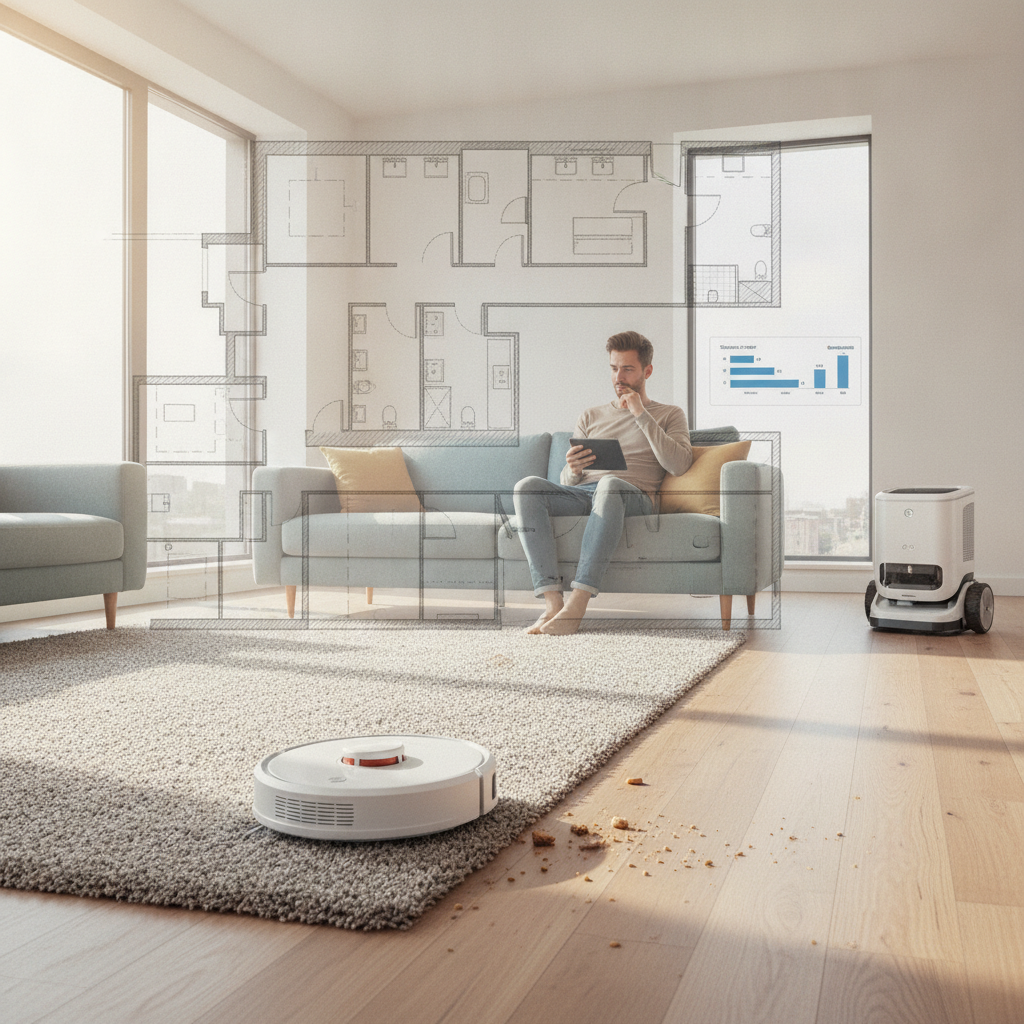
Open-concept homes with few interior walls, minimal furniture density, and a single floor are the layouts where tier-three navigation provides the least additional value. A robot vacuum using basic LiDAR mapping can efficiently cover a 1,200-square-foot open plan apartment — like those common in newer construction across Phoenix or Austin — in roughly the same passes as a top-tier SLAM unit. The advanced system's multi-room zone management, selective room cleaning, and persistent mapping become meaningful primarily when a home has many discrete rooms, narrow doorways the robot must learn to prioritize, or multiple floors with distinct cleaning profiles. Paying for that intelligence in a studio or open-plan layout is effectively funding features the architecture will never activate.
When Does High Suction Power Actually Pay Off?
The practical threshold where suction ratings above 3,000 Pascals deliver noticeable cleaning returns is homes with wall-to-wall medium or thick-pile carpet, multi-pet households where hair accumulates in dense mats, or rooms with area rugs layered over hard flooring. In these environments, a Roborock S8 or iRobot Roomba j9+ series unit justifies its higher price through cleaning completeness — genuinely lifting embedded debris that lower-rated units redistribute rather than remove. In homes that are predominantly hardwood, tile, or LVP with perhaps one or two low-pile area rugs, a mid-tier unit with 2,000 to 2,500 Pascals and basic LiDAR navigation completes the same effective job at a substantially lower purchase price.
How Do Self-Empty Bases and Add-On Features Shift the Calculus?
Self-emptying bases, auto-mop-washing stations, and detergent dispensing systems have become standard upsells across most major brands. These features add genuine convenience but also layer additional cost onto units that already carry premium navigation pricing. Before committing to a bundled system from brands like Ecovacs or Narwal, it's worth separating the base unit's core cleaning capability from the dock's convenience features. A household that can empty a dustbin every three to four days gets marginal return from a self-empty base that adds significantly to the total system cost. The calculus shifts for households with pollen or dust sensitivities, where reducing manual bin contact has a practical health rationale beyond simple convenience.
How Should You Match Specifications to Your Specific Home?
Before you look at a single spec sheet, walk your floor plan with three questions in mind. First, count your discrete rooms — if the answer is fewer than five and the layout is largely open, basic LiDAR navigation handles the job. Second, assess your flooring: if more than half your square footage is hard surface or low-pile carpet, suction above 2,500 Pascals adds minimal real-world benefit. Third, consider pet load and debris type — one shedding dog on hardwood is not the same cleaning demand as two cats on medium-pile carpet. Once those three variables are honest, match them against models in the tier that satisfies all three without exceeding any. Cross-reference actual unit dimensions against your narrowest doorways — a robot that can't reliably pass between rooms becomes a single-zone cleaner regardless of its mapping sophistication. Finally, check independent cleaning test results from sources like the Wirecutter or RTINGS rather than relying on brand-published Pascal numbers, which are measured under controlled conditions that rarely reflect residential debris types.
A robot vacuum's value is determined not by how impressively it performs in a manufacturer's test environment, but by how completely it matches the real demands of the floor it will actually clean. Suction ratings and navigation tiers represent genuine engineering achievements, but they deliver proportional returns only when a home's layout and flooring complexity require them. Spending deliberately at the tier a specific floor plan genuinely needs — rather than the tier marketing suggests everyone deserves — is where smart automation buying begins.