Why Renting a Cottage in County Clare Instead of Staying in Galway City Cuts Costs While Putting Ireland's Burren, Cliffs of Moher, and Atlantic Villages Directly Outside Your Door
There is a particular kind of traveler who arrives in Galway City with the best intentions, books a hotel near Shop Street, and spends most of their Irish trip navigating one-way roads, paying for parking, and watching the Wild Atlantic Way from a tour bus window rather than from a stone wall at the edge of a field. The accommodation is comfortable, the city is genuinely worth a day or two, and the seafood at McDonagh's is exceptional — but something is slightly off about the geometry of the whole thing. The experience of Ireland keeps arriving through glass rather than directly underfoot. This happens not because the traveler has made a poor choice, but because the conventional logic of Irish travel defaults to the nearest city, without fully accounting for where the most remarkable geography actually lives.
The Financial Case for a County Clare Cottage
Galway City accommodation, particularly in the city centre, carries prices that reflect demand from students, festival crowds, and international tourists who treat it as a base for everything west of the Shannon. A self-catering cottage in County Clare — in the townlands around Ballyvaughan, Doolin, or Lisdoonvarna — typically runs considerably less per night for considerably more space, often including a kitchen, a garden, and a turf fire that no hotel room anywhere can replicate. The savings compound quickly when you factor in restaurant bills. A cottage kitchen means breakfast costs are minimal, packed lunches are possible, and dinner becomes a choice rather than a necessity of location. Over a week, that difference in daily spend can quietly cover a ferry to the Aran Islands or an extra night's stay entirely, which is a meaningful shift in what a fixed travel budget actually delivers.
The financial logic extends beyond nightly rates. Galway City parking is a genuine expense for anyone driving the Wild Atlantic Way. A cottage in rural Clare requires no parking fees, no congestion navigation, and no taxi rides to reach the landscape that was the whole point of coming in the first place. The cottage itself sits inside the destination rather than adjacent to it, which is a distinction that matters more than most travelers anticipate when they are still planning at home.
What the Burren Teaches You About Proximity
The Burren — from the Irish Boireann, meaning rocky place — is one of Europe's most distinctive karst landscapes, a place where limestone pavements called clints are separated by deep fissures called grykes that shelter an improbable collection of Arctic, Mediterranean, and alpine wildflowers growing side by side. It is not a landscape that rewards a single day trip from elsewhere. The light changes it completely between morning and afternoon, the walking trails reveal different geology depending on the season, and the portal dolmen at Poulnabrone, standing at roughly 5,800 years old, warrants more than the fifteen-minute stop that tour itineraries typically allow. Staying in Clare means the Burren is simply outside the door each morning, available for an hour's walk before anyone else arrives, in the low-angled light that photographers and painters have always understood is when the limestone truly performs.
The village of Ballyvaughan, sitting on the southern shore of Galway Bay at the northern edge of the Burren, is small enough to walk across in minutes but positioned so perfectly that the limestone hills begin almost immediately behind it and the bay stretches in front. A cottage within a few kilometres of Ballyvaughan places a traveler within reach of Corcomroe Abbey, the Black Head coastal loop, and the Burren Perfumery in Carron, which is both a working distillery of native plant fragrances and a quietly absorbing cultural stop that most visitors simply never reach.
The Cliffs of Moher Before the Coaches Arrive
The Cliffs of Moher are genuinely dramatic — 214 metres of sheer Atlantic-facing rock that stretches for eight kilometres along the Clare coastline — and they are also one of Ireland's most visited sites, which means timing is everything. Tour coaches from Galway typically arrive mid-morning and clear by mid-afternoon, compressing the most popular hours into a window that makes genuine contemplation difficult. A traveler staying in Doolin, the small village just north of the cliffs, or in a cottage anywhere in western Clare, can reach the Cliffs of Moher at half past eight in the morning or in the late evening when the coaches are gone and the light is extraordinary. The experience is not just better in those hours — it is categorically different, something closer to what the place actually is rather than what a crowd makes of it.
Doolin itself deserves more than the passing mention it gets in most Ireland guides. It is small, slightly windswept, and built around a tradition of trad — traditional Irish music played in informal sessions at Gus O'Connor's Pub that have been running for generations. That is not tourism theater; it is simply how the community has always used its evenings, and sitting inside with a pint of Guinness while a fiddle and a bodhrán are played three feet away is an encounter with Irish culture that no Galway City hotel corridor can arrange.
Atlantic Villages and the Slower Pace They Demand
The coastline south of the Cliffs of Moher through Lahinch and Miltown Malbay and down toward Kilkee follows a pattern of small towns that have genuine, unselfconscious character. Lahinch has a beach culture built around surfing — the Atlantic swells that arrive here from thousands of miles of open ocean have made it one of Ireland's most respected surf breaks — and the town around it functions as a real community rather than a heritage set piece. Kilkee, further south at the edge of Loop Head Peninsula, sits in a horseshoe bay of such improbable calm geometry that it has been a holiday destination for Irish families for well over a century. Wandering these places on foot, stopping for coffee at a counter where the conversation is local and unhurried, is what slow travel actually means in practice, and it is available in full only to travelers who are already there, sleeping in the landscape rather than commuting into it.
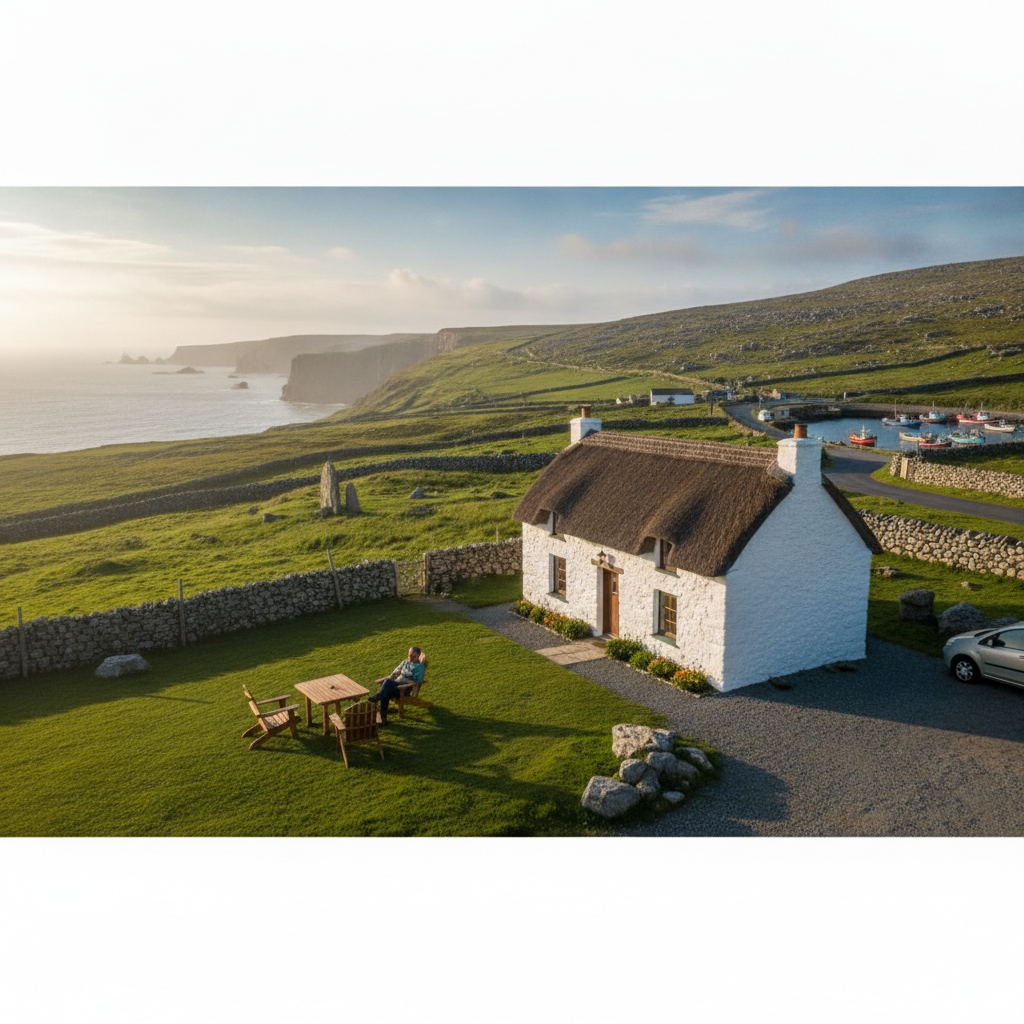
You arrive somewhere different when you rent a cottage in County Clare. The mornings begin without the pressure of a hotel checkout clock, the grocery run to the local shop in Ennistymon or Kilfenora becomes part of the rhythm rather than an inconvenience, and the particular quality of Atlantic light at six in the evening — that long, gold, horizontal light that seems to arrive from the sea itself — lands directly on the windowsill of wherever you are staying. The Burren is outside. The cliffs are twenty minutes away. The music sessions run on their own schedule. The whole geometry of the journey shifts from one of arrival and departure to one of genuine residence, however temporary, and that is exactly the difference that separates a trip remembered from one simply taken.