Why Basing a First-Time Moroccan Desert Trip Around Merzouga Instead of Marrakech Cuts Daily Costs While Delivering the Sahara Experience Most Tourists Only See in Photos
The Sahara is one of those destinations that occupies a permanent corner of the human imagination — ancient, boundless, and genuinely unlike anything a traveler has encountered before. Most people assume that reaching it requires anchoring their entire Moroccan trip around Marrakech, treating the city as an obligatory headquarters before enduring a long southward drive. What many discover, often too late, is that this approach inflates daily costs significantly while reducing the actual time spent in the landscape they traveled thousands of miles to experience. Building a first-time Morocco trip around Merzouga, the small desert town at the edge of the Erg Chebbi dune field, inverts that logic entirely — placing travelers inside the experience from the moment they arrive.
The Geography of Getting There Differently
Merzouga sits roughly 550 kilometers southeast of Marrakech, accessible by overnight bus through Rissani or by a rented car following the N10 highway through the Atlas Mountains and the Ziz Valley. The journey itself is part of the experience — the landscape transitions from red-earthed mountain passes to palm-lined gorges to the open pre-Saharan plateau, a visual sequence that no internal flight or rushed transfer can replicate. Flying into Errachidia, the nearest airport with limited regional connections, is an option that shortens road time considerably for those with tighter schedules. The critical shift in thinking is to treat Merzouga not as a detour from a Marrakech trip but as the actual basecamp around which everything else radiates outward.
What Merzouga Actually Costs Compared to the Imperial Cities
Accommodation in Merzouga reflects its position as a quieter, secondary destination. Guesthouses and small desert camps called maisons d'hôtes — the Moroccan term for family-run lodgings — offer en-suite rooms, rooftop terraces, and included Moroccan breakfasts of msemen flatbread, argan oil, and fresh-squeezed orange juice at rates well below what a comparable riad in the medina of Marrakech commands per night. Meals at local restaurants along the main road through Merzouga are priced for residents and long-term travelers rather than tourists on a 48-hour stopover, meaning a full tagine with bread and mint tea costs a fraction of what a tourist-facing medina restaurant charges. Daily spending in Merzouga, even with camel trekking and guided dune walks included, runs meaningfully lower than a typical Marrakech day that factors in riad accommodation, restaurant meals near Jemaa el-Fna, and guided medina tours.
The Erg Chebbi Experience and What It Requires
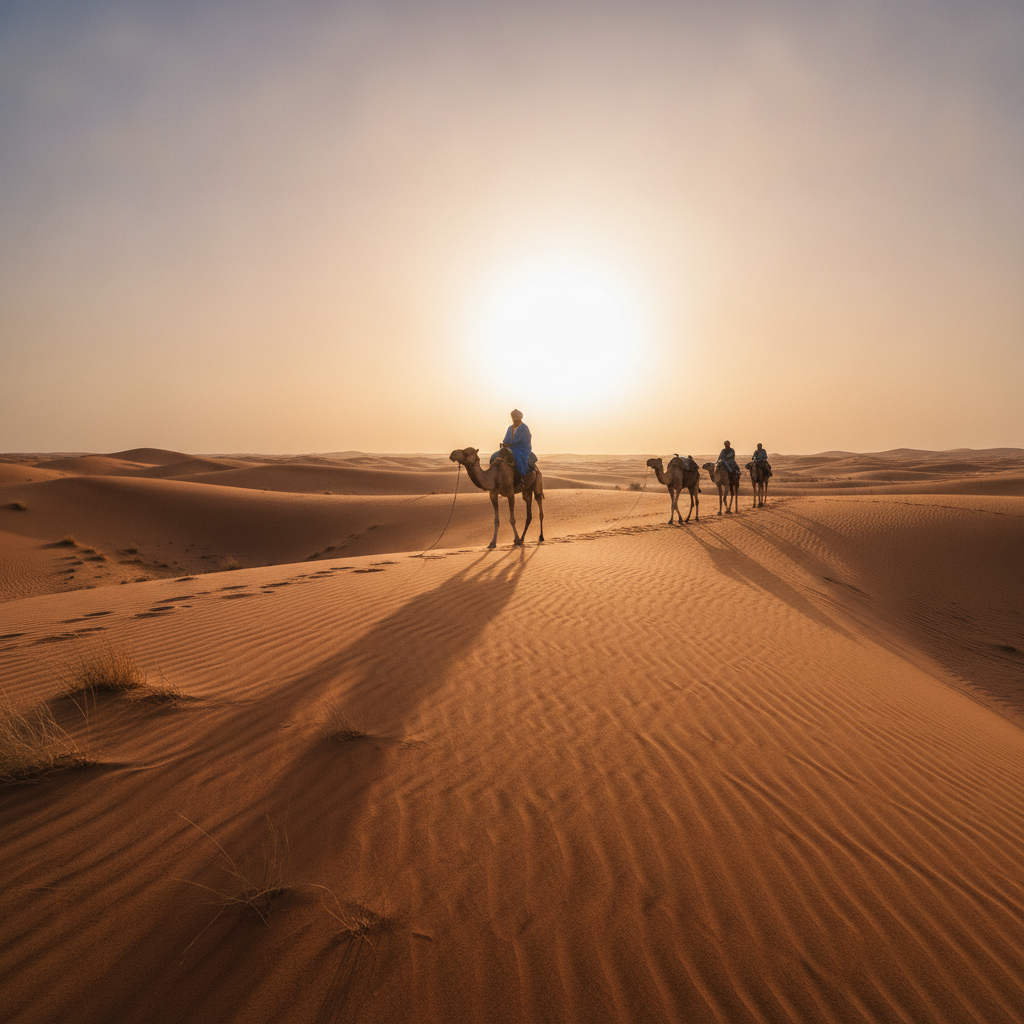
Erg Chebbi is the name of the dune field that rises just east of Merzouga — a mass of wind-sculpted orange sand that reaches heights of nearly 150 meters at its peak ridgelines. The erg, an Arabic term for a sea of sand dunes formed by wind deposits, is one of two major erg fields in Morocco, and it delivers the archetypal Sahara image with particular drama at sunrise and sunset. Most desert camps position guests just far enough into the dunes to eliminate all visible infrastructure, and a standard overnight bivouac — a temporary desert camp with Berber tents, shared meals, and live Gnawa or Amazigh music around an open fire — is included in accommodation packages that still undercut urban Morocco pricing. Travelers who base themselves in Merzouga for three nights rather than passing through on a single-night excursion from Marrakech experience the dunes across multiple light conditions, which changes the landscape entirely each time.
Side Trips That Reward the Slower Itinerary
Merzouga's value as a base extends well beyond the dunes themselves. The surrounding region contains several destinations that most Marrakech-centric itineraries never reach. Rissani, located about 20 kilometers west, is a historic market town and the original seat of the Alaouite dynasty — Morocco's current royal family traces its origins here — and its weekly souk draws agricultural traders from across the region rather than tourist vendors. The Ziz Gorges to the north offer dramatic canyon driving through palm oases, while the fossil markets near Erfoud present some of the world's most accessible Devonian marine fossils set into polished stone. None of these require organized tours; they're accessible by local shared taxi, the grand taxi system that connects regional Moroccan towns at low per-seat fares, making independent exploration genuinely affordable.
The Practical Rhythm of a Merzouga-Centered Trip
A well-structured trip built around Merzouga typically runs five to seven days. Arrival by overnight bus from Marrakech or Fès saves both a night's accommodation cost and a day of travel, turning the journey into productive transit rather than lost time. The first morning in the dunes at sunrise, before tour groups from distant cities arrive, offers the solitude that most desert photographs suggest but few visitors actually experience. Afternoons can be dedicated to village walks through ksar settlements — the Berber term for fortified mud-brick villages — or to sandboarding on the lower dune faces, an activity that requires nothing more than a rented board from a local shop. By designing the itinerary around Merzouga rather than around a city hub, travelers find that the daily cost curve flattens considerably while the density of genuine experience actually increases.
Returning With a Different Understanding of Morocco
There's a particular kind of traveler who arrives in Morocco expecting Marrakech and leaves having barely seen it — because the country kept revealing something more compelling further south. The person who books three nights in a small desert guesthouse, watches the Erg Chebbi dunes change from burnt orange to deep violet in the span of twenty minutes at dusk, and spends an evening listening to Gnawa music around a fire under a sky undiminished by light pollution tends to return home with a quieter, more grounded memory than the one manufactured by a busy medina. That memory costs less to build than most travelers expect — and it starts with the simple decision to let the desert be the destination rather than the footnote.