How Planning a Late-Autumn Road Trip Through Japan's Nakasendo Trail Between Magome and Narai Delivers Feudal Post-Town Culture and Forest Scenery Without the Kyoto Autumn Foliage Crowds
Autumn in Japan pulls travelers toward the same handful of destinations every year — Kyoto's Arashiyama bamboo grove, the vermillion corridors of Fushimi Inari, the manicured gardens of Nara — until the experience begins to resemble a queue more than a journey. What most visitors don't realize is that the country's most atmospheric autumn scenery sits hours away from those famous corridors, threading through the Kiso Valley along the old Nakasendo highway, where post-towns built to serve Edo-period travelers still stand largely as they did three centuries ago.
Why the Nakasendo Rewards Late-Autumn Timing
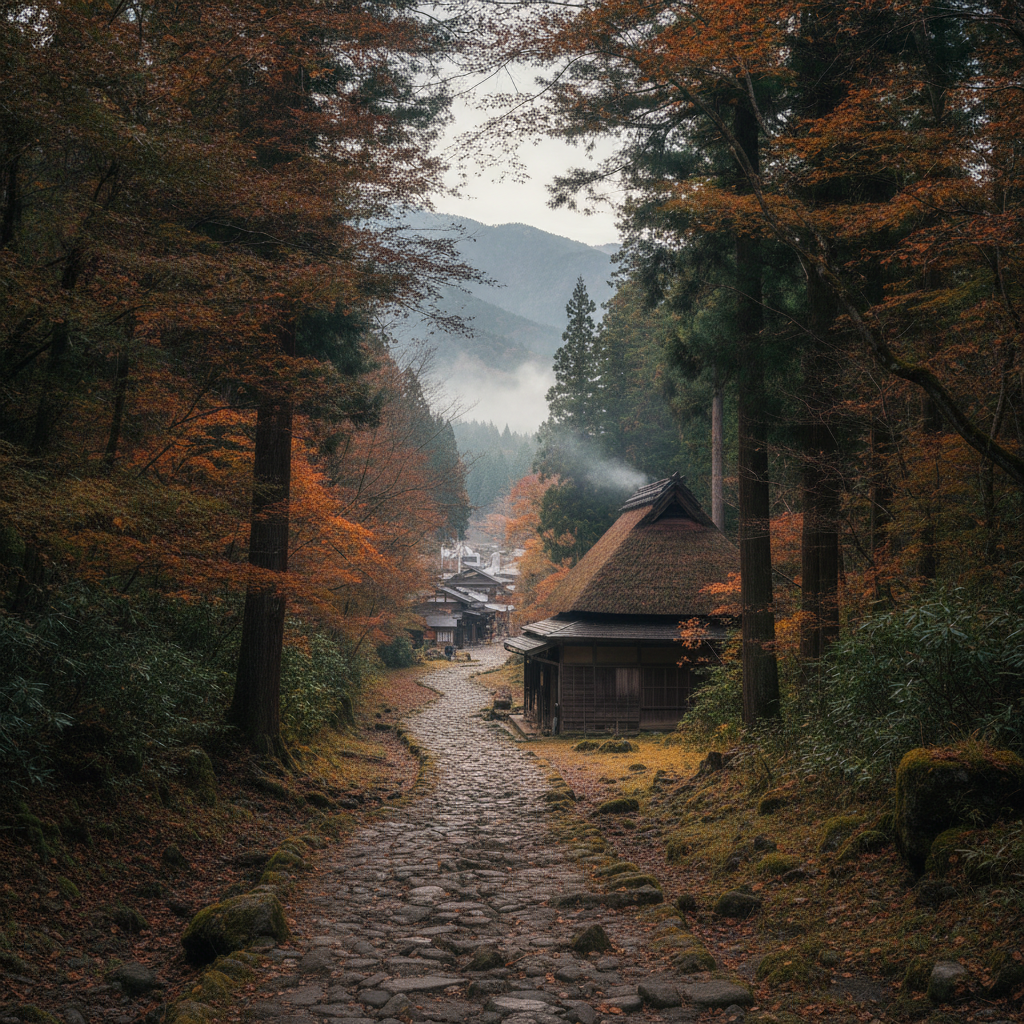
The Nakasendo was one of Japan's five major highways during the Edo period, connecting Edo — present-day Tokyo — to Kyoto through the mountainous interior of Honshu. Unlike the coastal Tokaido, it ran through forests, river valleys, and elevated passes, and the post-towns that lined it were built to shelter the officials, merchants, and daimyo processions that traveled the route. Late autumn, roughly mid-November through early December, brings two distinct advantages to this corridor. The tourist volume that peaks along the well-worn Kyoto circuit has yet to migrate inward, and the deciduous forests above the valley floor shift through deep amber and rust before finally dropping their canopy, leaving the cedar-roofed machiya townhouses framed against bare ridgelines that feel almost sculptural in the low-angle winter light.
Mapping the Route Between Magome and Narai
The road trip logic along this stretch works best when anchored at two endpoints: Magome in the south and Narai in the north. Magome sits at the southern tip of the Kiso Valley and is accessible via the Chuo Expressway from Nagoya in roughly ninety minutes, making it a natural starting point for travelers flying into central Japan. The town climbs a steep hillside, its stone-paved main street flanked by traditional inns and tea houses that look convincingly unchanged from their Meiji-era photographs. From Magome, the route moves north through Tsumago — arguably the most intact post-town on the entire trail — before continuing up through Nara-i, where the narrow main street is lined with lacquerware shops and sake breweries operating in buildings that predate the Meiji Restoration. Google Maps handles the driving navigation cleanly across this corridor, though downloading the offline map segment before departure is worth doing given cellular coverage gaps in the deeper valley sections.
Tsumago and Magome on Foot
Walking the Connecting Path
Between Magome and Tsumago, an eight-kilometer hiking path follows the original Nakasendo stone road through cedar forest and rice paddies, and in late autumn the trail offers the kind of silence that proves genuinely difficult to find elsewhere in Japan. The walk takes roughly two and a half hours at an unhurried pace, and many road-trippers choose to leave their car in Nagiso and take the local bus back after completing the path on foot. AllTrails carries a usable route map for this segment, though the trail is well-signposted in both Japanese and English.
What the Post-Towns Actually Contain
Tsumago achieved its preserved condition partly through a 1968 community agreement that prohibited new construction and the sale of land to outside buyers — a decision that has made it one of the most photographed villages in Japan while keeping it genuinely livable. The Waki-Honjin museum there opens its interior rooms to visitors, allowing a close look at the sleeping quarters and administrative spaces where high-ranking officials rested during official journeys. Admission is modest, and the experience of walking through those low-ceilinged rooms on a cold November morning, with mist still sitting in the valley below the windows, is the kind of detail that tends to anchor itself in memory long after the trip itself has faded.
Narai: The Northern Anchor of the Journey
Narai, located at the northern end of the Kiso Valley, is often described as the longest preserved post-town on the Nakasendo, its main street extending for nearly a kilometer without a single building that breaks the visual continuity of the Edo-period streetscape. What makes Narai particularly compelling in late autumn is its position near the Torii Pass, where the old trail climbs through larch forest before descending toward the Matsumoto Basin. The pass walk is shorter than the Magome-Tsumago route — roughly five kilometers round trip — and the larches turn a vivid yellow in November before dropping their needles, creating a carpet of gold along the forest floor that persists for several weeks after the peak color has gone. Narai is also one of the few post-towns with enough accommodation options to justify an overnight stay, and the ryokan experience here — communal baths, multi-course kaiseki dinners built around mountain vegetables and river fish — arrives at a price point significantly below what the same quality commands in Kyoto.
Practical Logistics for the Drive
Renting a vehicle in Nagoya through Nippon Rent-A-Car or Toyota Rent a Car provides the most flexibility for this corridor, since train access to some of the smaller post-towns requires connections that add considerable time. Navigation apps like Google Maps work reliably, though Navitime Japan is worth downloading as a backup since it integrates local road restrictions and seasonal closures that international apps sometimes miss. Fuel costs remain manageable — the total driving distance from Magome to Narai runs under a hundred kilometers — and parking in each post-town is available at designated lots just outside the preserved pedestrian zones. Travelers arriving on weekdays will find the streets noticeably quieter than weekends, even in late autumn, since domestic Japanese tourism to the Kiso Valley concentrates heavily on Saturday and Sunday.
Accommodation and Food Along the Way
Staying at a traditional minshuku or small ryokan in either Tsumago or Narai transforms the visit from a day-trip into something more immersive. Hosts at family-run properties along this corridor tend to serve dinner built around regional ingredients — soba noodles made from locally grown buckwheat, hoba miso grilled over a ceramic plate, mountain vegetables preserved in salt through the summer months. Booking through Jalan, Japan's domestic travel reservation platform, often surfaces properties that don't appear on international booking sites, and the pricing on those listings reflects local rather than tourist-market rates. Arriving before dusk allows for a walk through the main street after the day visitors have cleared out, when the paper lanterns in shop windows provide the only light on the stone-paved lane and the temperature drops quickly enough to send visible breath into the cold air.
Reading the Season and Timing Departure
The foliage window in the Kiso Valley typically runs two to three weeks behind Kyoto's peak, meaning that mid-to-late November delivers reliable color when the famous southern destinations have already moved past their peak and shed their leaves. By the first week of December, the valley has taken on a spare, wintry quality that suits the architecture — the dark cedar boards and white plaster walls of the machiya read differently against bare forest than they do in full summer green, and the visual quietness of the late-autumn palette tends to slow visitors down in a way that the explosion of red maples elsewhere does not. Checking seasonal foliage tracking resources ahead of departure helps calibrate the timing, though the Kiso Valley's elevation means conditions vary enough from year to year that building a few days of flexibility into the schedule is always worthwhile.
There is something genuinely restorative about arriving at a destination that wasn't optimized for the volume of attention it receives — where the stone pavement is worn smooth from three centuries of foot traffic rather than recent restoration, and where the person serving dinner at the ryokan has lived in the same post-town their entire life. The Nakasendo between Magome and Narai offers exactly that: a road trip that moves at the pace of the old highway itself, through forest and cold air and towns that exist for reasons older than tourism. If autumn in Japan is on the list, this corridor deserves to be the starting point rather than the afterthought.