
How Reading Bed Frame Weight Ratings and Slat Spacing Specs Before Buying Prevents Premature Sagging and Costly Mattress Voided Warranties
A bed frame is not simply a decorative base — it is a structural support system whose specifications directly determine how long a mattress performs and whether warranty claims remain valid. Most shoppers focus almost entirely on style and price when choosing a frame, overlooking two technical details that carry significant financial consequences: weight capacity ratings and slat spacing measurements. Ignoring these figures doesn't just risk a squeaky frame — it can void a mattress warranty worth several hundred dollars and accelerate sagging that no amount of rotation will reverse.
Why Weight Capacity Is More Than a Safety Figure
Bed frame manufacturers assign weight capacity ratings based on the combined load the frame's hardware, legs, and center support system can sustain over time. This number reflects sustained nightly pressure, not a one-time maximum load. A frame rated for 400 pounds may handle two average adults comfortably, but if the total weight of sleepers plus the mattress itself approaches or exceeds that threshold, the frame begins to flex and deform gradually. Brands like Zinus and Linenspa publish these ratings prominently, but budget frames sold through third-party marketplace listings frequently omit or understate them, leaving buyers to guess at a number that matters considerably.
How Slat Spacing Affects Mattress Integrity
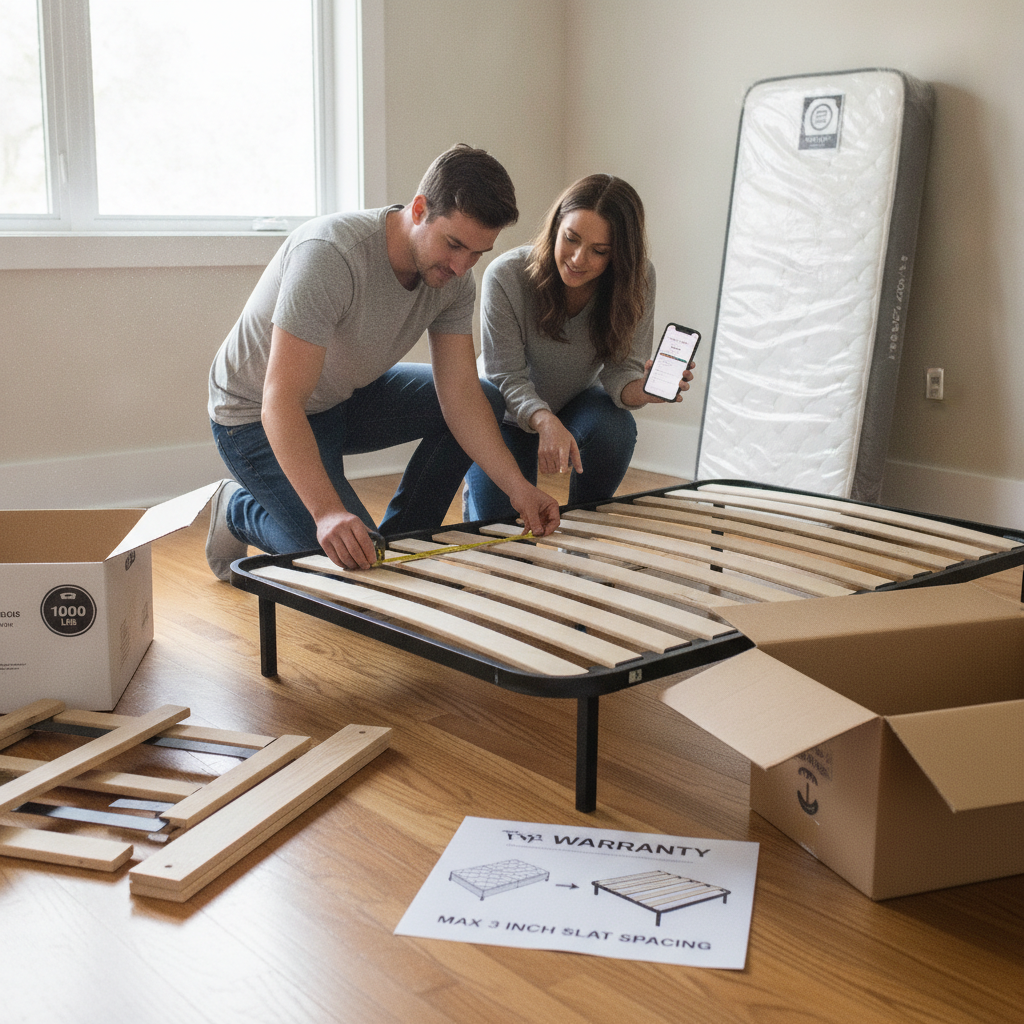
Slat spacing — the gap between each horizontal support board — is one of the most overlooked specifications in bed frame shopping. Most mattress manufacturers specify a maximum slat gap of three inches, and some memory foam brands like Casper and Nectar require gaps of no more than two and a half inches to maintain warranty coverage. When slats are spaced too far apart, sections of the mattress foam compress downward into the open spaces under nightly body weight. Over months, this creates uneven wear patterns and soft spots that mirror the slat layout rather than the sleeper's actual pressure points. The mattress doesn't fail — it is simply unsupported.
Reading the Fine Print Inside Mattress Warranty Documents
Mattress warranties are commonly ten to twenty-five years in stated length, but that duration comes with specific platform requirements embedded in the fine print. Terms from brands like Saatva and Purple explicitly state that the frame or foundation must provide adequate support at defined intervals, and they reserve the right to deny claims if an unsupported frame contributed to sagging beyond a specified depth — often around an inch to an inch and a half. Buyers who skip this section before purchase often discover it only after filing a claim, at which point the combination of an incompatible frame and noticeable mattress wear creates an almost unwinnable dispute with the warranty department.
What to Measure Before You Commit to a Frame
Before purchasing a bed frame, it pays to gather a few specific measurements and cross-reference them against the mattress documentation. You should check the stated weight capacity against your actual combined sleeper weight plus the mattress weight — which can range from 50 to over 150 pounds depending on type. Next, count the slats and measure the gap between them, or ask the retailer for the spec sheet if slat details aren't listed. For queen and king sizes, also confirm whether a center support leg is included, since wider frames without one place far more lateral stress on the outer rails. A tape measure and five minutes of comparison work before checkout can prevent months of mattress degradation.
Platform Beds Versus Slatted Frames and Box Spring Compatibility
Not all frames support all mattress types equally, and the distinction between platform beds and traditional slatted frames affects compatibility in ways that pricing alone doesn't reveal. A platform bed with a solid wood or metal grid surface distributes weight evenly and typically works well with memory foam and hybrid mattresses. Traditional slatted frames are compatible with innerspring mattresses but require closer attention to slat spacing when used with foam-based products. Retailers like IKEA include slat spacing specifications in product listings and even specify which of their mattresses pair with which frame systems — a transparency that makes cross-referencing straightforward. The error most buyers make is assuming any frame works with any mattress, when in practice the pairing requires deliberate matching.
Protecting the Investment With the Right Questions
Treating a bed frame purchase as a strategic decision rather than an afterthought is the simplest way to protect a mattress investment that may span a decade or longer. Before finalizing any frame purchase, you should pull up the mattress manufacturer's warranty terms — usually available as a downloadable PDF on the brand's website — and confirm the slat spacing requirement and foundation type language. If the frame listing doesn't include slat spacing measurements, contact the seller directly or look for verified owner reviews that mention the gap. When shopping in-store at retailers like Pottery Barn or Article, ask a sales associate for the technical spec sheet rather than relying solely on the display model's appearance. Spending a few extra minutes confirming compatibility at the point of purchase is a fraction of the cost and frustration of replacing a mattress that wore out years ahead of schedule due to an incompatible frame.
The relationship between a bed frame and a mattress is a structural one, not a decorative one, and the specifications governing that relationship are not arbitrary fine print. Weight capacity ratings and slat spacing measurements exist because mattress materials respond predictably to support conditions — foam that is properly backed lasts, and foam that bridges unsupported gaps degrades. Smart buyers treat these two figures as non-negotiable checkboxes before committing to any frame, protecting both the mattress's performance and the warranty coverage that backs it.