
How Reading Appliance Energy Star Ratings Against Your Actual Usage Patterns Reveals Whether Upgrading Early Actually Saves Money
Most appliance decisions get made on vibes — the new model looks sleeker, the salesperson mentions energy savings, and suddenly you're signing a credit card receipt for something your old machine was still handling just fine. Energy Star ratings are genuinely useful tools, but they only tell part of the story. The real question isn't whether a new appliance is more efficient in theory — it's whether the difference in efficiency is large enough to justify replacing something that still works, given how you actually use it.
This is where most people leave money on the table. They either hold onto aging appliances well past the point of cost-effectiveness, or they upgrade prematurely chasing savings that never quite materialize. Running the actual numbers against your household patterns is the move that separates a smart purchase from an expensive one dressed up as responsible ownership.
Pull Your Actual Monthly Utility Bills First
Before comparing any spec sheets, gather 12 months of electricity bills. Most utility companies — including major providers like Duke Energy and Pacific Gas & Electric — now offer online usage dashboards that break consumption down by month and sometimes by appliance category. You're looking for your baseline cost, not a national average. Energy Star estimates are calculated against standardized test conditions that may not match a three-person household running a chest freezer in an un-insulated garage. Your real numbers are the only numbers that matter for this decision.
Understand What the Energy Star Label Actually Measures
Energy Star certification means an appliance meets efficiency thresholds set by the EPA — typically meaning it uses meaningfully less energy than the federal minimum standard for that product category. What the label doesn't tell you is how that efficiency translates to your specific usage volume, your local electricity rate, or your climate. A refrigerator rated for annual savings assumes average door-opening frequency, average ambient room temperature, and a full load. Run it nearly empty in a warm kitchen, and the real-world performance shifts. The label is a comparison tool between products — not a personal savings forecast.
Calculate the Annual Operating Cost Gap Between Old and New
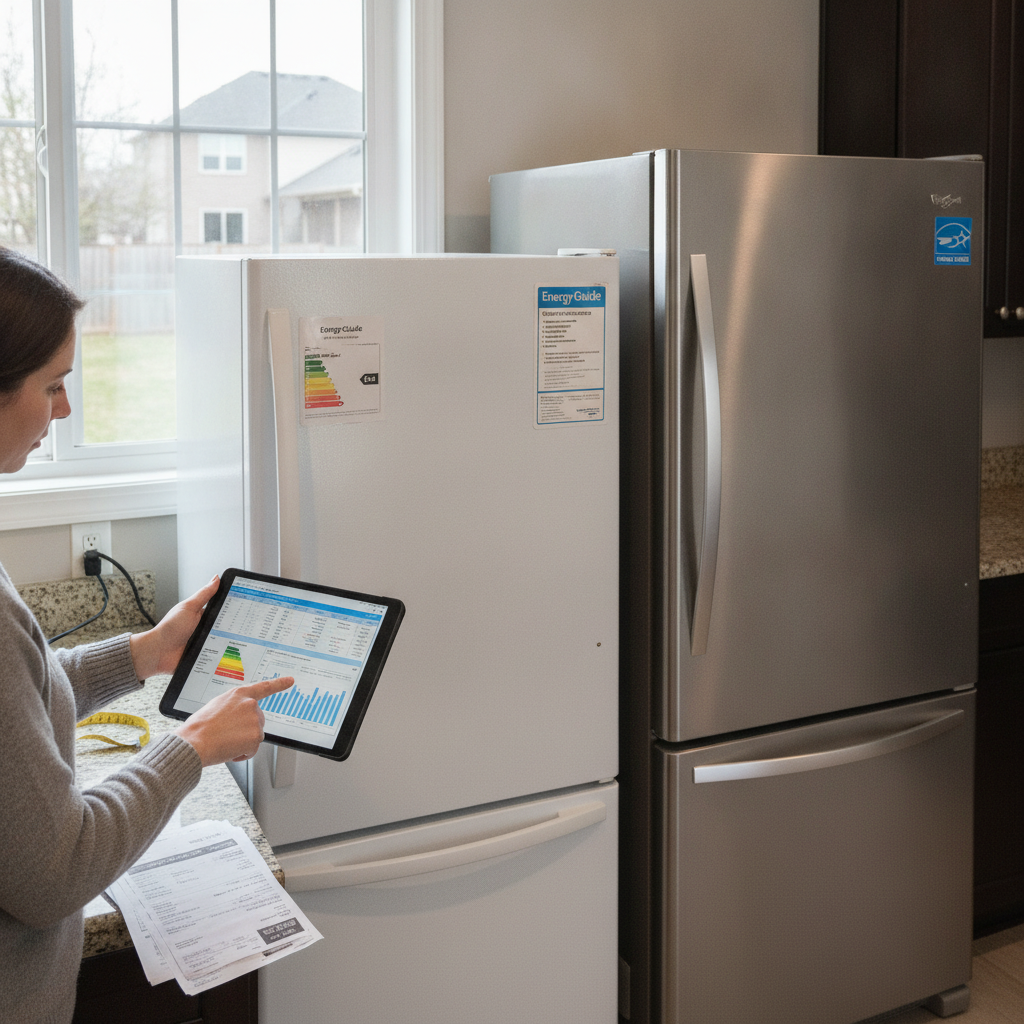
This is the step most people skip, and it's the most important one. Find the estimated annual kilowatt-hour consumption for the new model — this is listed on the yellow EnergyGuide label, not just the Energy Star badge. Then estimate your current appliance's consumption, either from its original paperwork, the manufacturer's website, or an inexpensive plug-in energy monitor like the Kill A Watt P3. Multiply the kilowatt-hour difference by your actual local electricity rate per kWh. That number is your real annual savings — and it's often smaller than retailer marketing suggests.
Factor in the Age and Remaining Life of Your Current Appliance
A washing machine that's eight years old and running without issues has a reasonable chance of lasting another five to seven years. A dishwasher showing intermittent drain errors might need a repair call within the next 18 months. These projections matter because the payback period on a new appliance — the time it takes for energy savings to offset the purchase price — can stretch anywhere from four years to over a decade depending on the efficiency gap and the appliance category. Replacing a functional unit that has years of useful life remaining often means paying for an upgrade that won't break even before the new model itself needs replacing.
Check Whether Rebates and Utility Incentives Change the Math
Many utility companies partner with state energy offices to offer rebates on Energy Star-certified appliances — sometimes significant ones on heat pump water heaters, smart thermostats, and high-efficiency HVAC systems. Appliance retailers like Home Depot and Lowe's also periodically stack manufacturer rebates with their own promotional offers, particularly during holiday weekends and end-of-model-year clearances. Running your purchase through a rebate aggregator site like DSIRE (Database of State Incentives for Renewables & Efficiency) before buying can dramatically shorten that payback period and genuinely tip the math in favor of upgrading sooner rather than later.
Match the Efficiency Gain to Your Actual Usage Volume
High-volume users benefit most from efficiency upgrades — this is non-negotiable math. A family running a dishwasher twice daily captures far more annual savings from switching to a high-efficiency model than a single person who runs it every three days. The same logic applies to washing machines, dryers, and refrigerators. A new Energy Star refrigerator in a household of five people with teenagers constantly opening the door will deliver closer to its rated savings than the same unit sitting in a guest house that's occupied four months a year. Calibrate your expectations to your actual usage frequency, not the average household the certification was benchmarked against.
Know When Repairing Beats Replacing Every Time
Appliance repair has become significantly more accessible through services like Angi and local repair networks, and many common failure points — a refrigerator door seal, a washing machine drain pump, a dryer heating element — cost far less to fix than the efficiency gains from a new unit would ever recover. A general rule: if the repair cost is under 40 to 50 percent of the replacement cost and the appliance is under 10 years old, repair wins almost every time on a pure cost basis. Early replacement dressed up as an energy-saving decision is still an early replacement — the efficiency framing doesn't change the underlying math.
Running appliance upgrade decisions through this lens — actual bill data, real efficiency gaps, honest payback timelines, rebate availability, and repair alternatives — turns what feels like a gut-check purchase into a genuinely informed one. Energy Star ratings are a solid starting point, but layering them against your household's specific usage patterns is what reveals whether you're making a smart financial move or simply upgrading on schedule because a shiny new label told you to.