How Reading Air Purifier CADR Ratings Against Your Actual Room Square Footage Prevents Overpaying for Performance Your Space Will Never Require
Air purifier marketing is built around impressive numbers, and CADR — Clean Air Delivery Rate — is the number most brands lead with. It sounds authoritative, and it is a genuinely useful metric, but only when read against the actual dimensions of the space where the unit will live. Without that pairing, shoppers routinely spend significantly more on machines capable of cleaning air volumes their rooms will never come close to demanding.
What the CADR Number Actually Measures
CADR quantifies how quickly an air purifier removes specific pollutants — typically smoke, dust, and pollen — from a controlled test environment. The number represents cubic feet of clean air delivered per minute. A unit rated at 250 CADR for smoke, for example, reduces smoke particles in a defined space at a measurable, standardized rate. The Association of Home Appliance Manufacturers oversees this testing process, which gives the metric credibility. What the number doesn't tell consumers, standing alone in a product listing, is whether that capacity matches their actual room.
How Square Footage and CADR Connect
The widely accepted rule of thumb ties CADR to room size by suggesting the rating should equal at least two-thirds of the room's square footage. A 200-square-foot bedroom, for instance, is well-served by a unit with a CADR of roughly 130 or higher. Most manufacturers, including Levoit, Coway, and Winix, include room coverage estimates on packaging — but those estimates often assume standard eight-foot ceilings. Rooms with higher ceilings require more air movement, which shifts the math upward slightly. Matching CADR to actual room volume, not just floor area, prevents both underpowering and overpowering a space.
Where Overspending Quietly Happens
The most common overspending scenario involves placing a large-room unit in a modest bedroom or home office. A purifier rated for 500 square feet running in a 150-square-foot space will clean that air faster than necessary, cycling through clean air repeatedly at a cost premium the room doesn't justify. Brands like Blueair and Alen produce genuinely excellent large-space models, but their premium pricing reflects large-space engineering. Paying for that engineering to serve a spare bedroom is a straightforward mismatch between product capability and actual need — one the CADR rating would have flagged clearly if compared directly to the room dimensions.
When Higher CADR Is Actually Worth the Cost
Higher CADR ratings do deliver real value in specific circumstances. Open-plan living spaces, rooms with poor natural ventilation, or homes with pets and allergy sufferers present legitimate cases for stronger air delivery. Someone managing asthma in a connected kitchen-and-living area of 400 square feet benefits meaningfully from a unit built for that load. Similarly, spaces where air quality events — wildfire smoke, renovation dust, seasonal pollen surges — create temporary high-demand conditions warrant the headroom a higher CADR provides. The key distinction is whether the condition is genuine or assumed.
Reading the Specification Sheet Before the Marketing Page
Product pages for air purifiers lead with lifestyle photography and vague claims about fresh, clean air. The specification sheet, usually buried beneath the fold or in a downloadable PDF, contains the information that actually matters: CADR by pollutant type, coverage area assumptions, fan speed settings, and filter replacement cycles. Shoppers who compare specification sheets across three or four models in their CADR range — rather than comparing price tags or star ratings — consistently make better purchasing decisions. Amazon's detailed product comparison tool and retailers like Best Buy allow side-by-side spec views that make this process faster than it sounds.
Practical Steps Before You Buy
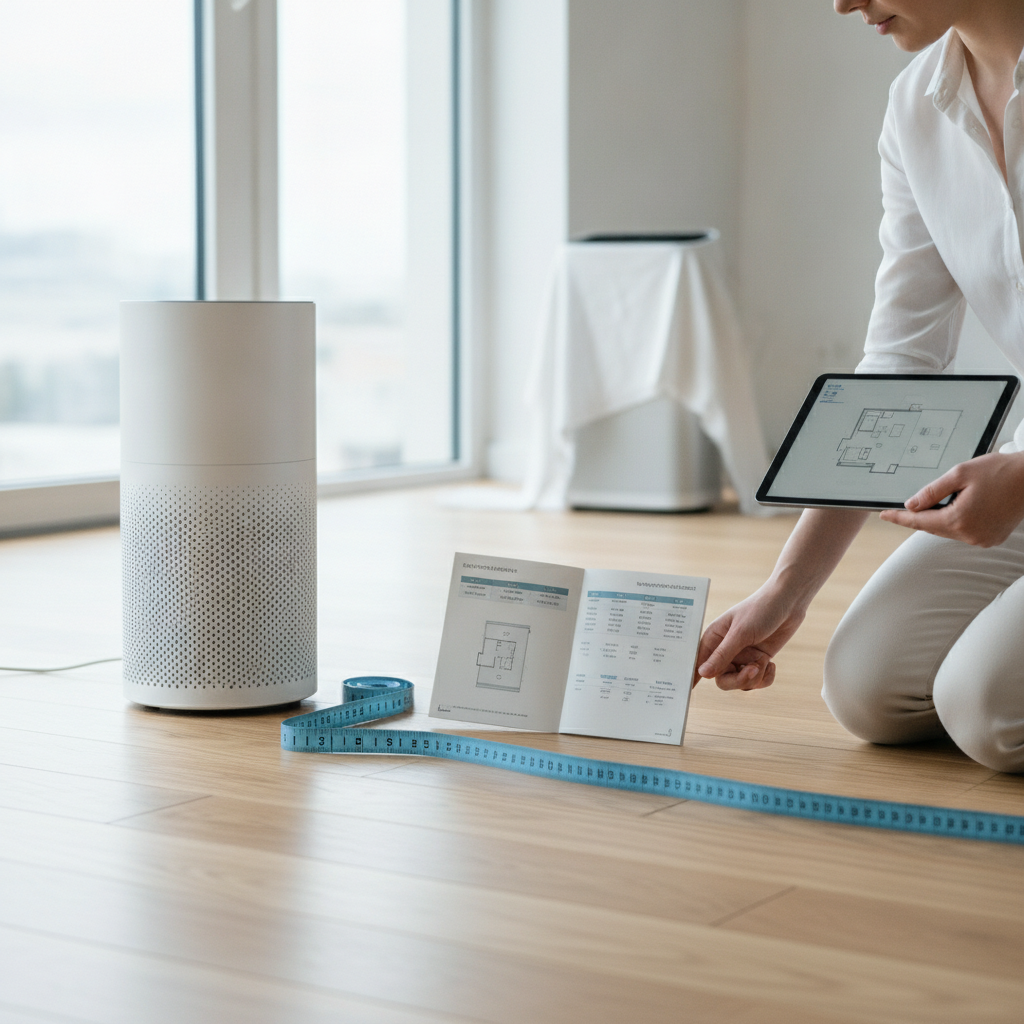
Before purchasing, measure your room length and width, then multiply for square footage. Note your ceiling height — if it's above nine feet, factor that into your calculations. Apply the two-thirds rule to determine your minimum CADR target, then shop within a range of that number rather than above it. If you're buying for a single room, you don't need a whole-home rating. Read the coverage estimate in the product specs, not the headline, and verify it assumes standard ceiling height. Look at filter replacement costs annually — a cheaper unit with expensive filters often costs more over three years than a pricier machine with affordable replacements. Check whether the unit carries AHAM certification, which confirms independent CADR testing rather than manufacturer self-reporting.
CADR ratings are genuinely useful tools for comparing air purifiers — but only when measured against the actual room they're meant to serve. A well-matched unit at a modest price point outperforms an oversized one in every practical category that matters to daily life: energy cost, filter longevity, and noise level. Letting square footage lead the decision, rather than marketing language, keeps both the air and the budget in better shape.