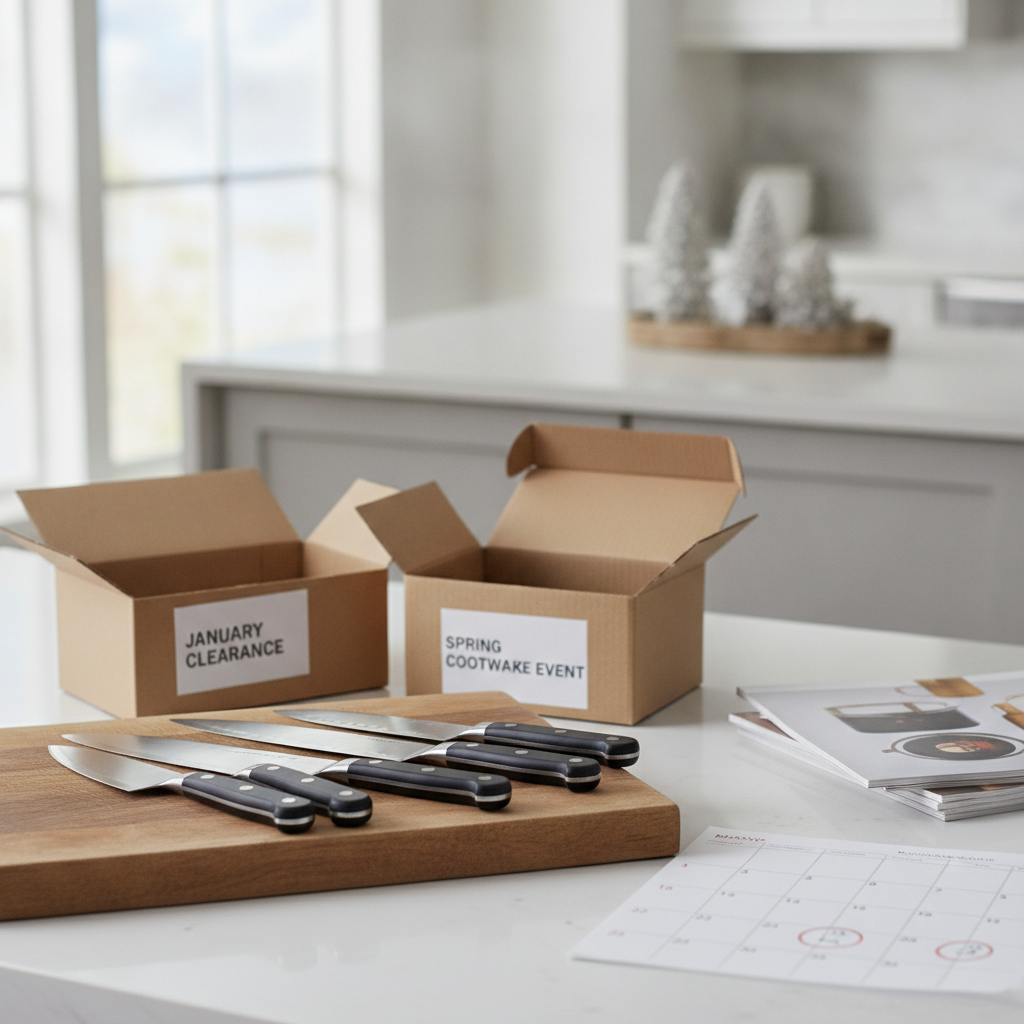
How Timing a Kitchen Knife Set Purchase Around Post-Holiday January Housewares Resets and Spring Cookware Promotions Delivers Better Steel Specifications Than Any Black Friday Bundle
Retail timing shapes the quality of what consumers bring home far more than most shoppers realize, and nowhere is this truer than in the cutlery category. Kitchen knife sets occupy a peculiar space in the housewares market — premium enough to attract serious shoppers, yet bundled often enough to invite the same discount theater that distorts electronics and bedding sales. Understanding when the market genuinely resets, versus when it performs a reset, is the foundation of buying well.
Why Black Friday Cutlery Deals Underdeliver on Steel Quality
Black Friday knife bundles from major housewares retailers tend to prioritize visual appeal and unit count over material integrity. Sets from brands like Cuisinart and Farberware flood big-box shelves in October, designed to photograph well in advertisements rather than hold an edge through years of daily use. The steel specifications in these bundles — typically stamped blades with Rockwell hardness ratings in the lower range — reflect the economics of gift-season production runs, not culinary performance. Retailers order these bundles months in advance, and manufacturers accommodate the price point by adjusting metallurgy accordingly.
The January Housewares Reset and What It Actually Unlocks
After the holiday season closes, major retailers including Williams Sonoma, Crate & Barrel, and Sur La Table conduct comprehensive housewares floor resets to introduce new inventory lines. This transition period — roughly spanning the second and third weeks of January — produces meaningful clearance on prior-season knife sets that were priced for gift buyers, not performance buyers. Crucially, the sets moving through these clearance cycles often include higher-specification blades from reputable manufacturers, discounted simply because the retail floor needs space rather than because anything is wrong with the product. For consumers willing to shop with a specification checklist rather than a gift impulse, this window offers genuine value.
Reading Steel Specifications Before the Price Tag
Knife quality lives in the details that most packaging minimizes: steel alloy designation, Rockwell hardness score, blade construction method, and bolster design. German steel from manufacturers like Wüsthof and Zwilling typically carries a Rockwell rating between 57 and 59, offering a balance of sharpness retention and chip resistance suited to everyday kitchen use. Japanese steel from brands such as Shun runs harder, often between 60 and 66 on the scale, delivering exceptional edge refinement at the cost of slightly more careful handling. Shoppers who understand these distinctions before entering a sale event can evaluate a clearance knife set on its actual merits rather than its original sticker price — a critical difference when January floor resets move both quality and mediocre inventory simultaneously.
Spring Promotions and the Cookware Bundle Opportunity
March through early May introduces a secondary purchase window that many shoppers overlook entirely. Spring housewares promotions — driven by wedding registries, housewarming season, and retailers refreshing their floor sets ahead of summer — create meaningful opportunities to acquire knife sets bundled with complementary cookware at better net specifications than any November sale produced. All-Clad and Misen, among others, run spring promotional periods that bundle cutlery with cookware in ways that allow consumers to compare the knife component against standalone retail pricing. When the knife set within a spring bundle carries higher steel credentials than what Black Friday offered at a similar total price, the bundle math changes substantially in the buyer's favor.
How to Evaluate a Deal Without Getting Distracted by Bundle Size
One of the most common mistakes buyers make during any promotional window is equating piece count with value. A twelve-piece knife block set sounds more substantial than a six-piece set, but if the larger collection includes low-utility pieces — a bread knife of marginal quality, steak knives with no bolster, or hollow-handled units that loosen over time — the per-useful-knife cost rises considerably. When you evaluate a January clearance set or a spring cookware promotion, focus your assessment on the three or four blades you will actually reach for daily: the chef's knife, the paring knife, the utility blade, and optionally a boning knife. The quality of that core group, measured in steel specification and construction method, tells the real story of what the set delivers.
Aligning the Purchase With a Longer Buying Strategy
Patient buying in the housewares category rewards consumers who treat their kitchen as a long-term investment rather than a series of reactive purchases. A well-specified knife set purchased during a January housewares reset or a spring promotional window, chosen for its steel credentials rather than its bundle price, will perform meaningfully longer than a Black Friday set that looked impressive in the box. The annual savings on knife sharpening services, replacement purchases, and the quiet inefficiency of using poorly balanced blades adds up across a decade of cooking. Timing the purchase well is not about waiting for the lowest number — it is about waiting for the moment when the market's inventory and pricing align with the specifications your kitchen actually deserves.
The original observation holds: retail timing shapes quality. Shoppers who resist the November cutlery theater and instead align their purchase with January housewares resets or spring cookware promotions consistently bring home better steel at comparable or lower prices. The knife block sitting on the counter every morning is a daily-use tool, and treating its acquisition with the same deliberate timing applied to any significant household investment is simply smart life management.