
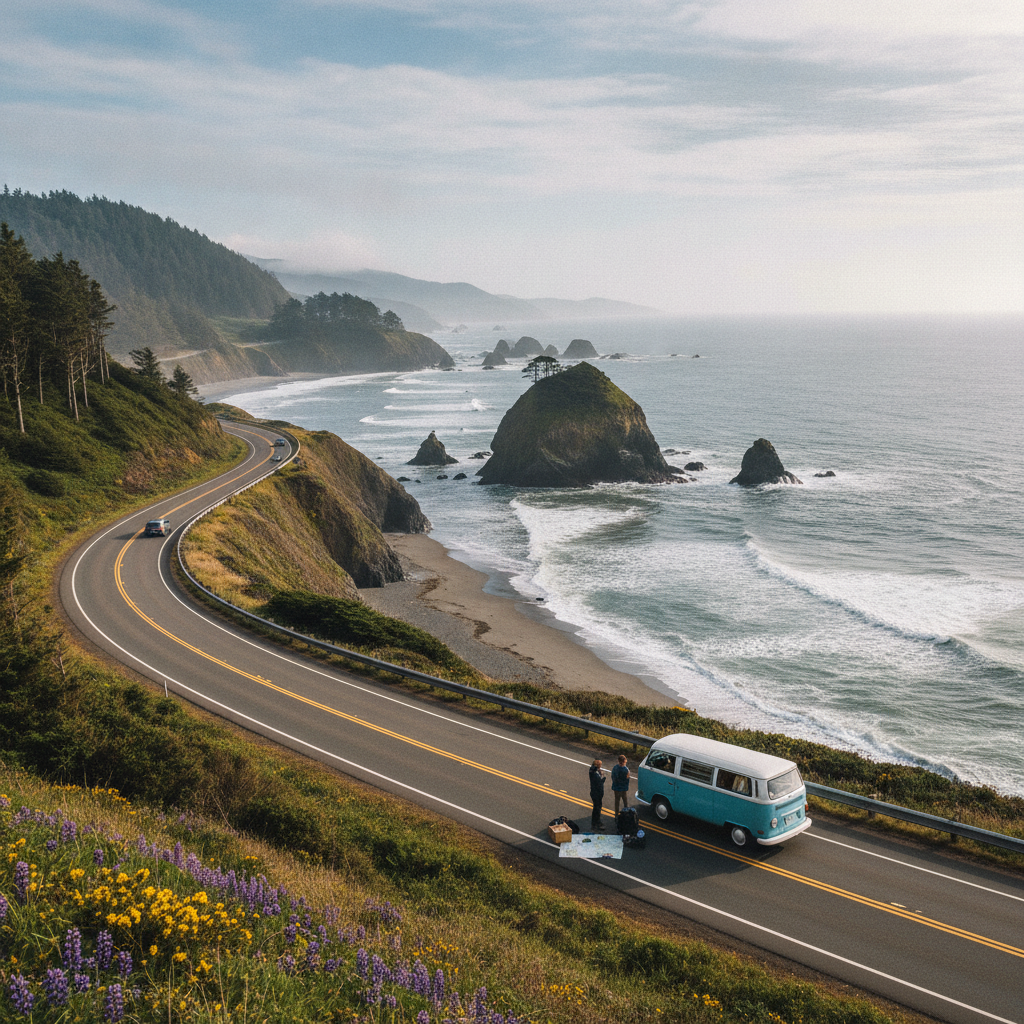
How Planning a Spring Road Trip Along Oregon's Coast Highway 101 from Astoria to Brookings Delivers Dramatic Scenery Without Peak Summer Crowds
Few drives in the continental United States match the sheer variety of what Oregon's Highway 101 delivers — towering sea stacks, old-growth headlands, fishing villages, and beaches so wide they feel borrowed from another planet. The stretch from Astoria in the north to Brookings near the California border runs roughly 360 miles, and it rewards the traveler who shows up before the summer crowds do. Spring — particularly late March through May — transforms this highway into something genuinely special. The light is softer, the wildflowers are out, and you can actually find parking at Cannon Beach.
Time Your Departure for the Sweet Spot Window
The window between mid-April and late May sits squarely in shoulder season territory on the Oregon Coast. Summer tourism kicks into full gear around Memorial Day, which means late May still offers breathing room before prices spike and popular overlooks fill with minivans. Weekday travel during this window gives you even more space. Weather in spring does involve some rain — the coast averages more precipitation than inland Oregon — but that works in your favor at iconic spots where moody overcast skies and crashing surf create photographs far more dramatic than any blue-sky summer afternoon could manage.
Start Strong in Astoria and the Northern Coast
Astoria deserves more than a quick stop. Perched at the mouth of the Columbia River, the city has a working waterfront feel that hasn't been polished into a tourist simulacrum. Climb the Astoria Column for an immediate orientation to the coastline ahead, then head south through Cannon Beach, where Haystack Rock emerges from the surf with the kind of visual authority that earns its reputation. In spring, tufted puffins begin nesting on the rock's upper reaches — a detail that summer visitors often miss entirely because they're busy fighting for parking spaces. Ecola State Park sits just north of town and offers trail access to coastal headlands that feel almost untouched.
Use Mapping Tools That Reward Slow Travel
A straight-shot drive from Astoria to Brookings can technically be completed in a single long day, but that approach misses the entire point. Planning the route with Roadtrippers — a trip-planning platform built specifically for road journeys — lets you layer in state parks, scenic pullouts, and small towns without losing track of where you're sleeping. Google Maps works for navigation, but it tends to optimize for speed. Roadtrippers surfaces the detours worth taking, like the Three Capes Scenic Route near Tillamook, which trades the main highway for a quieter coastal loop that passes Cape Meares, Cape Lookout, and Cape Kiwanda in sequence. That loop alone justifies the extra hour.
Build a Flexible Accommodation Strategy Around the Middle Coast
The stretch between Lincoln City and Florence represents the geographic midpoint of the drive and offers the widest range of places to stay. In spring, you can often book independently owned motels directly rather than competing for inventory through major platforms. That said, using Hipcamp to locate coastal campgrounds and unique stays — including some private properties with ocean access — can unlock accommodation options that don't appear on standard hotel search engines. Yachats, a small town just south of Cape Perpetua, tends to fly under the radar compared to Cannon Beach and Newport but has genuinely excellent lodging options at spring prices that reflect the lower seasonal demand.
Anchor Your Southern Days Around the Oregon Dunes and the Wild Rivers Coast
South of Florence, the Oregon Dunes National Recreation Area stretches for more than 40 miles — a landscape that looks like it was imported from the Sahara and set down between the highway and the Pacific. In spring, the dunes see far fewer off-highway vehicle users than summer, which means quieter trails and better access for hikers. Continuing south, the stretch through Bandon, Port Orford, and Gold Beach brings you into the so-called Wild Rivers Coast, where rivers from the Klamath Mountains pour into the ocean and the coastal bluffs grow steeper and more dramatic. Bandon's Face Rock State Scenic Viewpoint is worth a deliberate stop — the rock formations at low tide read almost architecturally against the spring surf.
Track Tides and Conditions with a Dedicated App
Tide timing matters more on the Oregon Coast than most travelers realize. Tide pools at spots like Cape Perpetua's Thor's Well are significantly more accessible and visually interesting at lower tides, and some beach walks become impassable at high tide. The MyTides app provides accurate tide predictions for specific Oregon coastal locations and lets you plan your stops around optimal windows. Weather on the coast also shifts quickly — the Windy app offers more granular coastal wind and precipitation forecasting than standard weather platforms, which matters when you're deciding whether to hike a headland trail or wait an hour for a squall to pass.
End the Drive Deliberately in Brookings
Brookings sits about 6 miles from the California border and enjoys a microclimate noticeably warmer and sunnier than the rest of the Oregon Coast — locals sometimes call it the Banana Belt. In spring, the area around Alfred A. Loeb State Park blooms with Azalea Festival preparations, and the Chetco River estuary offers quiet kayaking and bird activity that peak in shoulder season. Rather than treating Brookings as a finishing line to cross quickly, give it at least a full day. The town itself is unpretentious and functional, but the natural environment surrounding it — the Kalmiopsis Wilderness to the east, the ocean bluffs to the west — delivers a genuinely satisfying conclusion to the full coastal arc.
Spring road trips along the Oregon Coast are likely to grow more popular as travelers become more intentional about avoiding peak-season pricing and crowding. Route planning tools are improving steadily, shoulder-season accommodation options are expanding, and the appeal of slower, more deliberate regional travel continues to build momentum. If you've been waiting for the right time to make this particular drive, the calendar is already pointing you toward the right window — and the coast will look better in April fog than it ever does in July sunshine.