How Booking a Slow Coastal Drive Through Portugal's Alentejo Coast Between Comporta and Zambujeira do Mar Delivers Uncrowded Atlantic Beauty at Half the Algarve's Daily Cost
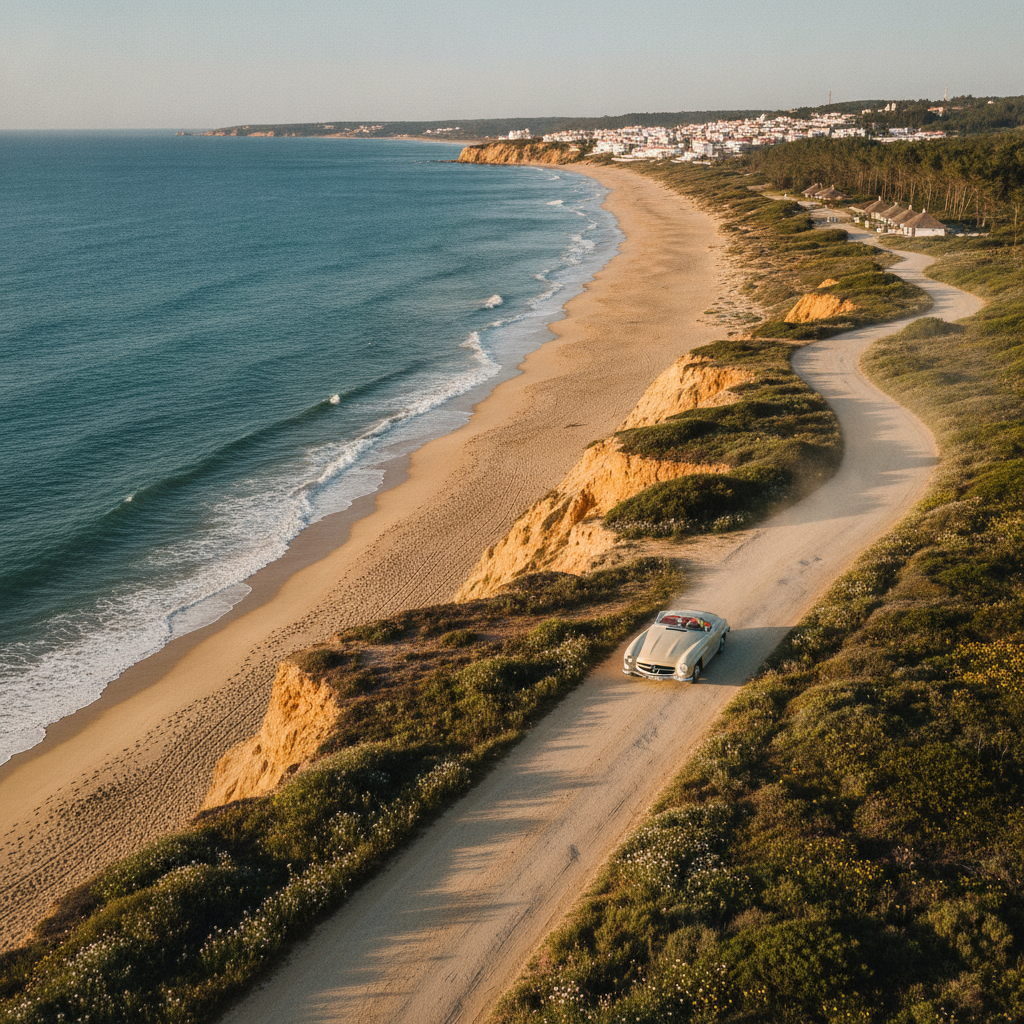
There is a version of Portugal's Atlantic coastline that most visitors never find — not because it's hidden, but because the signage to somewhere else is louder. While the Algarve continues drawing enormous summer crowds to its cliffside lookouts and packed beach towns, the Alentejo Coast stretches quietly northward, offering the same elemental combination of wind-flattened dunes, dark volcanic rock, and cold Atlantic surf at a pace that actually allows you to feel it. The roughly 150-kilometer route between Comporta and Zambujeira do Mar remains one of Western Europe's most underappreciated coastal drives, and the traveler willing to take it slowly discovers that uncrowded doesn't mean underdeveloped — it means the accommodation owners still greet you at the door.
Timing the Drive for Maximum Reward
The Alentejo Coast operates on a different seasonal logic than the Algarve. Late spring — from mid-May through early June — and early autumn — September into mid-October — represent the corridor where conditions align most favorably. Temperatures settle into the mid-twenties Celsius range, the Atlantic winds that characterize this stretch are manageable rather than punishing, and the small guesthouses and rural casas de campo that define the region's accommodation scene are available without advance booking pressure. Midday light in late May falls at an angle that makes the pale sand of Praia de Comporta almost luminous, while the surf beaches near Vila Nova de Milfontes hold warmth into the early evening hours. Summer, by contrast, brings Portuguese families and an influx of European visitors who have discovered that the Alentejo Coast offers what the Algarve used to — and the window of genuine quiet narrows considerably by July. For travelers who build their planning around the travel app Hopper, monitoring this shoulder-season window for flights into Lisbon or Faro typically reveals a meaningful price gap compared to peak-summer departures, giving the budget more room to breathe once on the ground.
The practical rhythm of this drive rewards those who resist the urge to cover distance quickly. Comporta itself, the northern anchor of the route, has evolved into a subtly fashionable destination with rice paddies, flamingos, and a beach culture that feels more considered than chaotic. Spending a night or two here before heading south allows the pace to calibrate naturally. The road south — largely the IC4 and connecting rural routes — passes through cork oak forests and small agricultural towns before the coastline reasserts itself near Cercal do Alentejo. This is not a drive for autopilot navigation; it rewards the traveler who treats Google Maps as a backup rather than a guide, turning toward the Atlantic whenever a rough track looks promising.
Where the Budget Actually Lives
The daily cost comparison between the Alentejo Coast and the Algarve reveals a gap that compounds meaningfully over a week-long trip. Midrange accommodation in the Algarve's established towns — Lagos, Albufeira, Sagres — runs considerably higher than equivalent-quality stays along the Alentejo stretch, where a well-maintained guesthouse in Vila Nova de Milfontes or a rural quinta outside Odemira routinely offers private rooms with breakfast at prices that feel like a different country altogether. Meals follow the same logic: the seafood restaurants along this coast serve the same Atlantic catch — barnacles, razor clams, grilled sea bass — at prices that reflect local rather than tourist-market economics. A long lunch with wine at a family-run tasca near Porto Covo costs a fraction of an equivalent meal in a Ferragudo harbour restaurant, and the experience tends to be quieter and more personal.
For travelers who manage their trip finances through an app like Trail Wallet or track spending across a journey using TravelSpend, the Alentejo Coast consistently produces end-of-day totals that leave meaningful buffer without requiring sacrifice. The key is that the region's tourism infrastructure is scaled to independent travelers rather than resort packages, which means costs are disaggregated and controllable. You pay for what you actually use — a pastry from a padaria in Odemira, a bag of local oranges from a roadside stall, a surf lesson at Praia do Malhão that costs less than a cocktail at an Algarve beach club. That granular control over spending is exactly where the real savings accumulate.
The Coastal Highlights That Make the Drive Worth It
The southern end of the route, anchored by Zambujeira do Mar, sits within the boundaries of the Parque Natural do Sudoeste Alentejano e Costa Vicentina, one of Europe's most protected Atlantic coastlines. The effect is immediately visible: no high-rise hotels, no chain restaurants, no parasol empires on the beaches. The cliffs around Zambujeira drop dramatically to a wide beach that faces the open Atlantic, and the surrounding trails — part of the long-distance Rota Vicentina walking network — allow exploration on foot at a depth that a car window can't provide. The Fishermen's Trail section of the Rota Vicentina runs the full length of this coastline, and even completing a single day's section between two points and returning by car reveals a version of this landscape that rewards genuine attention.
Vila Nova de Milfontes, roughly midway along the route, deserves more than a passing stop. Positioned where the Rio Mira meets the Atlantic, the town has a small historic center, an excellent fish market, and enough character to justify two nights rather than one. Booking platforms like Booking.com surface a range of local accommodation options here at prices that reflect the region's scale rather than its quality — a distinction worth trusting. Porto Covo, smaller and slightly further north, offers a whitewashed village aesthetic and a string of coves that require nothing more than a parked car and comfortable shoes to access fully.
The Alentejo Coast asks less of you financially and logistically than the Algarve, and returns more of what most travelers are actually seeking — space, quiet, and the particular freedom that comes from a road where you can stop whenever the light looks right. That combination is increasingly rare along Europe's Atlantic fringe, which makes the window to experience it without the crowds that will eventually find it worth taking seriously now.