
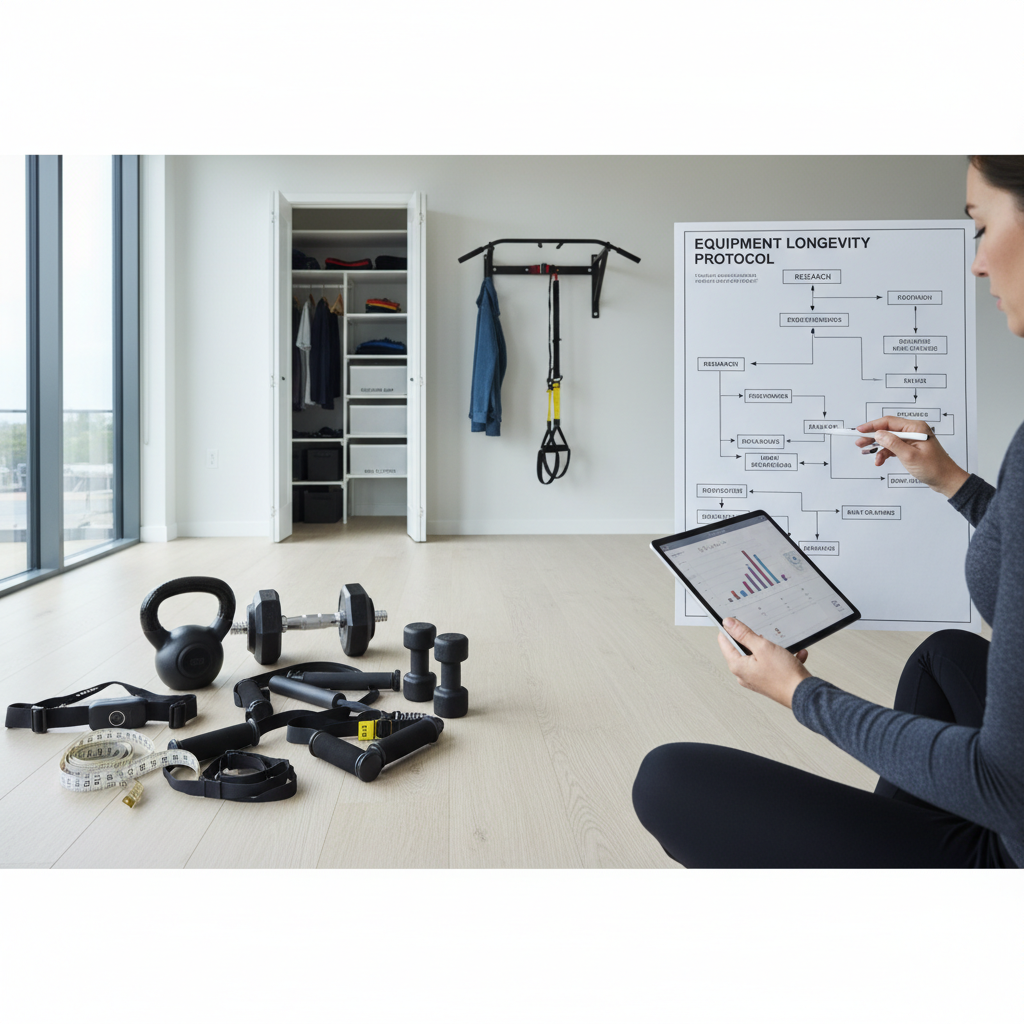
The Science-Based Guide to Buying Home Exercise Equipment That Won't Become Expensive Coat Hangers
The Science-Based Guide to Buying Home Exercise Equipment That Won't Become Expensive Coat Hangers
Walk into any garage sale, and you'll find them: dusty treadmills, unused resistance bands, and exercise bikes that haven't seen action since their first week home. Americans spend over $4 billion annually on home fitness equipment, yet studies show that 80% of purchased equipment goes unused within six months.
As someone who's spent years in sports medicine and exercise science, I've seen the aftermath of poor equipment choices – both financially and physically. The good news? With the right approach, you can invest in equipment that actually enhances your long-term health and gets used consistently.
The Psychology Behind Equipment Abandonment
Before diving into what to buy, let's understand why most home gym investments fail. Research from the American Council on Exercise identifies three primary reasons:
- Overestimation of motivation: People buy based on peak enthusiasm, not realistic usage patterns
- Space constraints: Equipment that doesn't integrate well into living spaces gets avoided
- Complexity barriers: Machines requiring extensive setup or learning curves create friction
The solution isn't to avoid home equipment entirely – it's to buy strategically based on exercise science principles and honest self-assessment.
The 3-Question Filter Before Any Purchase
Before spending a dollar, ask yourself these evidence-based questions:
1. Does This Address Movement Patterns You Actually Enjoy?
Exercise adherence research consistently shows that enjoyment is the strongest predictor of long-term success. Don't buy a rowing machine because it's "efficient" if you hate rowing. Instead, identify activities you naturally gravitate toward and support those.
2. Can You Use It in Your Current Space Without Major Disruption?
A 2019 study in the Journal of Physical Activity and Health found that exercise equipment used in the same space where people spend leisure time gets 300% more usage than equipment relegated to basements or spare rooms. If setup requires moving furniture or traveling to another floor, usage drops dramatically.
3. Does It Support Progressive Overload?
Progressive overload – gradually increasing challenge over time – is fundamental to fitness improvement. Equipment that can't grow with your fitness level becomes obsolete quickly, both functionally and motivationally.
The Evidence-Based Equipment Hierarchy
Tier 1: The Universal Foundations
These items support the widest range of movement patterns and fitness levels:
Adjustable Dumbbells (Budget: $300-600) Research shows free weights activate more stabilizing muscles than machines, improving functional strength. Look for sets that adjust from 5-50 pounds minimum. Quality brands like PowerBlock or Bowflex SelectTech may cost more upfront but offer better durability per pound.
Resistance Bands Set ($30-80) A 2019 systematic review found resistance band training produces strength gains comparable to free weights. Bands excel at:
- Travel portability
- Joint-friendly resistance curves
- Easy storage in small spaces
Choose fabric bands over latex for durability, and ensure the set includes multiple resistance levels.
Yoga Mat ($20-100) Even if you don't do yoga, a quality mat defines your exercise space and supports floor-based movements. Invest in 6mm thickness minimum for joint protection.
Tier 2: The Specialized Workhorses
Kettlebells (Budget: $100-300) Kettlebell training uniquely combines strength, cardio, and mobility work. Start with one moderate weight (25-35 lbs for most people) rather than buying a full set. Master the fundamentals first.
Pull-up Bar ($30-150) Pull-ups target muscles difficult to work effectively with other home equipment. Doorway bars work for most people, but if you have the space, wall-mounted options offer more exercise variations.
Foam Roller ($25-60) While not traditional "exercise" equipment, foam rolling supports recovery and movement quality. Research shows it can improve range of motion and reduce perceived soreness.
Tier 3: The Big Decisions
These require significant space and financial investment. Only consider after consistently using Tier 1 equipment for 6+ months.
Cardio Machines ($500-3000) Treadmills, bikes, and rowers can be excellent investments for cardio enthusiasts, but choose based on activities you already enjoy outdoors. If you never run outside, a treadmill likely won't change that.
Power Racks/Home Gyms ($800-5000) For serious strength training, nothing beats a proper rack system. However, these require dedicated space and significant commitment to barbell training.
The Smart Buying Strategy
Start Small and Scale
Begin with one item from Tier 1. Use it consistently for 2-3 months before adding anything else. This approach:
- Builds sustainable habits first
- Prevents overwhelming your space
- Allows you to learn what you actually need versus want
Buy Quality Where It Matters
Invest more in items you'll handle frequently. Dumbbells with comfortable grips justify higher cost better than premium yoga mats. For electronic equipment, prioritize build quality over features – a simple, reliable treadmill beats a complex one that breaks frequently.
Consider Cost Per Use
Calculate realistic usage over 2-3 years. A $600 adjustable dumbbell set used 3 times weekly costs about $1.25 per workout over two years. Compare this to gym memberships or class fees for perspective.
Test Before Investing
For major purchases, try similar equipment at gyms or friends' homes. Many sporting goods stores have liberal return policies – use them if equipment doesn't integrate well into your routine within the first month.
Red Flags: When Not to Buy
Avoid purchases when:
- You're buying to motivate yourself to start exercising (motivation follows action, not purchases)
- The equipment only supports one type of movement
- You can't easily demonstrate the equipment to a friend (complexity barrier)
- The purchase strains your budget significantly
- You're buying based on infomercial promises rather than proven exercise principles
Making It Stick: Post-Purchase Success Strategies
Owning equipment is just the first step. Research-backed strategies for consistent use include:
Visual Cues: Keep equipment visible in your living space Habit Stacking: Attach equipment use to established routines Progress Tracking: Log workouts to maintain motivation Social Accountability: Share your equipment investment with friends who'll ask about your progress
Key Takeaways
Smart home fitness equipment buying isn't about finding the "perfect" machine – it's about choosing tools that align with your actual behavior patterns and space constraints. Start with versatile, space-efficient basics. Prove consistent usage before scaling up. Prioritize equipment that supports activities you already enjoy rather than trying to buy your way into new preferences.
Remember: the best equipment is what you'll actually use consistently. A simple set of dumbbells used three times weekly beats the fanciest home gym gathering dust. Focus on building the exercise habit first, then let your proven preferences guide future equipment investments.
Your future self – and your bank account – will thank you for taking this measured, science-based approach to home fitness investing.