
Why Centering a Greek Island Trip Around Naxos Instead of Santorini Delivers Richer Experiences at a Third of the Cost
There is a particular kind of traveler who returns from the Greek islands with a vague sense of disappointment — not because the islands were ugly or the water was anything less than extraordinary, but because the experience felt mediated, packaged, and quietly expensive in ways that only became clear in retrospect. Santorini is genuinely beautiful, and no honest observer would argue otherwise. But beauty that has been fully discovered, fully priced, and fully staged for the camera creates a kind of invisible distance between a traveler and the place they've come so far to experience. Naxos, the largest island in the Cyclades, offers something fundamentally different — a Greece that is still primarily oriented around the people who live there rather than the people passing through.
The Economics of Choosing a Different Center
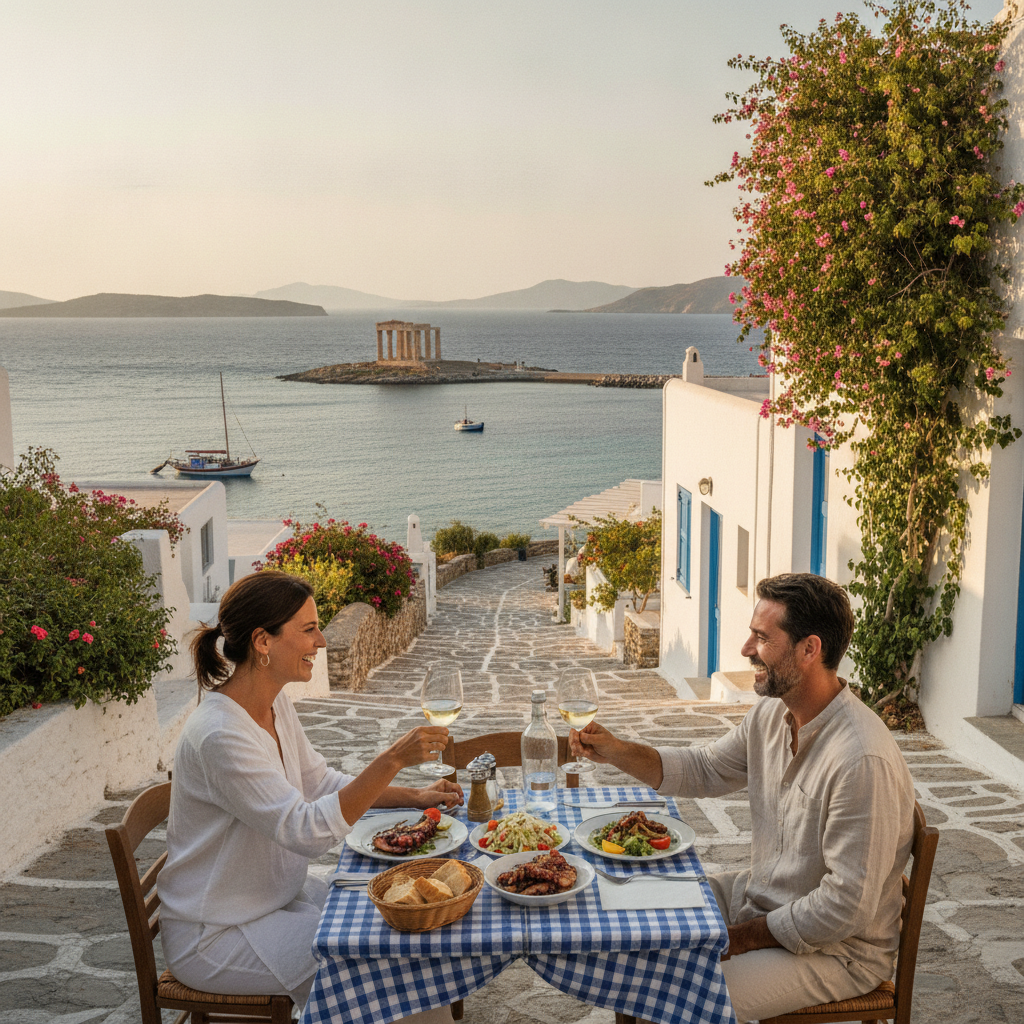
Accommodation costs on Santorini, particularly in the iconic caldera-view villages of Oia and Fira, routinely run three to four times higher than comparable rooms on Naxos — and that gap widens significantly during peak summer months. On Naxos, a well-situated room or small apartment in Naxos Town, the island's capital known locally as Chora, can be secured for what amounts to a modest nightly rate even in high season. Meals follow a similar pattern. The mezes — small shared dishes of tzatziki, grilled octopus, and spanakopita that form the backbone of Greek casual dining — cost roughly half as much at tavernas in Naxos's interior villages as they do at the sunset-facing terraces of Santorini's most photographed spots. Because accommodation and food represent the two largest line items in any travel budget, the savings compound quickly across even a modest week-long trip. The difference isn't sacrifice — it's simply a reallocation away from paying for other people's Instagram backdrops.
What Naxos Actually Offers Beyond the Price Tag
Naxos rewards travelers who are curious rather than merely compliant with popular itineraries. The island's interior — a terrain of marble mountains, Byzantine churches, and Venetian towers called pyrgoi — unfolds across a landscape that most ferry passengers never see because they're focused on the beaches. The village of Halki, sitting in the Tragaea valley, preserves an almost medieval atmosphere of narrow stone lanes and centuries-old olive groves, while Apeiranthos, higher in the mountains, is known for its distinctive Cretan dialect and small but excellent archaeological museum. These aren't manufactured heritage experiences — they're functioning communities where the kafeneion, the traditional Greek coffee house, still serves as the social center of daily life. The contrast with Santorini's tourist-facing commerce couldn't be more pronounced.
The Beach Calculus That Most Guides Undercount
Santorini's beaches — famously dark with volcanic sand at Perissa and Kamari — are striking to look at but have been accommodating paying visitors for so long that the infrastructure around them has grown dense and transactional. Naxos's coastline tells a different story. Plaka Beach, stretching for several kilometers south of Naxos Town, offers fine white sand and clear water in a setting that remains uncrowded by Aegean standards even in summer. Agia Anna and Agios Prokopios, closer to the main port, provide easy access without the commercial saturation that tends to accumulate around equally beautiful beaches in more heavily marketed destinations. Because Naxos draws fewer international visitors relative to its size, the beaches breathe. There's room to exist without performing leisure for a crowd doing exactly the same thing.
Navigating the Island on Local Terms
Naxos is large enough — roughly 430 square kilometers — that renting a small car or scooter for a few days genuinely unlocks a different category of experience. The interior road system connects villages that appear on few tourist maps, and local bakeries in towns like Koronos sell loukoumades — honey-soaked dough fritters that are among the oldest recorded Greek sweets — for a fraction of what a comparable snack costs in Santorini's tourist corridors. The port town itself, dominated by the unfinished Portara archway that dates to the sixth century BCE, is compact and walkable, with a Venetian kastro district rising above the waterfront lanes. Wandering without a fixed agenda here produces the kind of accidental discovery — a ceramics workshop, an unmarked church with extraordinary frescoes, a fisherman mending nets at the edge of the dock — that travel is supposed to deliver but rarely does in places that have been optimized for tourism.
Ferries, Logistics, and the Broader Cyclades Strategy
One practical advantage that rarely appears in destination guides is Naxos's role as a ferry hub within the Cyclades. Regular Blue Star Ferries connections link Naxos to Athens's Piraeus port as well as to smaller nearby islands including Paros, Ios, and Amorgos — making it an efficient base for anyone interested in day trips or brief overnight excursions without paying the airfare premium that Santorini's airport commands. The logic of using Naxos as a home base rather than one stop among many also reduces the logistical friction of constant packing and repacking. Slow travel economics favor this approach: longer stays at a single, less expensive base often cost less in total than shorter stays spread across multiple premium destinations while delivering a more coherent sense of place.
The Kind of Trip That Stays With You
If you've ever returned from a celebrated destination and struggled to explain exactly what moved you about it — if the photographs looked right but something felt hollow at the edges — Naxos offers a corrective that's worth considering seriously. The island's pace is slower not because nothing is happening, but because what's happening is primarily the ordinary life of a community that has existed for millennia. The morning fish market in Chora, the evening volta (the slow promenade along the waterfront that Greeks have practiced for generations), the sound of a priest chanting in a hilltop church at dusk — these are not attractions staged for visitors. They're the texture of a place that hasn't yet been fully translated into a product. That distinction matters, both for the quality of what you experience and for the bill you pay at the end of it. The traveler who sat on Santorini's terrace watching a sunset they'd already seen a thousand times on other people's feeds might find, on a quieter island, something closer to what they were actually looking for all along.