How Booking a Masseria Farmstay in Puglia's Itria Valley Instead of a Lecce Hotel Cuts Costs While Unlocking a Slower, More Authentic Southern Italian Rhythm
There is a particular kind of exhaustion that comes from traveling well but not deeply — from ticking baroque cathedrals off a list, photographing the same piazzas that appear in every travel magazine, and returning home with receipts that outpaced the memories. Southern Italy has long attracted this brand of tourism, and Lecce — the so-called Florence of the South — has become its most polished expression. Yet within an hour's drive of that gilded city, a different Puglia exists entirely, one built around ancient farmhouses, olive groves older than most nations, and a pace of life that doesn't accelerate for anyone.
The Masseria and What It Actually Means
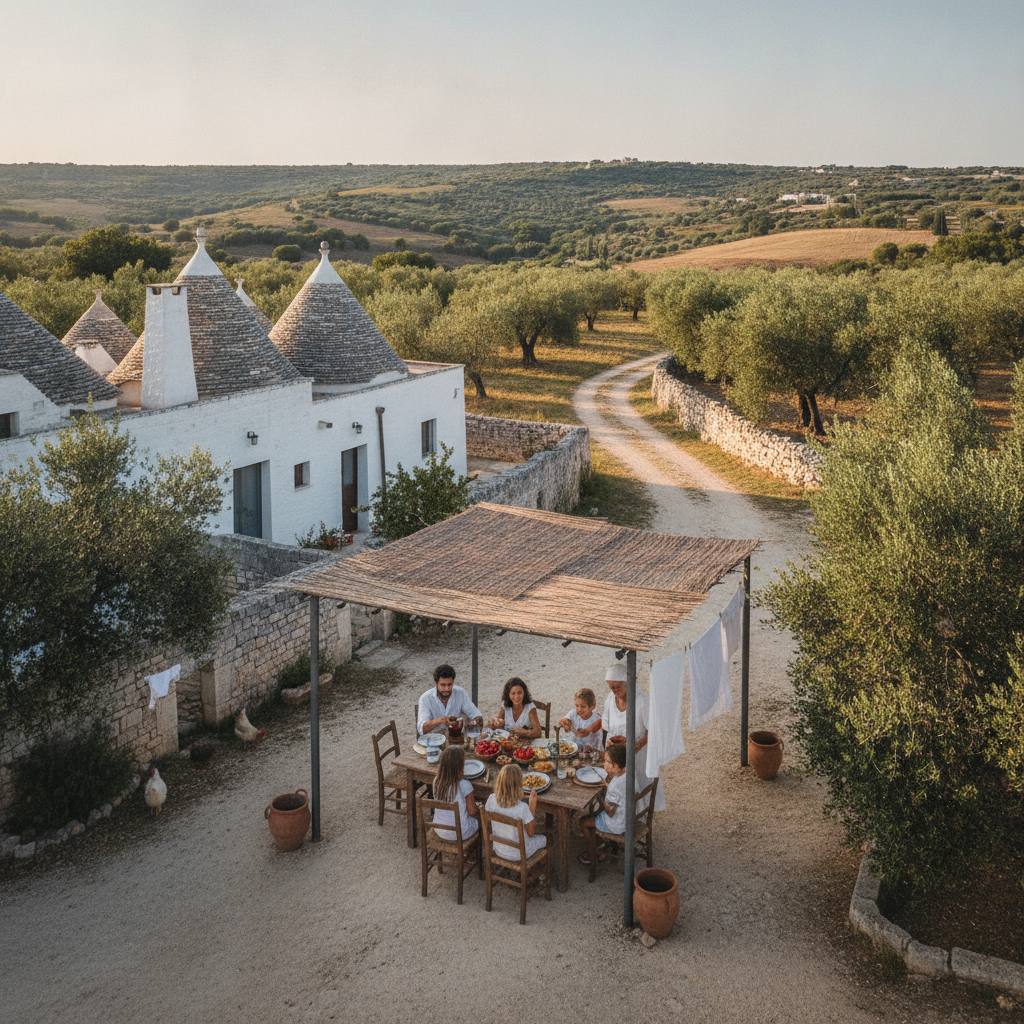
A masseria is a working or historically working farm estate, typically stone-built and fortified, that once served as the agricultural backbone of the Pugliese countryside. Many date to the sixteenth and seventeenth centuries, and the finest examples in the Itria Valley — the gentle, plateau landscape between Alberobello, Locorotondo, and Cisternino — have been converted into intimate guesthouses without losing their essential character. This is not a resort experience retrofitted with rustic aesthetics. The thick walls genuinely keep rooms cool without air conditioning for much of the year. The breakfast olive oil genuinely comes from trees on the property. The silence at night is not engineered; it's simply what the countryside sounds like when a town of twelve thousand people goes to sleep at nine.
For travelers accustomed to hotel districts, the masseria model requires a small mental adjustment. There is no lobby bar open until midnight, no concierge suggesting the same three restaurants that paid for their recommendations. What replaces those conveniences is something harder to quantify: the sensation of being a temporary resident rather than a permanent guest.
Why the Numbers Work in Your Favor
Lecce's hotel market has tightened considerably as the city's profile has risen. Boutique properties in the historic centro storico now regularly command rates comparable to mid-tier accommodation in Rome or Florence, particularly from late spring through September. The masseria model disrupts that pricing logic in a meaningful way. Properties in the Itria Valley, even those offering private pools, farm-to-table dinners, and beautifully restored interiors, tend to price noticeably lower per night because their operating model amortizes costs differently — many grow or produce a portion of what guests consume, and the absence of urban real estate premiums is simply structural.
The savings compound in less obvious ways as well. A masseria stay typically includes breakfast that runs to an hour-long affair of local cheeses, taralli biscuits, and seasonal preserves — a meal that in Lecce would cost twelve to eighteen euros per person at a decent café. Many properties offer optional half-board arrangements that make dinner a non-decision, eliminating the nightly taxi expense into the nearest town and back. When you factor in reduced transportation costs, included meals, and lower nightly base rates, a week at a well-chosen masseria in the Itria Valley frequently undercuts an equivalent week in Lecce by a meaningful margin, without any sacrifice in comfort and with a considerable gain in atmosphere.
The Itria Valley's Quieter Rewards
The Itria Valley presents its landscape in a language that rewards patience. The trulli — the conical-roofed limestone structures that dot the hillsides and cluster most famously in Alberobello — appear first as curiosities and slowly reveal themselves as a coherent architectural tradition shaped by centuries of agricultural practicality and perhaps a degree of tax avoidance mythology. The towns of Locorotondo and Ostuni, both hill-perched and whitewashed, offer the visual drama of a Lecce without the concentrated tourist foot traffic. The strade vicinali — the narrow agricultural lanes that thread between olive groves and dry-stone walls — are navigable by rental car or bicycle and connect villages where a single bar serves as post office, social club, and informal news exchange simultaneously.
This is not a landscape that performs for visitors. It simply continues being itself, which is precisely why spending several nights within it, rather than driving through it between Lecce and Alberobello, changes the nature of the experience entirely.
Choosing the Right Property Without Overthinking It
Platforms like Airbnb and Booking.com list hundreds of masseria-style properties, but the most reliable options tend to be those bookable directly through the property's own website, which often yields better rates and allows for honest communication about what the stay actually involves. Properties around Fasano and Martina Franca have developed a particularly strong reputation for balancing authentic character with considered hospitality. Smaller operations with five to ten rooms tend to offer a more immersive experience than larger properties that have scaled toward resort conventions.
When evaluating options, the practical questions matter as much as the aesthetic ones: Does the property have reliable Wi-Fi if remote work is part of the trip? Is a rental car genuinely necessary, or is the property positioned within walking distance of a village? Are dinner reservations required in advance, and does the kitchen reflect local tradition rather than a generically Italian menu designed for international palates? These details, easily confirmed through a direct inquiry email, separate a genuinely restorative stay from one that simply looks compelling in photographs.
A Different Register of Travel
If you've arrived at the end of this with a growing sense that a Puglia trip centered on the Itria Valley rather than Lecce might suit you better than you initially expected, trust that instinct. The baroque architecture of Lecce will still be there for a day trip — it's less than an hour south of the valley, and an afternoon among its honey-colored facades remains worth the drive. But returning at dusk to a masseria where dinner is already underway, where the only ambient sound is cicadas and the distant clang of a church bell from a town you've come to recognize, is a genuinely different proposition from returning to a hotel corridor. The opening observation holds: some travel exhausts, and some travel restores. The distinction usually comes down to where you sleep, and how slowly the days around that place are willing to move.