
Why Planning a Late-Winter Trip to the Azores in February and March Delivers Dramatic Volcanic Landscapes and Whale Watching Before Spring Crowds Arrive
Few destinations in the Atlantic reward the off-season traveler quite like the Azores. This Portuguese archipelago, scattered across the mid-Atlantic between Europe and North America, sits in a kind of perpetual climatic middle ground — never truly cold, never overwhelmingly hot, and almost always alive with natural drama. February and March occupy a sweet spot that most travelers overlook entirely, which is precisely what makes those months worth circling on the calendar.
The Case for Visiting Before the Spring Rush
The Azores have gained considerable attention over the past few years, and São Miguel — the largest and most visited island — now sees meaningful tourist pressure from late April through September. Traveling in late winter means arriving before that shift happens. Flights are quieter, accommodation in Ponta Delgada is more available and more affordable, and the trails threading through caldera rims and hydrangea-lined lanes belong almost entirely to whoever is walking them. The experience feels less curated and more honest during these months, and that matters when the whole point of coming is to encounter something genuinely wild.
Volcanic Drama at Its Most Atmospheric
The Azores' volcanic origins are on constant display, but February and March add a layer of atmospheric intensity that summer photos simply don't capture. Low cloud often settles around the rim of Sete Cidades, the twin-lake caldera on São Miguel, creating the kind of moody, otherworldly scene that makes the effort of getting there feel earned. Furnas Valley, where thermal springs bubble through the earth and locals slow-cook cozido das Furnas underground, carries a particular mystique in cooler temperatures — steam rising from geothermal vents against a gray-green hillside feels more dramatic than the same scene under August sunshine. The landscape rewards slower movement in these months.
Navigating the Islands Between Weather Windows
Late winter weather in the Azores is famously variable. It's entirely possible to experience sunshine, mist, and passing rain within a single afternoon, which is part of the charm but does require flexibility in planning. Booking accommodations with some flexibility — either refundable rates or extended stays — helps absorb weather-dependent days. Apps like Windy and Yr.no, both of which offer detailed Atlantic island forecasting, give travelers useful short-range windows for planning hikes or boat departures. Building rest days into an itinerary rather than scheduling every hour gives the trip room to breathe around whatever the Atlantic decides to deliver.
Whale Watching Season Opens Early Here
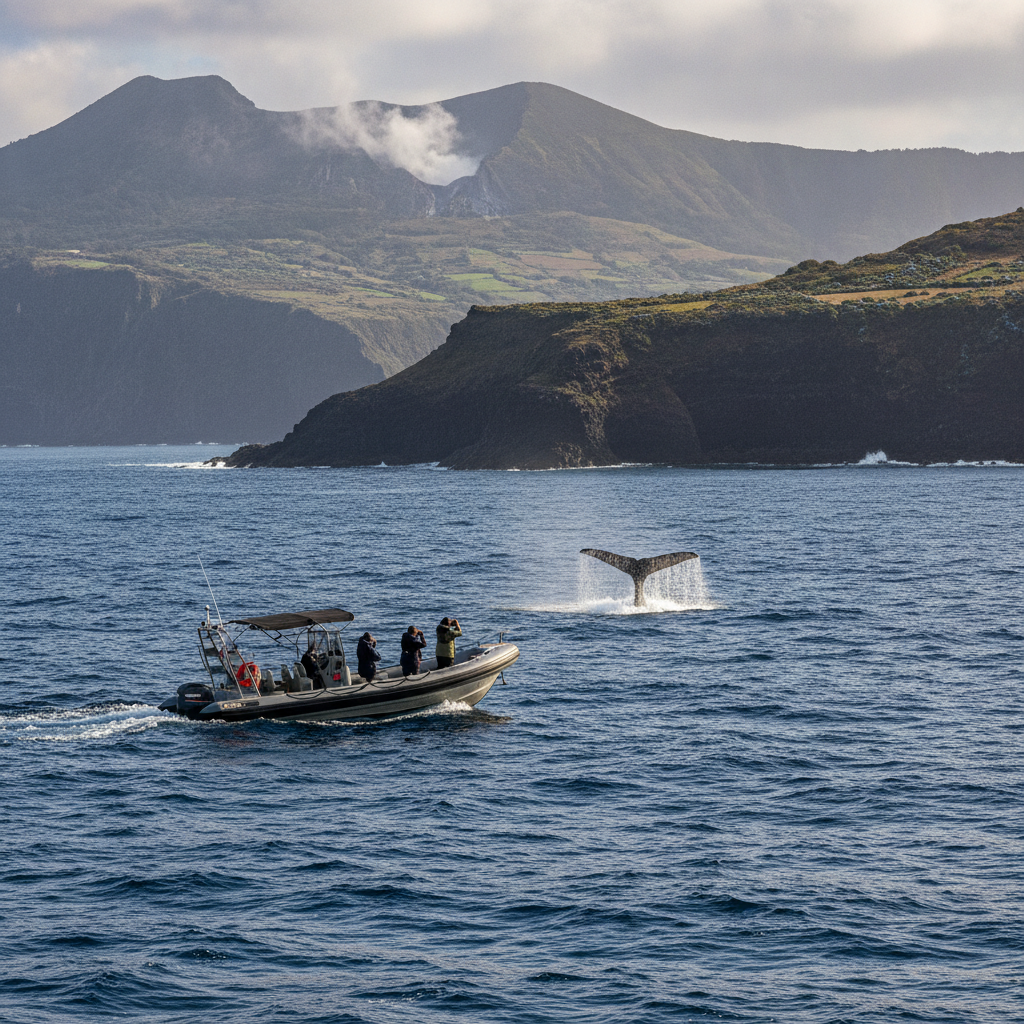
The Azores sit along some of the most productive cetacean waters in the world, and late winter marks the beginning of one of the most reliable whale watching seasons anywhere in Europe. Sperm whales are present year-round in these waters, but February and March bring additional species passing through on migration routes — including sei whales and, on fortunate days, blue whales moving northward through the Atlantic. Several operators on Faial and São Miguel run early-season departures by late February, with smaller group sizes than summer allows. TERRA AZUL, one of the better-known operators on São Miguel, uses rigid inflatable boats and onshore observers — a traditional vigía system — to locate pods before boats even leave the harbor.
What to Expect on the Water
Conditions in late winter can make for lively open-ocean passages, and some travelers find the choppier water adds to the sense of occasion. Bringing proper waterproof layers and booking through operators who monitor sea state carefully makes a meaningful difference in comfort. Morning departures typically offer the calmest windows. The sightings themselves can be extraordinary — sperm whales surface relatively close to shore in the Azores compared to most other destinations, and the depth of the water dropping steeply offshore creates a remarkably concentrated feeding area. A February morning watching a sperm whale sound against a volcanic backdrop is a difficult scene to replicate anywhere else.
Island-Hopping Logic for a Late-Winter Itinerary
Most visitors center their trip on São Miguel, which makes practical sense given the direct flights from Lisbon, London, and several other European hubs operated through SATA Air Azores. However, adding Faial or Pico to the itinerary transforms a pleasant trip into something considerably richer. Faial's Horta marina is a legendary waypoint for transatlantic sailors, and the caldera walk there is one of the finest in the archipelago. Pico's black lava vineyards — a UNESCO World Heritage landscape — carry a stark beauty in late winter light that disappears somewhat under summer greenery. Inter-island flights through SATA connect the major islands in under an hour, making a two or three island trip entirely manageable in ten days.
Where to Stay Without Overspending
Ponta Delgada has accumulated a reasonable range of accommodation options, from converted manor houses in the old town to newer boutique properties near the marina. In February and March, rates run noticeably lower than peak season, and the quieter streets around the town center make the city more pleasant to walk than the warmer months allow. On Pico, small guesthouses and rural tourism properties often offer rooms near the vineyards and coast that provide immediate access to the island's quieter, more austere character. Booking through the property directly, rather than exclusively through platforms like Booking.com, sometimes surfaces rates or inclusions that aggregator listings don't show.
Planning the Trip Around Practical Timing
The late-winter window genuinely closes as April approaches. By mid-April, group tour bookings begin filling whale watching departures, accommodations on São Miguel rise in price, and the trails above Sete Cidades start seeing enough foot traffic that the solitude of an early February morning disappears. Travelers who wait for spring warmth often find themselves at a destination that has quietly shifted from intimate to busy without the transition being entirely obvious in advance. The most practical approach is to lock in flights and key accommodations by early January, leave daily activities loosely planned, and use Google Flights' price tracking alerts to identify the best departure windows from your home city. The Azores in February won't offer every traveler's idea of perfect holiday weather, but for those drawn to dramatic landscapes, extraordinary wildlife, and the feeling of arriving somewhere before everyone else catches on — the timing is nearly ideal.