Why Anchoring a Late-Summer Iceland Trip Around the Snæfellsnes Peninsula Instead of the Golden Circle Delivers Wilder Landscapes and Dramatically Fewer Crowds
Iceland has a crowd problem, and it's almost entirely concentrated in one corner of the country. The Golden Circle — Þingvellir, the Geysir geothermal area, and Gullfoss — is genuinely spectacular, but it's also one of the most visited stretches of road in all of Northern Europe. On a busy August afternoon, you're sharing those famous geysers with coachloads of tourists, jostling for the same vantage points, and paying peak-season prices for accommodation in Reykjavík that books out months in advance. Meanwhile, three hours to the northwest, the Snæfellsnes Peninsula sits largely quiet — volcanic, dramatic, and almost impossibly varied — waiting for the travelers willing to drive past the obvious.
What Makes Snæfellsnes Different From the Typical Iceland Route?
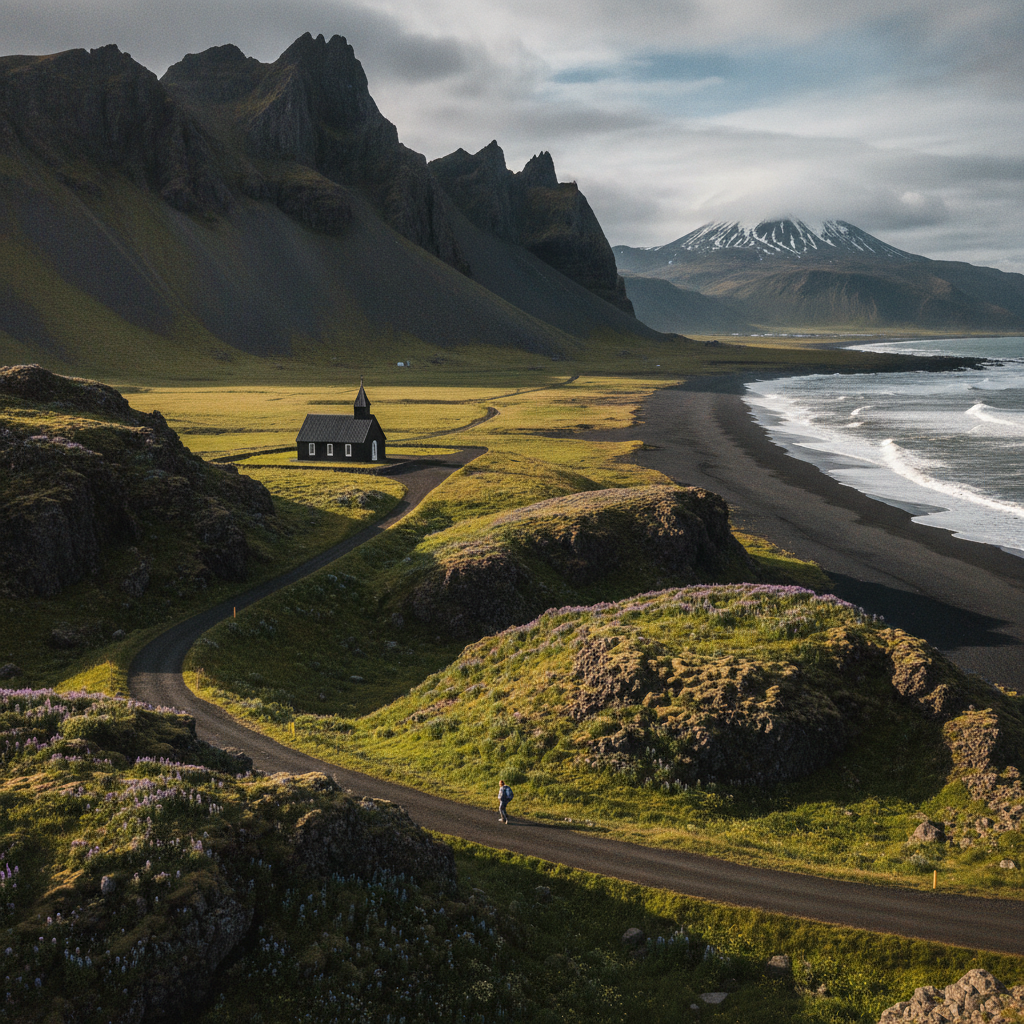
Snæfellsnes is sometimes called Iceland in miniature, and the description earns its keep. Within roughly 90 kilometers of road, you move through black lava fields, whale-watching bays, sea stacks that rise from the Atlantic like sentinels, and the glacier-capped stratovolcano Snæfellsjökull — the same volcano Jules Verne used as the entry point to the center of the earth. The peninsula has all the geological drama Iceland is famous for, compressed into a route you can anchor a multi-night stay around rather than rushing through in a single day. Late summer, meaning late July through mid-September, is the sweet spot: the roads are clear, daylight stretches well past 10 p.m., and the highland colors have started turning amber and rust.
How Does the Timing Actually Work for a Late-Summer Visit?
Planning Your Arrival Window
August and early September offer the most balanced conditions on the peninsula. You avoid the peak crush of mid-July, when even Snæfellsnes sees more visitors, while still having long enough days to explore without headlamps. By mid-August, the lupine fields that carpet roadside shoulders in purple have faded, but the light takes on a warmer, lower quality that photographers tend to prefer. Accommodation options — guesthouses in Grundarfjörður, Stykkishólmur, and Ólafsvík — are still bookable with two to three weeks of lead time, compared to Reykjavík hotels that require months of advance planning during the same period.
Building Your Base on the Peninsula
Staying on the peninsula rather than commuting from Reykjavík changes the entire experience. Booking through Airbnb or Booking.com, you'll find self-catering cottages and farmhouses that put you within ten minutes of Snæfellsjökull National Park's main trailheads. Waking up with a direct view of the glacier before the day-trippers arrive from the capital — a drive most visitors don't want to make twice — means you consistently have popular spots like Djúpalónssandur beach and the Lóndrangar basalt cliffs nearly to yourself before midday.
Which Specific Landscapes Set the Peninsula Apart?
The Western Edge and Glacier Zone
The national park at the peninsula's tip deserves at least a full day on its own. The Snæfellsjökull glacier, even in late summer when its ice cap is partially receded, dominates the skyline from almost every direction. Trails from the Arnarstapi and Hellnar villages wind along sea cliffs where Arctic terns dive and the basalt columns look almost engineered. Hellnar's small cafe is one of the better places on the entire peninsula for a bowl of lamb soup when the wind picks up off the water — and wind is almost always part of the equation out here.
The Northern Coast Toward Grundarfjörður
Kirkjufell, the arrow-shaped mountain near Grundarfjörður, became internationally recognizable through its appearance in various productions and travel photography circles, but it's still quieter than anything on the Golden Circle. Early morning visits before 8 a.m. are practically solitary. The falls beside the mountain, Kirkjufellsfoss, run well through late summer and the combination of mountain, waterfall, and fjord light makes for a genuinely unrepeatable scene. The town of Grundarfjörður itself is functional rather than picturesque, but it has a well-stocked grocery store, a gas station, and a small swimming pool — all the infrastructure you actually need.
How Do You Handle Navigation and Road Conditions?
Road 54, the main circuit around the peninsula, is paved and straightforward for any standard rental vehicle. You don't need a 4x4 for the core route, though having one opens up a handful of interior tracks that reveal even emptier landscape. Apps like Maps.me work well offline for the peninsula's smaller roads where cellular signal drops out, and the Safetravel Iceland app — run by the Icelandic Association for Search and Rescue — is worth having active for real-time road and weather alerts. Weather on Snæfellsnes shifts fast; a clear morning can turn rainy by noon on the southern coast while the northern shore stays bright. Building flexibility into each day rather than locking to a rigid schedule makes the difference between frustration and serendipity.
What Does the Cost Picture Look Like Compared to the Golden Circle?
Accommodation on the peninsula runs noticeably lower than comparable stays in Reykjavík or the Golden Circle corridor towns like Selfoss and Flúðir. Guesthouses in Stykkishólmur and Ólafsvík frequently offer private rooms with breakfast included at rates that would buy you a basic hostel bed in Reykjavík during August. Food costs less too, largely because you're not eating at tourist-facing restaurants engineered around high volumes and premium pricing. Self-catering for two or three nights from the Grundarfjörður grocery store, supplemented by one or two restaurant meals in Stykkishólmur, keeps daily spending manageable without feeling like you're compromising the experience. Gas costs are the same across Iceland, so the extra driving distance from Reykjavík is a real factor — factor roughly half a tank each way in a standard rental.
How Should You Sequence a Snæfellsnes-Centered Trip?
A week-long Iceland itinerary that anchors around the peninsula works well with two nights in Reykjavík on arrival for acclimatization and logistics, three to four nights based on the peninsula, and one night back in Reykjavík before departure. That structure leaves room to stop at Borgarnes on the drive out — an underrated town with a good saga museum and the best lamb burger on the western route — and to linger at Gerðuberg, a basalt column formation just off Route 54 that most Golden Circle itineraries never come near. Using Google Flights to find positioning days around Keflavik gives you the flexibility to extend on either end without dramatically increasing airfare.
The Snæfellsnes Peninsula rewards the kind of traveler who wants Iceland's iconic geological drama without the infrastructure of mass tourism layered on top of it. Late summer gives you long light, accessible roads, and a window before the autumn storms close in — which makes this the ideal moment to start sketching out the route, locking in that peninsula guesthouse, and letting the rest of the itinerary build outward from there.