How Planning a Late-Spring Road Trip Through Montana's Beartooth Highway and Lamar Valley Before Yellowstone's Gate Crowds Arrive Delivers Wildlife and Scenery Without the Summer Bottlenecks
The American West has a narrow window each year when the most dramatic roads are open, the wildlife is active, and the parking lots haven't yet become gridlocked with summer traffic — and late May into early June is exactly that window along Montana's Beartooth Highway and Lamar Valley corridor. Travelers who time their arrival before the national park's summer peak gain something increasingly rare: genuine wilderness access without the logistical frustration that makes Yellowstone feel more like an amusement park than a natural wonder. The strategy isn't about avoiding the destination — it's about choosing the right moment to meet it.
Choose the Right Departure Window for Maximum Access
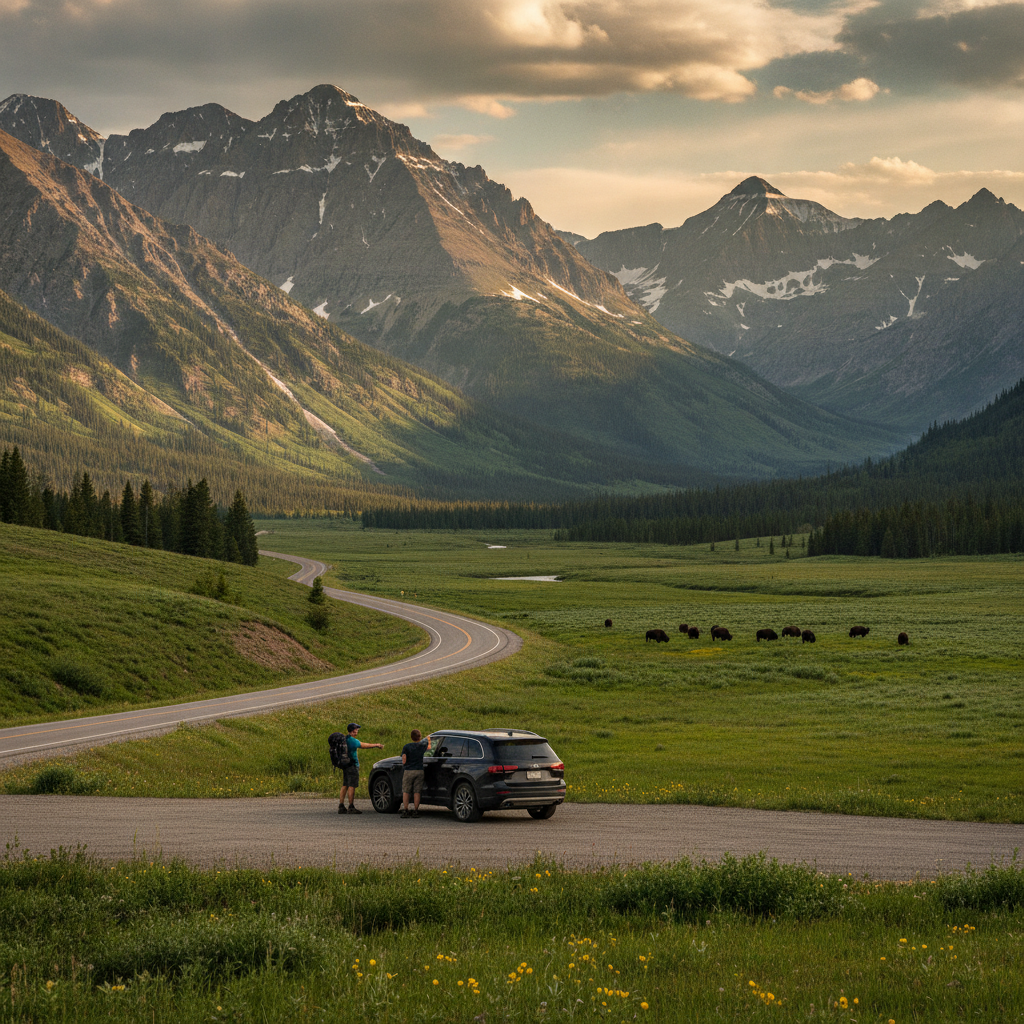
The Beartooth Highway, which connects Red Lodge, Montana to the northeast entrance of Yellowstone, typically opens in late May after the National Park Service completes its snow-clearing operations. Timing a trip for the final week of May or the first week of June positions travelers just ahead of the Memorial Day surge while still catching the road at its most dramatic — snow still piling on the roadside shoulders, alpine lakes just thawing at the edges, and wildflowers beginning to push through the rocky meadows at lower elevations. Most summer visitors don't realize this road exists as a Yellowstone entry point, which means the crowds they're battling at the west and south entrances simply aren't present here.
Check the Highway Opening Date Early
The Beartooth Highway's opening date varies by several weeks from year to year depending on snowfall, so monitoring it closely is essential. The Wyoming Department of Transportation posts real-time road status updates, and checking their site starting in late April gives enough lead time to finalize lodging in Red Lodge before it books out. Red Lodge itself is a compact, walkable mountain town with genuine character — independent restaurants, a Main Street with actual locally owned shops, and proximity to the Beartooth ski area for anyone who wants a half-day detour before the highway heads south.
Use Lamar Valley as Your First Wildlife Priority
Lamar Valley, which sits inside Yellowstone's northeastern section and is accessible directly from the Beartooth Highway's terminus, is often called the Serengeti of North America — and in late May, it earns the comparison more visibly than at any other time of year. Bison calves are born in spring, making herds more active and visually dynamic than the stationary summer groups tourists photograph from the roadside. Wolf packs, reintroduced into the park decades ago and now thriving, are easiest to spot during morning and evening hours when they move through open meadows. Bears emerging from winter dens also concentrate in valley corridors at this time, foraging on early grasses and winter-killed ungulates.
Use iOverlander and Gaia GPS for Route Planning
Two apps worth downloading before the trip are iOverlander and Gaia GPS. iOverlander aggregates community-sourced campsite and road condition data from travelers who've recently driven the same routes, which is particularly valuable on a corridor where conditions shift rapidly in late spring. Gaia GPS allows offline topographic maps of the entire Beartooth and Lamar region, so navigation doesn't depend on cellular coverage — which disappears quickly once the highway climbs above the treeline. Together, they remove the uncertainty that can make ambitious spring mountain driving feel riskier than it actually is.
Plan Lodging Strategically Along the Corridor
The lodging calculus along this route is different from other national park approaches. Because most visitors enter Yellowstone through the west or south entrances, the accommodations in Red Lodge, Cooke City, and Silver Gate — the small cluster of businesses just outside the northeast entrance — stay available well into late May at rates that drop sharply compared to July. Silver Gate and Cooke City offer only a handful of cabin-style properties, which means they fill up on weekends, but mid-week availability remains reasonable through early June. Booking directly through property websites rather than third-party platforms often unlocks rates that aren't listed on aggregators, and many small operators in this corridor will hold a reservation with a simple phone call.
Consider a Two-Night Red Lodge Anchor
Spending two nights in Red Lodge at the start of the trip before driving the Beartooth serves a practical purpose beyond logistics. The town sits at a lower elevation than the pass itself, which gives the body time to adjust to altitude before tackling the summit — the Beartooth reaches over ten thousand feet at its highest point, and headaches from rapid elevation gain are common for lowland travelers who drive straight through without acclimatizing. A slow evening in Red Lodge, a morning walk, and a second night after returning from the first Lamar Valley day provides a sensible physical rhythm that makes the whole trip more enjoyable.
Build Your Itinerary Around Dawn and Dusk Wildlife Windows
Wildlife activity in Lamar Valley peaks in two narrow windows each day: roughly the ninety minutes around sunrise and the ninety minutes before sunset. Structuring each park day around these windows — rather than treating wildlife viewing as a continuous activity — dramatically increases the chances of meaningful sightings while leaving the middle of the day free for driving the interior park roads, stopping at hot spring boardwalks, or simply sitting in one of the valley pullouts with binoculars and patience. A quality pair of binoculars is arguably the most important piece of equipment for this trip; wolves and bears in Lamar are often at distances where the unaided eye sees only movement.
Download the NPS App Before Entering the Park
The National Park Service's official NPS app includes downloadable offline maps for Yellowstone that update regularly with road closures, thermal area conditions, and construction alerts. In late May, some interior park roads may still be partially closed from winter damage, and checking the app the evening before each driving day prevents wasted time on roads that haven't fully reopened. The app also includes ranger-led program schedules, which run on a smaller scale in late spring than summer but tend to be far more intimate — five to fifteen people instead of fifty.
Account for Late-Spring Weather Without Over-Preparing
Late May in this corridor means accepting a degree of meteorological unpredictability that summer visitors simply don't face. Snow is possible at Beartooth Pass even in early June, afternoon thunderstorms can materialize quickly at elevation, and morning temperatures in Lamar Valley can hover well below freezing even when daytime highs reach the sixties. Layering effectively — a thermal base, a mid-layer fleece, and a waterproof shell — covers the full temperature range without requiring a massive gear investment. The reward for tolerating a bit of weather variability is considerable: light after a storm in the Beartooth is extraordinary, and a Lamar morning with mist rising off the river while bison move through frost-covered grass is a scene that no summer visitor will witness.
The logic of a late-spring Beartooth and Lamar Valley road trip ultimately comes down to prioritization. Anyone who values genuine wildlife encounter over Instagram-friendly convenience, and open road over bumper-to-bumper traffic, will find that this corridor in late May delivers exactly the experience that Yellowstone promises in its marketing but struggles to provide in July. Booking the first lodging anchor now, setting a calendar reminder to monitor the highway opening date, and downloading the mapping tools ahead of time turns an ambitious idea into a trip that's actually ready to happen — without the summer crowd that will be planning the same route three months later.