
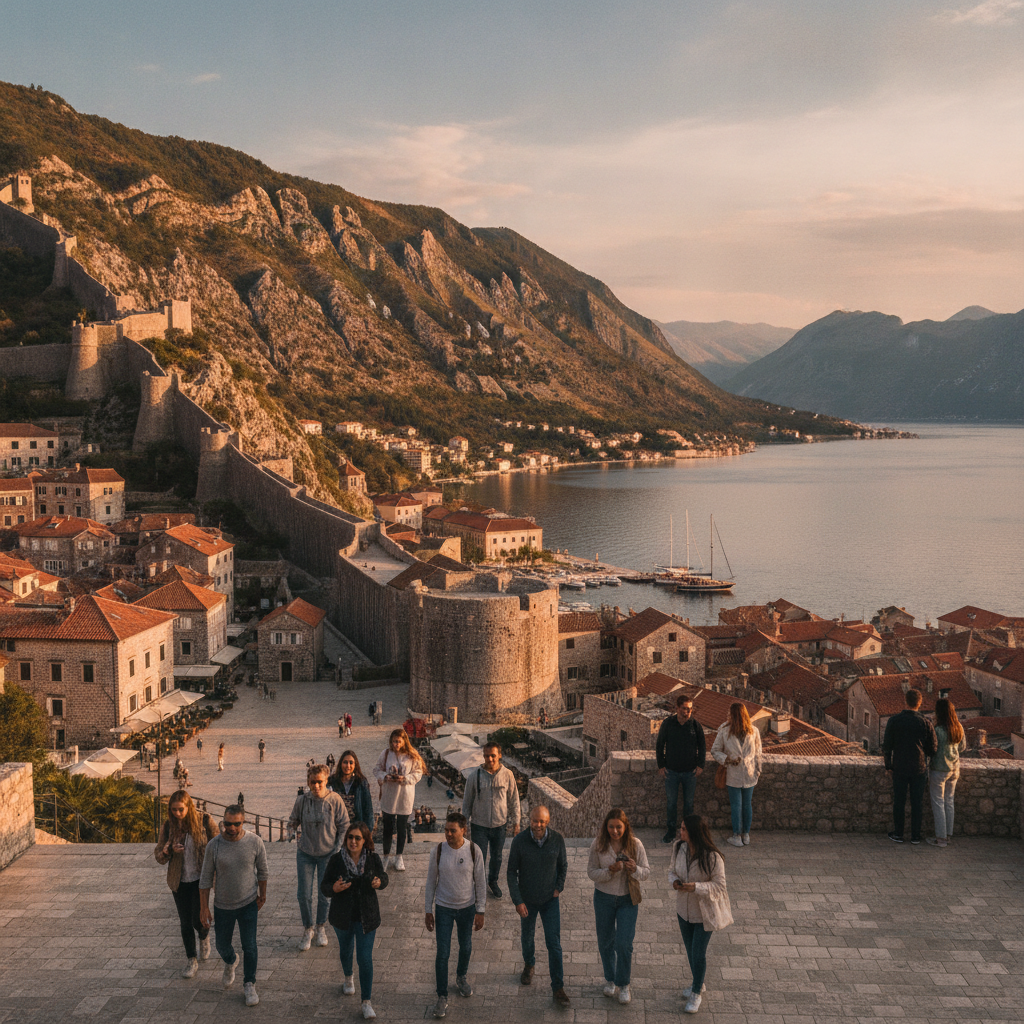
Why Anchoring a Late-Spring Balkans Trip Around Kotor Instead of Dubrovnik Delivers Comparable Medieval Beauty at Half the Accommodation Cost and a Third of the Crowds
Travellers have been discovering that Western Europe's most celebrated medieval cities aren't always the ones worth centering your trip around. The Adriatic coast holds two walled old towns separated by just three hours of driving — one consistently overrun, one consistently underestimated. If you're planning a late-spring Balkans trip and still defaulting to Dubrovnik as your anchor, it's worth pausing to look at what Kotor, Montenegro actually offers in comparison.
Understand What You're Actually Comparing
Both cities sit on dramatic coastlines, both have well-preserved medieval walls, and both attract visitors who want that specific combination of old stone, blue water, and warm Mediterranean light. Dubrovnik is genuinely beautiful — nobody disputes that. But the experience of being there in May increasingly resembles an outdoor theme park rather than a living town. Cruise ships dock daily, the main streets feel managed rather than inhabited, and the accommodation market reflects demand that has little connection to local economic reality. Kotor, by contrast, is a UNESCO-listed old town tucked into the Bay of Kotor — one of Europe's most dramatic natural harbors — where the experience still feels like somewhere people actually live.
Choose Your Timing Window Carefully
Why Late May Is the Kotor Sweet Spot
The window between late April and mid-June changes the Adriatic coast dramatically. Temperatures in Kotor sit in the mid-20s Celsius during the day, the Adriatic water is cool but swimmable by late May, and the mountain trails above the old town are accessible without summer's punishing heat. Coastal Montenegro gets genuine summer crowds from July onward, so arriving in late May puts you ahead of the main wave while still catching long golden evenings and fully operational restaurants and accommodation.
Why the Same Timing Doesn't Save You in Dubrovnik
Dubrovnik's crowd problem now starts earlier in the calendar than it used to. By early May, cruise ship traffic is already substantial, and the city's accommodation inventory is largely absorbed by tour operators booking months ahead. Late spring used to be the reliable shoulder window for Croatia's Dalmatian coast — that window has compressed significantly over the past several years. The city's own management authorities have implemented tourist entry controls, which signals the pressure the place is genuinely under.
Run the Real Cost Comparison
Accommodation Is Where the Gap Is Most Visible
The accommodation difference between the two cities during late May is where smart travel budgeting becomes tangible. A well-located guesthouse room inside Kotor's old town walls — stone floors, wooden shutters, walking distance to everything — runs at a fraction of what a comparable property in Dubrovnik's old town commands. You're not sacrificing character or location; you're simply paying a price that reflects a less saturated market. Booking platforms like Booking.com show this gap clearly when you run parallel searches for the same dates, and it's worth doing that exercise before you commit either direction.
Daily Costs Follow the Same Pattern
Restaurant meals, coffee, and casual spending inside Kotor's old town run noticeably cheaper than comparable options in Dubrovnik. Montenegro uses the euro despite not being an EU member, so there's no currency conversion friction, but the cost base remains lower across most categories. A sit-down dinner with local wine near Kotor's central square will cost you materially less than the equivalent meal on Dubrovnik's Stradun. Over five or six days, that gap compounds into real money that you can redirect toward experiences, a side trip, or simply keeping your overall travel budget intact.
Plan Your Base and Day Trips Strategically
Kotor as a Hub, Not Just a Stop
One of the practical advantages of anchoring in Kotor is what it puts within reach. The Bay of Kotor itself — Boka Kotorska — contains multiple villages accessible by local ferry or a short drive. Perast, a tiny baroque village with two island churches visible from the waterfront, is thirty minutes away and genuinely one of the most photogenic spots on the Adriatic. The mountain road up to Lovćen National Park offers panoramic views across the bay. Using Google Maps or Maps.me for offline navigation makes self-guided driving around the bay practical and low-stress, even on Montenegro's narrow coastal roads.
Crossing Into Croatia Without Making Dubrovnik Your Base
Nothing stops you from visiting Dubrovnik as a day trip from Kotor. The drive takes roughly two and a half hours, the border crossing into Croatia is straightforward with a valid passport, and a full day gives you genuine time inside the old town walls without the cost of sleeping there. You see what you came to see, you walk the walls, you have lunch, and you drive back to a quieter, cheaper place to sleep. Apps like Komoot are useful for planning the route and identifying stops along the Dalmatian coast on the way there or back.
Manage the Logistics Without Overcomplicating Them
Getting to Kotor typically routes through Tivat Airport, which is served by a growing number of European carriers, or through Dubrovnik Airport with a rental car for the drive south. Renting a car is genuinely worth it in Montenegro — public transport between villages is limited, and the flexibility to move along the bay on your own schedule is part of what makes the area work as a multi-day base. Car rental booked through Rentalcars.com lets you compare options across local and international providers in one place, which matters in a market where pricing varies considerably. Booking accommodation directly with smaller guesthouses after checking rates on a platform often yields better rooms and occasionally a small discount for direct contact.
What to Watch for as the Region's Profile Rises
Kotor's relative obscurity is already shifting. The Bay of Kotor has appeared more frequently in mainstream travel media, and late-spring visitor numbers are climbing year on year. The cost and crowd advantages that exist now aren't guaranteed to hold at the same level indefinitely — the same trajectory played out in Dubrovnik over the past two decades. Traveling the western Balkans in the next few late-spring seasons captures a window that is genuinely open but not permanent. If you've been building a travel budget and holding it for a trip worth taking, anchoring that trip around Kotor while the timing still works in your favor is a decision that holds up well across every dimension — financial, experiential, and practical.