
How Booking a Houseboat Stay on Kerala's Backwaters Instead of a Kochi Hotel Delivers a More Immersive South Indian Experience at a Comparable Price
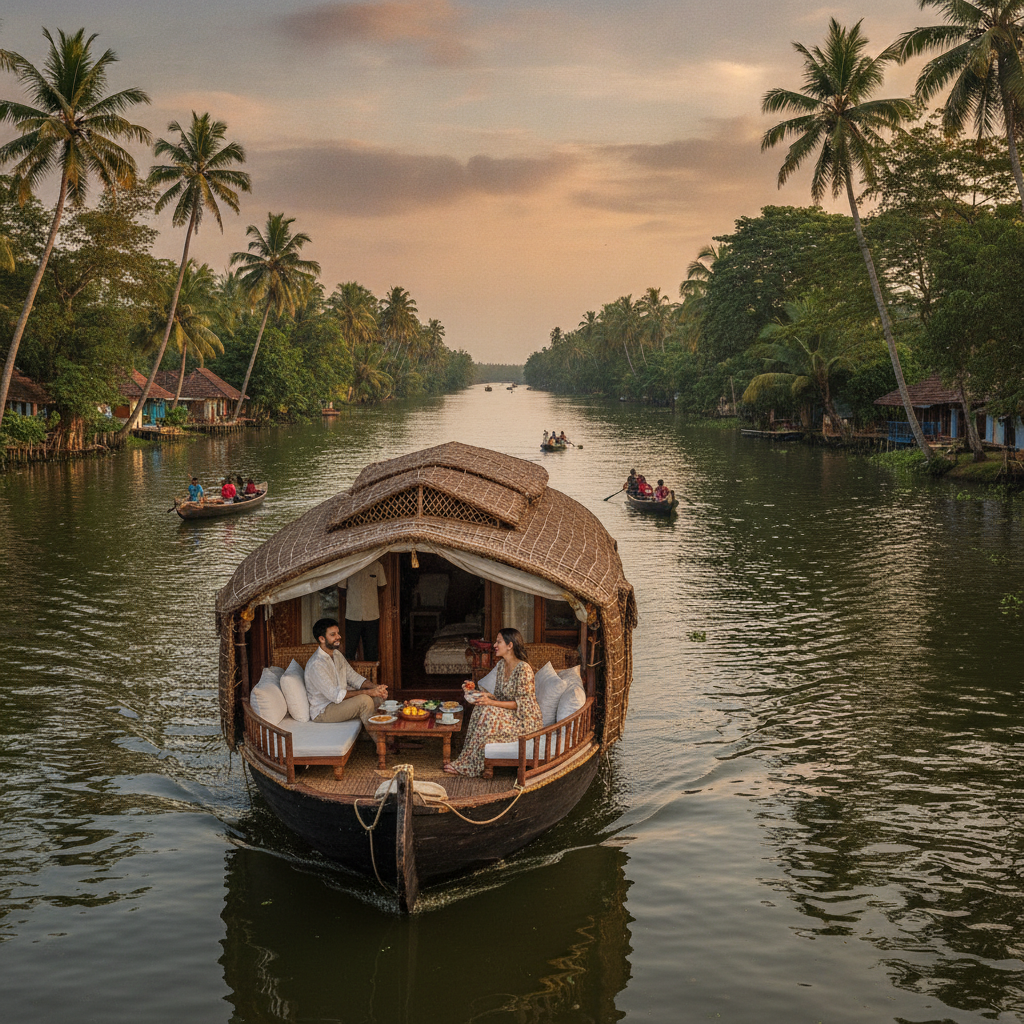
There is a particular kind of travel that stays with a person long after the suitcase is unpacked — not the kind built around monuments and menus, but the kind shaped by slowness, by water, by a rhythm entirely foreign to ordinary life. Kerala's backwaters offer exactly that. While Kochi remains one of South India's most celebrated cities, with its colonial spice warehouses, vibrant Fort Kochi art scene, and reliable hotel infrastructure, a growing number of travelers are discovering that swapping even two nights of that urban stay for a kettuvallam — the traditional rice barge converted into a floating guesthouse — delivers something the city cannot: genuine immersion in a living, breathing landscape.
The True Cost Comparison Worth Making
The assumption that houseboat travel is a luxury indulgence dies quickly once the actual numbers are examined. A well-appointed kettuvallam accommodating two travelers on the Alleppey backwaters — Alleppey being the town most travelers use as their departure point, roughly ninety kilometers south of Kochi — runs at rates broadly comparable to a mid-range hotel room in Fort Kochi's tourist corridor. The houseboat rate typically bundles accommodation, onboard meals prepared by a dedicated cook, and the services of a captain who steers the vessel through narrow canals fringed with coconut palms. When those same components are separated out from a Kochi hotel stay — dining at restaurants, booking excursions, paying for transport — the houseboat begins to look less like a splurge and more like quiet efficiency. The value isn't hidden; it's simply packaged differently.
What the Backwaters Actually Are
The Kerala backwaters are not a single body of water but an intricate network of interconnected canals, rivers, lakes, and lagoons stretching along the state's southwestern coast. Vembanad Lake, the largest of these, serves as the centerpiece of the system and is visible from many houseboat routes. The waterways pass through paddy fields at water level, small fishing communities where children wave from wooden jetties, and stretches of toddy shops — establishments serving the fermented coconut sap drink called kallu — that appear suddenly on the bank and disappear just as quickly. Chinese fishing nets, called cheena vala, angle over the water at intervals, their counterweighted frames rising and falling in a slow mechanical rhythm that hasn't changed in centuries. This is not a reconstructed cultural experience designed for visitors; it is simply how this part of Kerala lives, and the houseboat moves through it without disruption.
The Daily Rhythm Aboard a Kettuvallam
Mornings on the backwaters begin with the smell of coconut oil and the sound of water against the hull. A typical onboard breakfast consists of appam — the lacy, fermented rice crepe with a soft, pillowy center — served alongside coconut milk or a vegetable stew in the Kerala style, which is lighter and more aromatic than the dish its English name might suggest. The vessel moves through the morning hours, docking occasionally near small markets or temple ghats, then rests through the midday heat in a wider stretch of canal where the light turns everything golden. Evenings bring karimeen pollichathu, the pearl spot fish marinated in spices and wrapped in banana leaf before being cooked directly over flame — a dish so closely associated with the backwaters that ordering it anywhere else feels slightly beside the point. The entire rhythm is unhurried in a way that a Kochi hotel simply cannot replicate, regardless of its amenities.
Choosing the Right Booking Approach
The houseboat market in Alleppey is substantial and varies considerably in quality. Budget operators exist at the lower end, and discerning travelers benefit from spending a little time on platforms like Airbnb, Kerala Tourism's official portal, or specialist operators such as Xandari Riverscapes, which manages vessels with better environmental practices and more consistent hospitality standards. Booking directly through the Kerala Tourism Development Corporation is another credible route, particularly for travelers who want government-vetted options with transparent pricing. The key variables to confirm before booking are whether the vessel is a single-deck or double-deck design — single-deck boats sit lower on the water and feel more connected to the landscape — and whether the cook prepares meals using fresh, locally sourced ingredients rather than pre-packaged alternatives. A brief email exchange before booking usually reveals a great deal about an operator's standards.
Beyond the Boat: What Surrounds It
Spending two nights on the water doesn't preclude experiencing Kochi altogether; it simply reframes the visit. Most travelers combine a day or two in Fort Kochi — wandering the Dutch Cemetery, watching Kathakali performers rehearse at the Kerala Kathakali Centre, or exploring the Indo-Portuguese architecture of Mattancherry — with their backwater time. The two experiences complement each other naturally. Kochi provides the historical and urban context of a region shaped by centuries of Arab, Portuguese, Dutch, and British trade; the backwaters provide the agrarian, spiritual, and ecological counterpoint. Together, they form a more complete portrait of Kerala than either could offer alone. Travelers who skip the backwaters entirely in favor of a longer urban stay often sense, afterward, that something essential slipped past them.
A Slower Kind of Return
There is something worth returning to in that opening observation about the travel that stays. The canal at dawn, with mist sitting low over the paddy fields and a cormorant drying its wings on a weathered post — that image doesn't require a filter or a caption. It simply persists. The kettuvallam moves through it at the pace of the water itself, and the traveler aboard it is not consuming a place so much as briefly belonging to it. That quality of experience, achievable at a price point comparable to a decent city hotel, is precisely what thoughtful travelers have always been searching for, and Kerala's backwaters have been offering it quietly all along.