How Booking a Canal Boat Holiday on England's Inland Waterways Delivers a Slower, Cheaper Alternative to European City Breaks
There is a particular kind of exhaustion that follows a European city break — the sore feet from cobblestones, the queue fatigue, the restaurant receipts that somehow exceeded every careful estimate. The long weekend in Amsterdam or Prague promised escape but delivered a compressed version of modern busyness, just with a different skyline. Against that backdrop, England's inland waterways offer something genuinely different: a holiday that moves at the speed of thought rather than the speed of budget airline transfers.
The Culture of Narrowboating
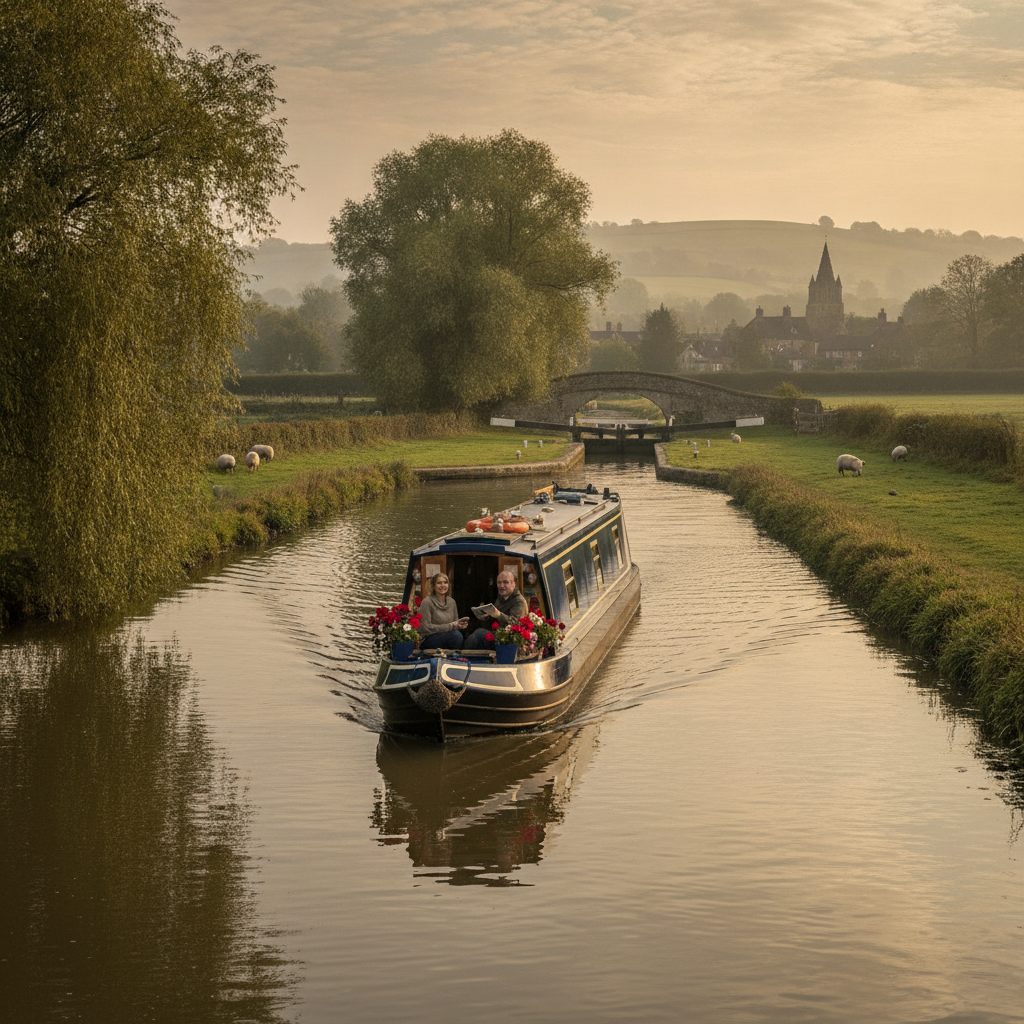
The narrowboat — a long, slender vessel originally built to carry cargo along England's industrial canal network — has evolved into one of the country's most distinctive leisure crafts. Canal culture in Britain carries its own quiet vocabulary: gongoozlers are the people who watch canal activity from the towpath with easy fascination, winding holes are the wider sections of canal where a boat can turn, and lock-wheeling describes the satisfying work of cycling ahead to prepare locks before the boat arrives. These terms belong to a living tradition that stretches back to the late eighteenth century, when the canal network formed the circulatory system of the Industrial Revolution. Hiring a narrowboat for a week means inheriting a piece of that history, operating a craft through the same stone locks and under the same brick bridges that have witnessed two and a half centuries of English working life.
What the Waterways Actually Cost
The financial comparison between a canal boat holiday and a European city break becomes striking when examined honestly. A week's hire on a six-berth narrowboat through operators like Alvechurch Boat Centres or Black Prince Holidays typically covers accommodation, fuel, and the boat itself — costs that would otherwise appear as separate line items for hotel rooms, restaurant meals, and daily transport in a city like Barcelona or Florence. Groceries purchased at canalside market towns like Nantwich, Stratford-upon-Avon, or Llangollen replace the restaurant dependency that quietly inflates city break budgets. A family or group of friends splitting the hire cost of a narrowboat often discovers the per-person expense lands considerably below what a weekend flight and two nights in a mid-range European hotel would demand — without the hidden costs of checked luggage, airport transfers, or the near-compulsory museum entry fees that punctuate major city tourism.
Moving Through the English Countryside
The pace of a canal holiday is governed not by timetables but by geography. Narrowboats travel at roughly four miles per hour — a speed at which herons take off unhurried from the bank, canal-side pubs remain visible long enough to make decisions about stopping, and the surrounding countryside transitions slowly enough to absorb properly. The Grand Union Canal, which stretches from London northward through the Midlands, passes through a version of England that rarely appears in travel photography: working farms, village cricket grounds visible over hedgerows, towns that have not reorganized themselves around visitor expectations. The Llangollen Canal in North Wales carries boats across the Pontcysyllte Aqueduct, an extraordinary feat of Georgian engineering that holds a UNESCO World Heritage designation and delivers a sensation — crossing 126 feet above the River Dee on an iron trough barely wider than the boat — that no European city itinerary replicates. These encounters accumulate differently from city break highlights; they arrive unexpectedly and linger rather than being ticked from a list.
Practical Preparation Without Prior Experience
One of the persistent misconceptions about narrowboating is that it requires specialist knowledge or a maritime background. In practice, most hire companies provide a thorough handover of two to three hours covering engine operation, lock-working technique, and mooring procedure — sufficient for a complete beginner to handle a canal boat with reasonable competence by the end of the first afternoon. The Canal and River Trust, which manages the waterway network across England and Wales, publishes detailed waterway guides and the Canalplan AC route planner allows prospective hirers to calculate travel distances, lock counts, and realistic daily mileage before departure. Licenses and insurance are typically included in hire fees, leaving the practical preparation focused on provisioning, route selection, and the minor mental adjustment of accepting that the journey is the destination rather than an inconvenience to be minimized.
The Slower Alternative Worth Choosing
What the canal holiday provides that the European city break structurally cannot is unscheduled time — hours that belong entirely to whoever is holding the tiller, watching the towpath, or sitting on the roof reading while the countryside passes. The rhythm of lock-working, which requires the whole crew to participate in raising and lowering the heavy wooden beams called balance beams, introduces a form of cooperative physical effort that most modern travel arrangements have eliminated entirely. Meals cooked in the narrowboat's compact galley kitchen using provisions from a canalside farm shop become the kind of unhurried domestic event that city break itineraries compress into fifteen-minute lunch breaks between attractions. Sleep aboard a moored narrowboat, in countryside quiet broken only by water sounds and early morning birdsong, tends to arrive earlier and last longer than sleep in an urban hotel a street away from the nightlife that drew everyone there in the first place.
The traveler who boards a narrowboat at the start of a week's hire rarely returns to the same conviction that speed and density are what make a holiday worthwhile. The canal moves slowly, the lock gates open one at a time, and the market town that appears around a long bend in the cut — the cut being the colloquial term for an artificial canal channel — offers exactly enough for an afternoon without demanding more. There is a lesson embedded in that pace that reaches beyond the holiday itself, about the particular value of choosing experiences that cannot be rushed and the unexpected richness that emerges when the day's achievement is measured in miles traveled gently rather than sights efficiently processed. The person who stood in an airport queue, budget airline boarding pass in hand, looking for an escape — they may well find it not across the Channel but along a quiet stretch of English water, moving at four miles per hour toward nowhere urgent.