
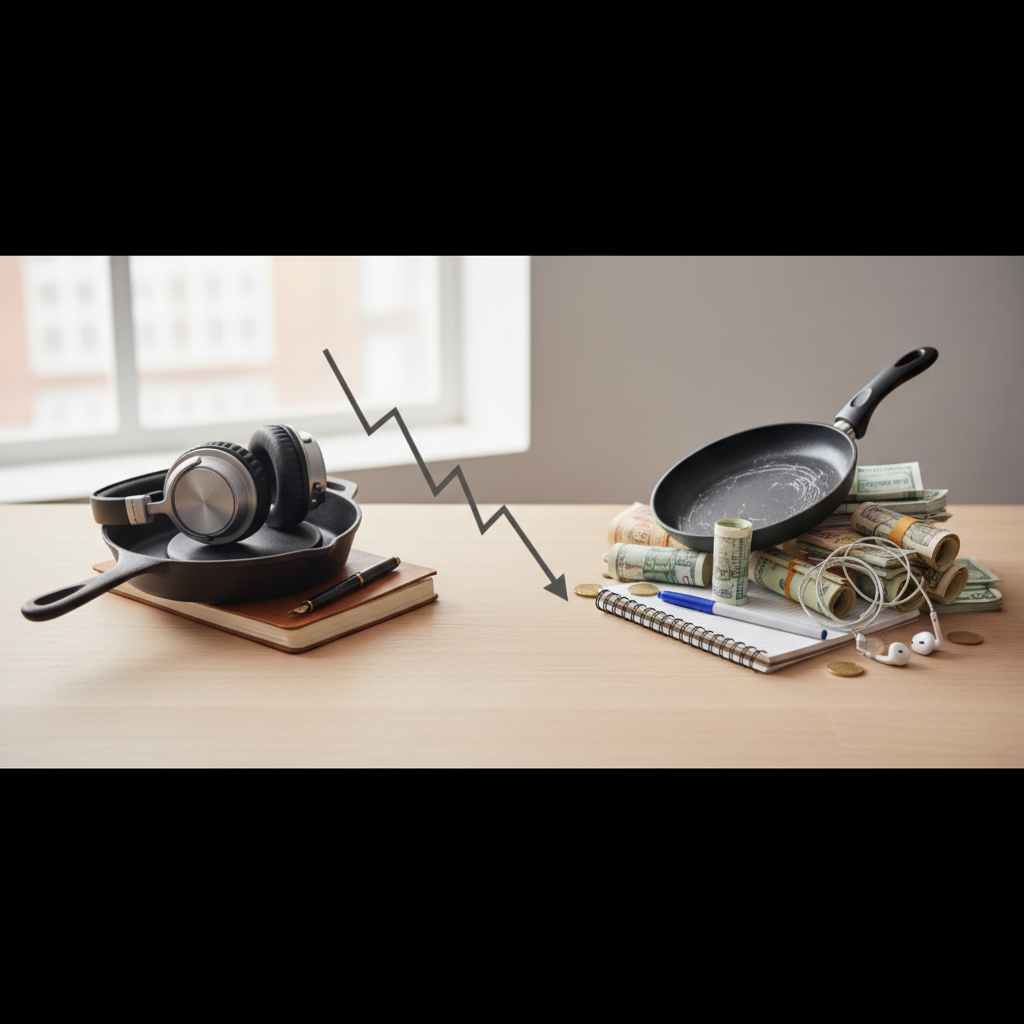
The 'Buy It for Life' Myth: When Cheap Products Actually Save You More Money
The 'Buy It for Life' Myth: When Cheap Products Actually Save You More Money
I used to be obsessed with the "buy it for life" philosophy. You know the drill – spend more upfront on premium products that'll supposedly last forever, and you'll save money in the long run. I bought expensive boots, premium kitchen knives, and top-tier electronics, all while patting myself on the back for being financially savvy.
Then I did the math. After tracking my purchases for three years, I discovered something that shattered my worldview: sometimes the cheap option actually saves you more money, even when you factor in replacements.
Don't get me wrong – there are definitely items worth splurging on. But the "buy it for life" mentality has become so pervasive that we've stopped thinking critically about when it actually makes sense. Let me share what I've learned about when to embrace the cheaper alternative without guilt.
The Hidden Costs of "Premium" Products
Technology Trap
Here's where the buy-it-for-life philosophy falls apart most dramatically: technology. I once bought a $300 "professional-grade" router that was supposed to last a decade. Two years later, WiFi 6 became standard, and my expensive router was suddenly outdated.
Meanwhile, my neighbor bought a basic $50 router every two years, always staying current with technology. Over five years, he spent $125 while I spent $300 for inferior performance.
The lesson: For rapidly evolving technology, cheaper replacements often beat expensive longevity.
The Maintenance Reality
Expensive "lifetime" products often come with hidden maintenance costs that budget alternatives don't have:
- Premium leather boots need regular conditioning and resoling ($50-100 annually)
- High-end knives require professional sharpening ($20-30 per knife)
- Luxury appliances need specialized parts and service technicians
I calculated that maintaining my "lifetime" leather boots cost me $400 over five years, on top of the initial $250 purchase. A friend who bought $60 work boots every 18 months spent $200 total over the same period.
When Cheap Makes Perfect Sense
Categories Where Budget Wins
Exercise Equipment: Unless you're a serious athlete, basic equipment works just as well. A $20 yoga mat performs identically to a $120 "premium" one for occasional use.
Basic Tools: For occasional DIY projects, harbor freight tools are perfectly adequate. That $15 drill will handle hanging pictures and assembling furniture just fine.
Kitchen Gadgets: Specialized kitchen tools you'll use monthly (not daily) don't need premium versions. A $12 mandoline slicer works as well as a $80 one for most home cooks.
Cleaning Supplies: Generic cleaning products often contain identical active ingredients to name brands. I switched to store-brand cleaners and saved $200 annually with zero difference in performance.
The Usage Formula
Here's my simple calculation to determine if cheap makes sense:
Cost per use = Total cost ÷ Expected uses
For items you'll use less than weekly, the premium version rarely justifies its cost. A $200 pressure washer used twice yearly costs $50 per use in the first two years. A $60 version costs $15 per use.
Smart Strategies for Embracing "Good Enough"
The 30-Day Test
When I need something new, I buy the cheapest acceptable version first. After 30 days, I evaluate:
- How often did I actually use it?
- What specific features did I miss?
- Would I pay 3x more for those missing features?
This approach has saved me thousands by revealing that "good enough" is usually perfect.
The Replacement Budget Method
Instead of buying one expensive item, I budget for multiple cheap replacements:
- Phone cases: $8 cases every 6 months vs. $50 "lifetime" case
- Workout clothes: $15 shirts replaced annually vs. $60 "performance" shirts
- Basic electronics: Cheap chargers, cables, and accessories with replacement budget
Quality Indicators That Actually Matter
When buying cheap, focus on these quality indicators:
- Safety certifications (UL, CE marks for electronics)
- Basic functionality over premium features
- Reasonable warranty (even 90 days shows manufacturer confidence)
- Positive reviews for core performance, not luxury features
When to Still Buy Premium
The Daily Driver Rule
For items used daily that affect your comfort or productivity, premium often wins:
- Mattress and pillows: You spend 8 hours daily here
- Work chair: Direct impact on daily comfort and health
- Primary shoes: Worn 8+ hours daily
- Cookware basics: One good pan used daily beats five cheap ones
Safety-Critical Items
Never go cheap on safety:
- Bike/motorcycle helmets
- Smoke detectors
- Car tires and brakes
- Electrical components in your home
The Professional Tool Exception
If you make money with a tool, invest in quality. A carpenter needs premium tools; a weekend warrior doesn't.
The Psychological Freedom of "Good Enough"
Embracing cheaper alternatives has given me unexpected psychological benefits:
- Less purchase anxiety: No agonizing over "the perfect" expensive choice
- Freedom to experiment: Cheap trial runs help me understand my actual needs
- Reduced attachment: I'm not emotionally invested in protecting expensive items
- More liquid cash: Money not tied up in premium products is available for opportunities
Key Takeaways: Rethinking Your Buying Strategy
The "buy it for life" philosophy isn't wrong, but it's often misapplied. Here's my framework for smarter buying:
- Technology: Almost always go cheaper and replace more frequently
- Occasional use items: Cheap versions usually sufficient
- Daily drivers: Consider premium for comfort and durability
- Safety items: Never compromise
- Professional tools: Match investment to usage intensity
Remember, the goal isn't to be cheap – it's to be strategic. Sometimes the most expensive choice is buying something premium you barely use, while the smartest choice is a $20 item that serves your actual needs perfectly.
Stop feeling guilty about choosing "good enough." Your wallet will thank you, and you might discover that good enough is often better than you thought.