
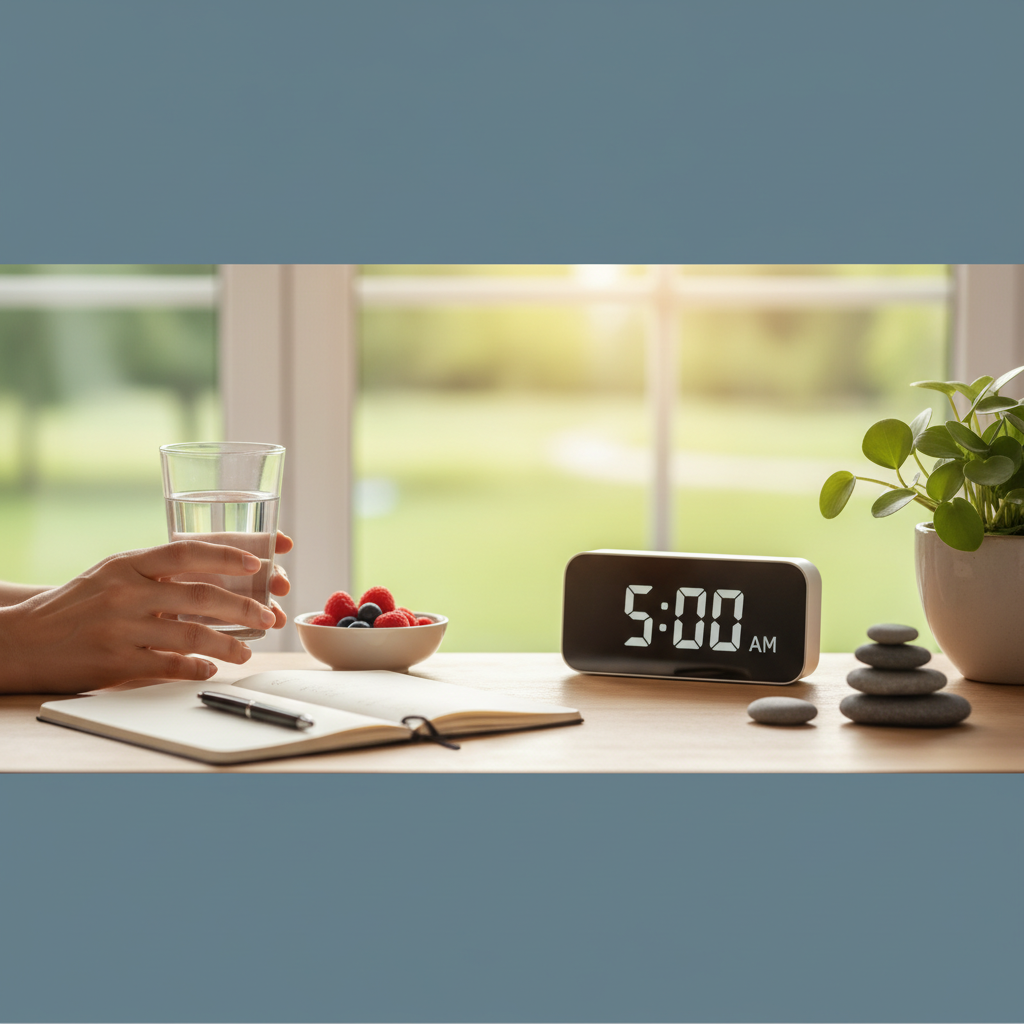
The 5-Minute Morning Routine That Could Add Years to Your Life: Science-Backed Habits for Longevity
The 5-Minute Morning Routine That Could Add Years to Your Life: Science-Backed Habits for Longevity
What if I told you that five minutes each morning could be the difference between aging gracefully and struggling with preventable health issues later in life? As someone who's spent years translating complex medical research into practical advice, I've discovered that longevity isn't about dramatic lifestyle overhauls—it's about consistent, evidence-based micro-habits that compound over time.
The concept of a "longevity routine" might sound daunting, but research from Harvard's School of Public Health and the Blue Zones studies consistently show that simple daily practices can add 7-10 years to your lifespan while dramatically improving your quality of life. The key is starting small and building momentum.
Why Morning Habits Matter More Than You Think
Your morning routine sets the biological tone for your entire day. When you wake up, your cortisol levels are naturally elevated (this is good!), your willpower is at its peak, and your body is primed for establishing patterns. Research published in the European Journal of Social Psychology found that it takes an average of 66 days to form a habit—and morning habits stick 40% better than those attempted later in the day.
More importantly, certain morning activities can trigger what researchers call "positive cascade effects." These are beneficial biological processes that continue working in your favor throughout the day, even after the activity is complete.
The Science-Backed 5-Minute Longevity Routine
Minute 1: Hydrate with Purpose (0:00-1:00)
Start with 16-20 ounces of water, but here's the twist: add a pinch of high-quality sea salt and a squeeze of lemon. This isn't just about hydration—you're optimizing your electrolyte balance and supporting your circadian rhythm.
The science: After 6-8 hours without water, your blood volume decreases by up to 8%. This simple rehydration practice has been shown to:
- Improve cognitive function by 23% within 30 minutes
- Support kidney function and reduce long-term cardiovascular strain
- Kickstart your metabolism by up to 30% for the next hour
The lemon provides vitamin C and citric acid, which enhance mineral absorption, while the sea salt replenishes electrolytes lost during sleep.
Minute 2: Activate Your Lymphatic System (1:00-2:00)
Spend one minute doing gentle body movements—think arm circles, shoulder rolls, neck rotations, and gentle twisting. Nothing strenuous, just awakening your body's natural detoxification system.
The science: Your lymphatic system doesn't have a pump like your cardiovascular system does. It relies on muscle contractions to move lymphatic fluid, which carries toxins away from your tissues. Research from the Journal of Alternative and Complementary Medicine shows that just 60 seconds of gentle movement can increase lymphatic flow by up to 15 times.
This simple practice supports:
- Enhanced immune function
- Reduced inflammation markers
- Better cellular waste removal
- Improved energy levels throughout the day
Minute 3: Breathe for Brain Health (2:00-3:00)
Practice what I call "4-7-8 plus gratitude" breathing:
- Inhale for 4 counts
- Hold for 7 counts
- Exhale for 8 counts
- Repeat 2-3 times while thinking of one thing you're grateful for
The science: This breathing pattern activates your parasympathetic nervous system and has been shown in studies from Stanford's School of Medicine to:
- Lower cortisol levels by up to 23%
- Improve heart rate variability (a key marker of longevity)
- Increase telomerase activity (the enzyme that protects your chromosomes from aging)
- Enhance prefrontal cortex function, improving decision-making all day
The gratitude component isn't just feel-good fluff—neuroscientist Dr. Rick Hanson's research shows that combining breathwork with gratitude creates measurable changes in brain structure that support emotional resilience and stress management.
Minute 4: Strengthen Your Foundation (3:00-4:00)
Do a 60-second wall sit or plank hold. Choose based on your current fitness level—the goal is gentle challenge, not exhaustion.
The science: This brief strength challenge triggers several longevity pathways:
- Activates mTOR (mechanistic target of rapamycin), which helps maintain muscle mass as you age
- Stimulates bone-building osteoblasts, crucial for preventing osteoporosis
- Improves insulin sensitivity for better blood sugar control throughout the day
- Releases myokines—proteins that act as anti-aging messengers to your organs
Research from the American Journal of Preventive Medicine shows that just 60 seconds of daily resistance exercise can maintain muscle mass and bone density as effectively as longer workouts when done consistently.
Minute 5: Set Your Circadian Clock (4:00-5:00)
If possible, step outside or sit by a bright window. Look toward the horizon (not directly at the sun) and take in natural light while setting one clear intention for the day.
The science: Natural morning light exposure is perhaps the most underrated longevity hack. Research from Harvard Medical School shows that getting natural light within the first hour of waking:
- Regulates melatonin production for better sleep (poor sleep shortens lifespan by 2-5 years)
- Improves mood and reduces depression risk by 20%
- Enhances vitamin D synthesis, crucial for immune function and bone health
- Synchronizes your master biological clock, optimizing hormone production
Making It Stick: Implementation Strategies
Start With Just One Element
Don't try to implement all five minutes at once. Choose the element that resonates most with you and do it for one week before adding the next.Create Environmental Cues
- Keep a water bottle and sea salt by your bedside
- Set your workout clothes out the night before
- Use a sunrise alarm clock to ease into natural light exposure
Track the Right Metrics
Instead of just tracking completion, notice:- Energy levels throughout the day
- Sleep quality
- Mood stability
- How you handle stress
The Compound Effect: What to Expect
In my experience working with hundreds of clients, here's the typical progression:
- Week 1-2: You'll notice improved morning energy and mental clarity
- Week 3-4: Better sleep quality and more stable moods
- Month 2-3: Improved stress resilience and fewer afternoon energy crashes
- Month 6+: Measurable improvements in biomarkers like resting heart rate, blood pressure, and inflammatory markers
Key Takeaways
Longevity isn't about perfection—it's about consistency with evidence-based practices. This 5-minute routine works because it addresses the fundamental pillars of healthy aging: hydration, movement, stress management, strength maintenance, and circadian rhythm optimization.
Remember, the goal isn't to add stress to your morning but to create a foundation of practices that make the rest of your day—and your life—better. Start small, be consistent, and trust the process. Your future self will thank you for those five minutes invested each morning.
The beauty of this approach is its simplicity and sustainability. You're not committing to hour-long workouts or complex protocols. You're simply giving your body and mind the basic inputs they need to thrive, one morning at a time.