How Price Anchoring and Decoy Effects in Restaurant Menus Manipulate Your Ordering Decisions
Restaurant menus represent carefully crafted psychological battlefields where pricing strategies wage war on dining budgets. Every placement, price point, and dish description serves a calculated purpose in guiding customer choices toward higher-profit items. The sophisticated manipulation techniques embedded within these seemingly innocent lists of food options can easily add twenty to thirty percent to the average check without diners realizing they've been influenced.
The Strategic Placement of Premium Items
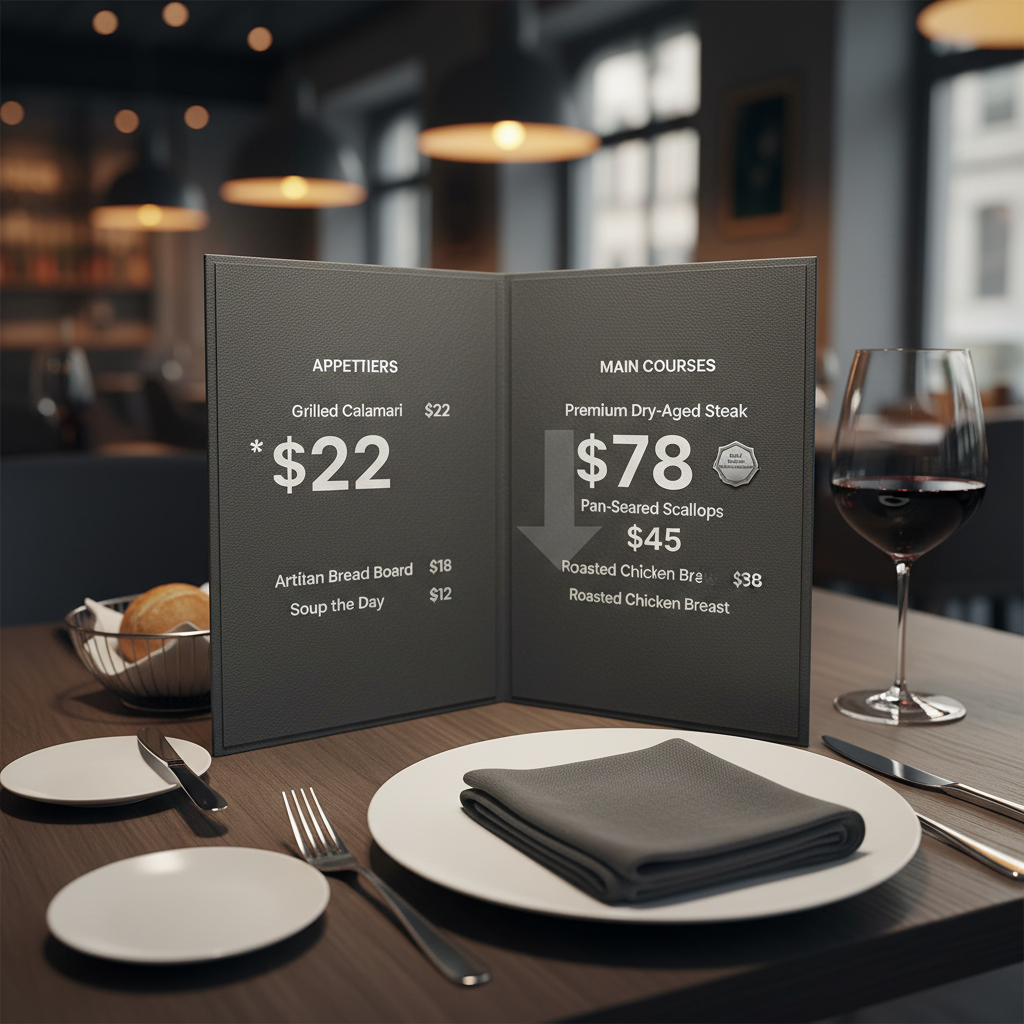
Menu engineers deliberately position their most expensive dishes prominently to establish price anchors that make everything else appear reasonable by comparison. Steakhouses like Ruth's Chris and Morton's showcase premium cuts at the top of their meat sections, creating psychological reference points that make mid-tier options seem like smart compromises. This anchoring effect works because human brains naturally use the first price encountered as a baseline for evaluating subsequent options. The hundred-dollar wagyu suddenly makes the sixty-dollar ribeye feel like a sensible choice, even though diners might have balked at that price without the expensive anchor present.
Engineering the Perfect Decoy Options
Decoy pricing creates artificial value perceptions by introducing deliberately inferior options that make target items appear more attractive. Restaurant chains like Olive Garden and Cheesecake Factory master this technique by offering three-tiered pricing within categories, where the middle option provides the best perceived value while generating optimal profit margins. The decoy effect relies on asymmetric dominance, where one option clearly dominates another in every meaningful way except price. When faced with a small pasta for twelve dollars and a large pasta for sixteen dollars, the addition of a medium pasta at fifteen dollars makes the large portion seem like an obvious bargain.
Visual Manipulation Through Design Elements
Menu layouts employ subtle visual cues to direct attention toward high-profit items without appearing overtly promotional. Upscale establishments remove dollar signs to reduce payment pain, while casual dining spots use boxes, bold fonts, and strategic white space to highlight profitable dishes. Colors play psychological roles too – red creates urgency around limited-time offers, while elegant fonts suggest premium quality worth higher prices. National chains like TGI Friday's and Applebee's extensively test these design elements to maximize average order values across thousands of locations.
The Psychology of Menu Categories and Sections
Section organization influences ordering patterns by capitalizing on decision fatigue and cognitive shortcuts diners use when overwhelmed by choices. Most people scan appetizers first, then entrees, often selecting from the first few items that catch their attention rather than reading every option. Smart menu designers front-load profitable items within each category and limit choices to prevent analysis paralysis. Research shows that menus with too many options actually decrease customer satisfaction and spending, as overwhelmed diners default to familiar, often less profitable, selections.
Profitable Pairings and Suggestive Add-Ons
Menu descriptions and strategic positioning encourage complementary purchases that significantly boost check averages without triggering buyer resistance. Wine pairings, appetizer suggestions, and dessert callouts appear throughout menu sections rather than isolated in their own categories. Chains like Capital Grille excel at weaving profitable add-ons into entree descriptions, making wine selections and premium sides feel like natural complements rather than additional expenses. The key lies in making these suggestions feel helpful rather than pushy, maintaining the illusion that diners are making independent choices.
Recognizing and Responding to Menu Manipulation
Understanding these psychological tactics allows you to make more intentional dining decisions that align with your actual preferences and budget. Before opening a menu, establish a rough spending target to avoid anchoring bias from premium options. Read entire sections rather than focusing on the first few items that catch your attention. Question whether add-ons and upgrades truly enhance your dining experience or simply boost the restaurant's profits. When faced with tiered pricing, evaluate whether the "value" option actually provides meaningful benefits over the basic choice.
Menu psychology continues evolving with digital ordering platforms and dynamic pricing capabilities that adjust in real-time based on demand, weather, and customer data. These technological advances will likely make menu manipulation even more sophisticated and personalized, making consumer awareness increasingly valuable for maintaining control over dining expenses.