
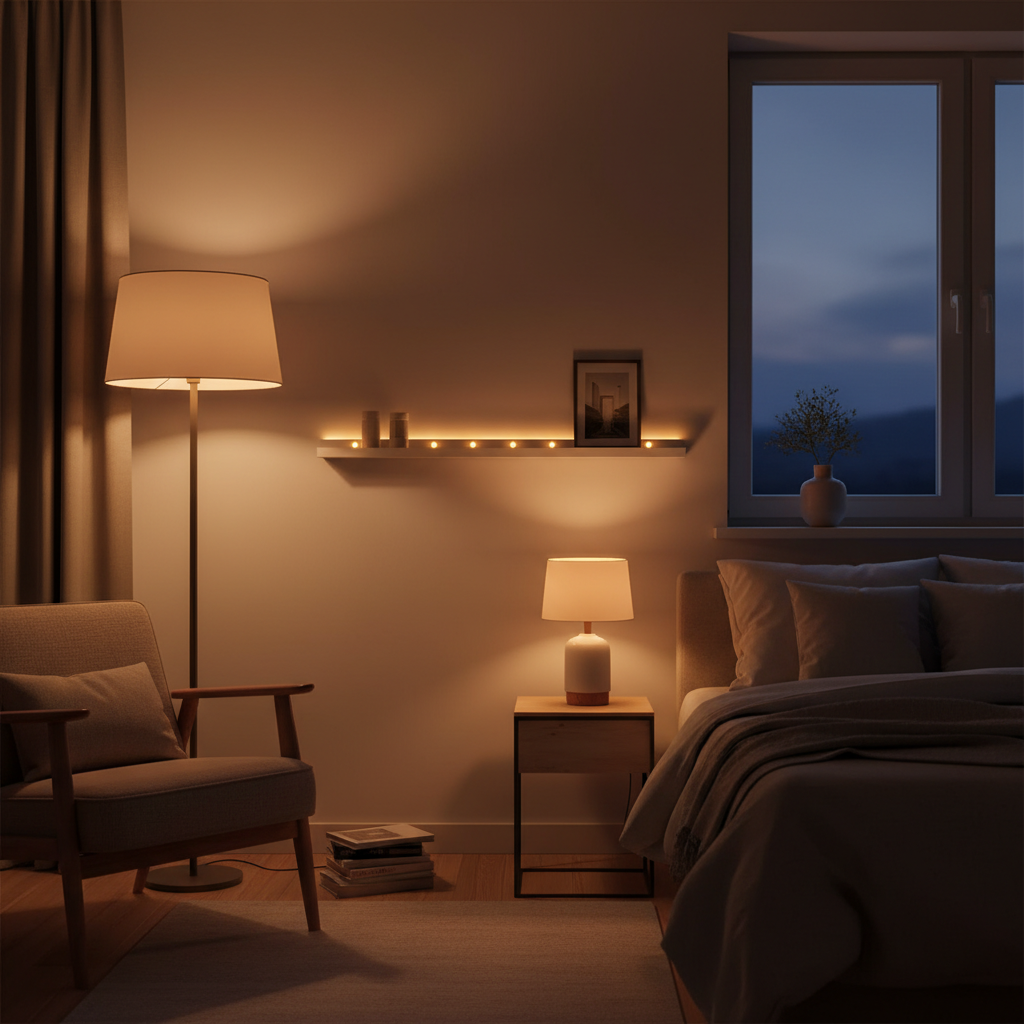
How the 9-3-9 Evening Room Lighting Method Signals Your Brain to Transition From Work Mode to Rest Mode
The harsh glow of overhead fluorescent bulbs follows most people from office cubicles straight into their living rooms, creating a jarring disconnect between work demands and personal restoration time. Your brain struggles to distinguish between productive daytime hours and restorative evening moments when exposed to the same bright, cool-toned lighting throughout the day.
The 9-3-9 evening room lighting method offers a structured approach to creating distinct visual cues that help your mind process the transition from work mode to rest mode. This technique involves dimming overhead lights to 30% of their daytime brightness at 9 PM, maintaining only three strategically placed warm light sources for essential activities, and implementing a complete lighting transition by 9:30 PM.
Start With Strategic Overhead Light Reduction at 9 PM
Begin the transition by dimming your main overhead lighting to roughly 30% of its daytime intensity when 9 PM arrives. This dramatic reduction in ambient brightness signals to your circadian rhythm that the active portion of your day is concluding. Smart bulbs from Philips Hue or LIFX make this process automatic, but traditional dimmer switches work equally well for creating this initial shift. The key lies in consistency rather than expensive technology - your brain learns to associate this lighting change with the end of work-related mental processing.
Maintain Three Warm Light Sources for Essential Activities
Identify three specific areas where you need functional lighting for evening activities like reading, gentle meal preparation, or personal hygiene routines. Table lamps with warm LED bulbs, under-cabinet kitchen lighting, and bathroom vanity lights provide targeted illumination without flooding your entire living space with bright light. These focused light sources allow you to complete necessary tasks while maintaining the overall dimmed atmosphere that supports mental transition. Position these lights at eye level or below to minimize the harsh shadows and bright spots that can re-energize your brain when you're trying to wind down.
Eliminate Blue Light Sources During the Transition Window
Remove or significantly reduce blue light exposure from electronic devices, overhead fluorescents, and cool-toned LED bulbs during your 30-minute transition period. Blue light wavelengths actively suppress melatonin production and maintain the alert mental state associated with daytime productivity. Cover or turn off digital clocks, switch phone screens to night mode, and avoid opening the refrigerator with its bright interior lighting. Even small amounts of blue light can disrupt the transition process your brain is trying to complete during this crucial window.
Create Physical Lighting Boundaries Between Work and Rest Spaces
Establish distinct lighting zones that separate your work area from your relaxation spaces, even within the same room. Desk lamps, computer monitors, and task lighting should be completely turned off or blocked from view during the evening transition. Floor lamps positioned away from your work station and wall sconces that illuminate seating areas help create visual boundaries that reinforce the mental shift from productivity to restoration. This physical separation becomes especially important for people working from home who use the same space for multiple purposes throughout the day.
Use Salt Lamps and Candles for Natural Warm Light Sources
Incorporate natural warm light sources like Himalayan salt lamps, beeswax candles, or flame-effect LED candles to create ambient lighting that mimics the sunset conditions your ancestors experienced. These light sources emit wavelengths that support rather than interfere with your body's natural evening hormone production. Salt lamps provide consistent, gentle illumination while candles offer the psychological comfort of flickering light that signals safety and relaxation. Keep battery-powered LED candles in bedrooms and bathrooms where real flames might pose safety concerns.
Implement Gradual Light Reduction Leading to Bedtime
Reduce your three essential light sources by half every 30 minutes after the initial 9 PM transition until only minimal lighting remains. This gradual reduction mimics natural sunset patterns and allows your eyes to adjust slowly rather than shocking your system with sudden darkness. By 10:30 PM, aim to have only pathway lighting and perhaps one bedside reading lamp active. Your bedroom should receive no direct lighting from other rooms, and any remaining illumination should be positioned below eye level to avoid stimulating alertness when you're preparing for sleep.
Track Your Sleep Quality Response to Lighting Changes
Monitor how the 9-3-9 lighting method affects your sleep onset time, sleep quality, and morning alertness over a two-week period. Most people notice faster sleep transitions and more refreshing morning wake-ups within the first week of consistent implementation. Sleep tracking apps like Sleep Cycle or simple journal notes can help you identify which specific lighting adjustments provide the most benefit for your individual circadian rhythm. Fine-tune the timing and intensity of each phase based on your natural sleep patterns and work schedule demands.
Lighting technology continues to evolve with circadian rhythm research, and smart home systems are beginning to incorporate automatic lighting transitions based on individual sleep data. The fundamental principle of using light to signal mental state changes will likely become even more personalized and seamless as our understanding of the connection between environmental cues and brain function deepens. These simple evening lighting adjustments create lasting improvements in sleep quality and work-life balance that compound over time.